
Senators’ Ridly Greig Suspended Two Games
5/4: Greig has been suspended for two games for his sucker punch on Walker, per TSN’s Bruce Garrioch. With Ottawa’s season wrapped up, Greig will need to serve the suspended games at the start of the 2026-27 regular season. That will require that he is on Ottawa’s active roster, rather than assigned to the AHL. Greig signed a four-year, $13MM contract extension in January.
4/26: Senators forward Ridly Greig‘s season is over following Ottawa’s sweep at the hands of the Hurricanes, which was finished off yesterday. He’ll now be facing a delayed start to his 2026-27 campaign as well. The NHL’s Department of Player Safety announced Sunday that Greig will have a hearing for roughing Carolina defenseman Sean Walker in their Game 4 loss.
Obviously, there’s no rush to make the decision. Still, it shouldn’t be more than a few days until Greig learns his fate. It’s not an in-person hearing, so his looming supplemental discipline won’t be any longer than five games.
Greig wasn’t penalized on the play, which was largely missed in the moment. At the midpoint of the second period in one of the many after-the-whistle scrums on Saturday, Walker and Ottawa winger Warren Foegele were engaged in a pseudo-fight near center ice. Greig, who didn’t have a sparring partner, came over and delivered a sucker punch square to Walker’s chin while he had his head down (video via Sportsnet).
In what was a silent series offensively for the Sens, Greig was one of only seven Ottawa skaters to record a point. His primary assist on Dylan Cozens‘ game-tying goal late in regulation in Game 2 was only the second postseason point of his career. He had a goal in six games against the Maple Leafs last season.
The 23-year-old will be kicking off his fourth full NHL season in the fall, whenever he does end up getting into the lineup. He’s already established himself as one of the Sens’ most physical forwards while posting some remarkably consistent offensive totals. He’s hit exactly 13 goals in each of his three full-time campaigns, with his point totals ranging from 26 to a career-high 35 this season.
Walker didn’t sustain an injury on the play, which certainly contributed to the non-call on the play. Walker took matters into his own hands later in the frame, earning a minor penalty for boarding Greig.
Offseason Checklist: Toronto Maple Leafs
The offseason has arrived for half of the league’s teams that aren’t taking part in the playoffs. Accordingly, it’s now time to examine what they will need to accomplish over the coming months. Next up is a look at the Maple Leafs.
To say this season didn’t go to plan for Toronto would be an understatement. Coming off just their second series win in the Auston Matthews era in 2025, there were going to be changes after bowing out to the Panthers – Mitch Marner‘s long-understood departure via a sign-and-trade to the Golden Knights was the biggest of them all – but the hope was that a bevy of depth free agent signings could help replace the star playmaker’s production by committee. Instead, the Leafs floundered, finishing with their worst record in 10 years and losing Matthews to a torn MCL in March, which eventually cost general manager Brad Treliving his job. Now, after installing John Chayka as his replacement earlier today, a list of daunting tasks awaits him without the guarantee of a first-round pick, which they’ll only retain if Tuesday’s lottery balls keep them within the top five.
Settle The Coaching Question
Chayka still has nearly two months until the opening of free agency in July, so he’ll have plenty of run-up to make player personnel decisions. The more pressing matter is the future of Craig Berube, who just wrapped up his second season behind Toronto’s bench with a 20-win regression. It would be surprising to see Chayka, who was aggressive with limited resources during his time atop the Coyotes’ front office, not move to bring in a new voice behind the bench. Doing so sooner rather than later is paramount, with a pair of high-profile, late-season fired candidates still available in Bruce Cassidy and Patrick Roy.
Seeing Berube remain behind the bench would be especially shocking, given how analytics-forward Chayka is. Even amid last season’s success, the Maple Leafs were middle of the pack in 5-on-5 expected goals share (49.8%) and were even worse in the playoffs, per MoneyPuck. This season, that number tumbled to a 30th-ranked 45.6% while their actual results followed suit, finishing 16th in goals for per game (3.07) but second-worst in goals against (3.60) and worst in shots against (32.4) by a significant margin.
Berube still has two years left on his contract, which he signed in 2024 to replace Sheldon Keefe. Given Toronto’s virtually unlimited financial resources, that’s not a concern for them, but it is indicative of just how quickly the franchise’s momentum has changed.
Solidify A Long-Term Plan
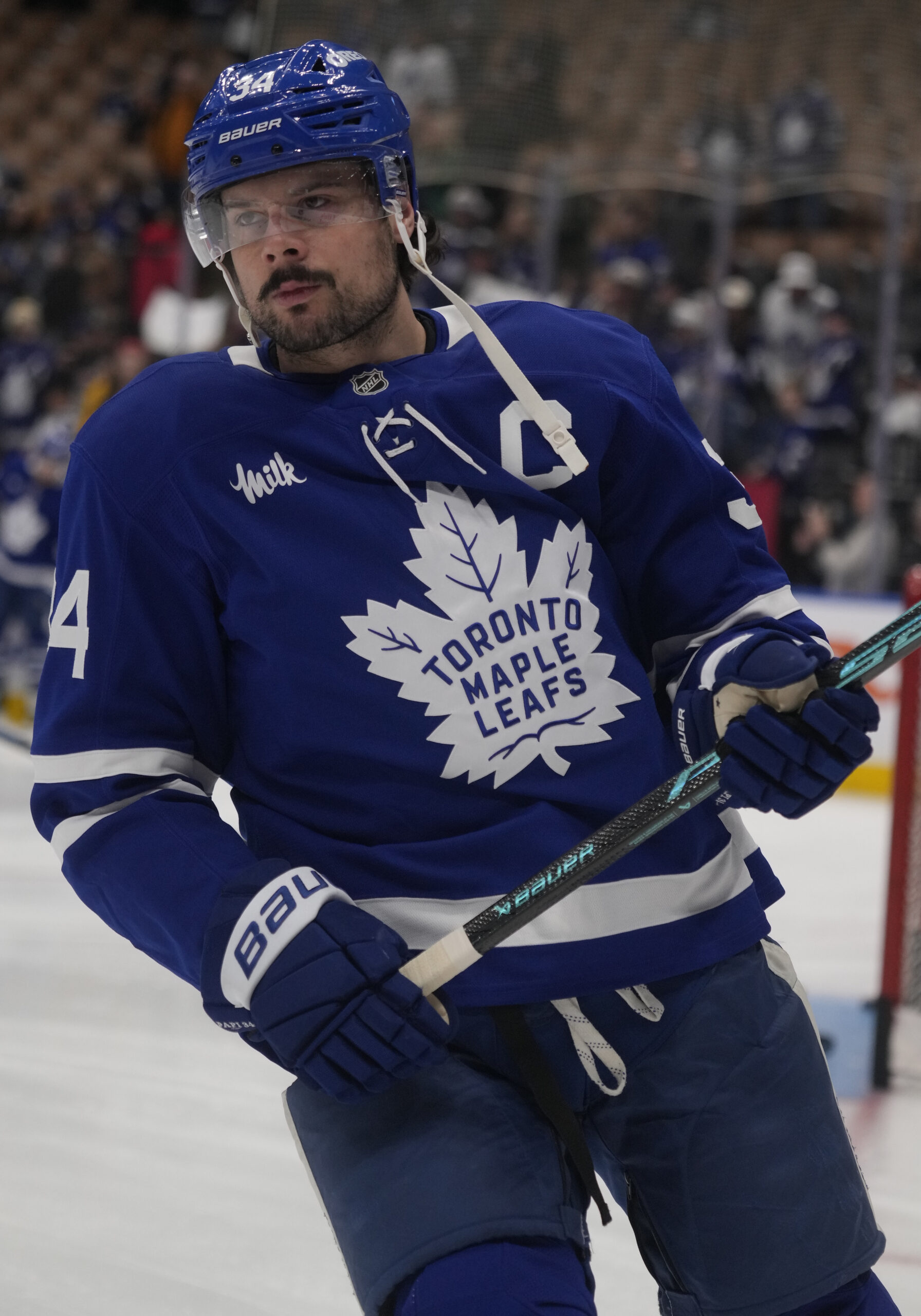 The Leafs’ two remaining “franchise” forwards after Marner’s departure, Matthews and William Nylander, have both expressed uncertainty about their futures if the team’s next GM opts for a full-scale rebuild rather than a short-term reload. Presenting them – particularly Matthews, who’s much closer to unrestricted free agency in 2028 – with a long-term vision needs to be higher on Chayka’s list so he can plan his offseason accordingly.
For a team whose draft pick and prospect cupboards are so bare, opting for a long-term route that Matthews and Nylander aren’t enthused about should immediately trigger trade conversations. Whether a deal of that magnitude could be cobbled together quickly enough to transpire by the draft is a different question entirely, but it’s a possibility all sides need to prepare themselves for (or definitively rule out) depending on Chayka’s vision.
They simply can’t afford a situation like Marner’s, where his signing rights as a pending UFA were sold for pennies on the dollar. They have plenty of cap space for next season, but a thin free agent market to spend it on. Matthews and Nylander could likely be appeased by a clear-cut plan of attack that gets them back to playoff/championship contention by the end of Matthews’ deal two years from now, but if that’s not something Chayka is confident in being able to achieve, he’ll be thrust into making one, if not multiple, of the most franchise-altering trades in recent memory.
Consider Goaltending Options
Toronto’s goals-against regression had more to do with team defense than goaltending, but it’s not as if their netminding was particularly inspiring. A year after serving as arguably the league’s most efficient goaltending tandem, Anthony Stolarz and Joseph Woll were both decidedly below average in 2025-26. Woll was “good” for -6.6 goals saved above expected in 39 outings while Stolarz had a -6.7 mark in 26 games amid another injury-plagued season, per MoneyPuck. This was, of course, after Treliving had locked Stolarz into a seemingly now ill-advised four-year, $15MM extension that begins next season.
That $3.75MM cap hit isn’t much of an eyesore on its own. Stolarz has long been one of the league’s better backups, and it stands he’ll rebound to some degree. But Toronto’s bright spot between the pipes this season was third-stringer Dennis Hildeby, who was excellent when stepping in during Stolarz and Woll’s various absences. Despite a 5-7-4 record, he managed a .912 SV% in 14 starts and six relief appearances to save a raucous 10.5 goals above expected.
Notably, Hildeby loses his waiver exemption next season. He won’t be able to head to the AHL without risking a claim. Still just 24 years old, that’s a fate the Leafs are surely looking to avoid. Chayka’s analytical bent means Hildeby likely won’t be the name on the way out if Chayka decides that carrying three goalies next season isn’t prudent.
However, there’s a strong argument to be made that staying the course is the best path forward. Stolarz’s ever-persistent injury concerns, despite his high ceiling, make a perfectly strong argument for carrying a third netminder, particularly with all three on affordable deals that would only total up to $8.25MM against the cap.
Toronto did briefly explore moving Stolarz prior to the trade deadline, but he stayed put. He’d almost surely be the name on the move if Chayka does move in that direction, but with a 16-team no-trade list, his options will be limited.
Refresh The Blue Line
Treliving leaves behind an overpaid, sluggish defense corps in Toronto. Obvious, easy-to-trade candidates are hard to come by. With seven names already signed to one-way deals for next season, pending UFAs Matt Benning and Troy Stecher are almost sure candidates to walk.
Outside of that, they have three 2027 UFAs in Brandon Carlo, Simon Benoit, and Philippe Myers. Only Carlo will fetch any significant value, and even then, it won’t be close to the potentially top-10 pick they’ll end up sending to the Bruins to acquire him at the 2025 deadline. Moving Morgan Rielly‘s $7.5MM cap hit should be of some intrigue, but with a no-movement clause, it could prove impossible – especially with Toronto no longer being in a severe cap crunch to force a move. There’s also something to be said for the fact that he’s still Toronto’s best goal-scoring D-man, despite his increasingly obvious skating and defensive deficiencies.
It’s here where Chayka’s hiring appears most targeted. He made a few shrewd blue-line acquisitions during his tenure in Arizona, often by taking on undesirable contracts that teams weren’t properly valuing or using. Jason Demers and Alex Goligoski were particularly effective pickups for short bursts. With such limited capital to trade from, though, he’ll need to pull out some “Moneyball”-style pickups to get the most out of Toronto’s defensive depth.
Image courtesy of John E. Sokolowski-Imagn Images.
Rangers Fire Multiple AHL Coaches
After the AHL’s Hartford Wolf Pack finished last in the league this season, its parent club is making sweeping changes. The Rangers announced Sunday that head coach Grant Potulny, as well as assistants Paul Mara and Jamie Tardif, have been relieved of their duties.
Potulny’s run in charge of the Rangers’ next wave of prospects ends after just two years. A longtime assistant coach at the University of Minnesota before taking over Northern Michigan’s program, Hartford was Potulny’s first professional coaching job. The former Senators draft pick (fifth round, 2000) amassed a 56-71-17 record as Hartford missed out on the AHL’s 23-team playoffs on both occasions. Hartford’s 26 wins in 72 games this season gave them the league’s worst record.
It’s not as if Hartford’s roster is overflowing with high-end prospects, but their lack of scoring depth and defensive competency overall was striking. Only two players hit the 30-point mark: Trey Fix-Wolansky and Brendan Brisson. Not a single player with at least 25 games played for them logged a plus rating.
They’re now looking at a full minor-league coaching overhaul with both of Potulny’s assistants following him out the door. Mara, who played 156 games for the Rangers from 2007-09 as part of a 12-year NHL career, first joined the Blueshirts in a coaching capacity in 2023 on their development staff before being reassigned to the AHL staff later that year. All of his previous coaching experience had come in women’s hockey, winning a gold medal as an assistant on Team USA’s staff in 2018 while winning two NWHL/PHF titles with the Boston Pride in 2021 and 2022.
Tardif is the longest-tenured name among the group. The 41-year-old just wrapped up his fourth and final season as an assistant in Hartford. He’s yet to hold a head coaching gig at any level and was previously an assistant coach with the OHL’s Soo Greyhounds from 2018-22, as well as a player/coach with the ECHL’s Quad City Mallards in 2017-18.
Only former Coyotes draft pick Brendan Burke, son of longtime NHL netminder Sean Burke, remains among Hartford’s core coaching staff as their goalie coach. That makes sense given the success of Rangers third-stringer Dylan Garand there this season. Given Hartford’s struggles in front of him, Garand’s 16-15-2 record and .896 SV% in 36 outings stand out in a positive light.
Multiple Mammoth Pending Free Agents Looking To Stay In Utah
Virtually all the Mammoth’s pending free agents expressed a desire to re-up on their contracts following Utah’s first-ever playoff berth during locker clean-out day Sunday. While their season ended Friday in a first-round Game 6 loss to the Golden Knights, UFA center Alexander Kerfoot (via Brogan Houston of Deseret News Sports), center Kevin Stenlund (via Houston), winger Kailer Yamamoto (via Houston), and pending RFA middleman Barrett Hayton (via Cole Bagley of KSL Sports) all expressed a willingness to work on extensions over the next two months before potentially reaching the open market on July 1.
Among those, Yamamoto’s expression is most notable. The former first-round pick of the Oilers is coming off his second season in the organization. He landed a two-way deal with Utah after being non-tendered by the Kraken in 2024. He cleared waivers and ended up suiting up in 54 games for AHL Tucson, the most minor-league action of his career and his first of any kind in five years.
Yamamoto was spectacular in Tucson, notching 20 goals and 56 points with a +17 rating. That prompted Utah to bring Yamamoto back on an identical two-way deal despite not extending him a qualifying offer. That decision paid solid dividends over the course of 2025-26. He worked his way back onto the opening night roster as an extra forward and slowly worked his way up the depth chart amid some injuries and a search for more stable production from Utah’s middle six. He finished the year as a second-line winger alongside youngsters Logan Cooley and Dylan Guenther, recording a goal and four assists in six playoff games in the process. His regular-season scoring line still ended up as a respectable 13-10–23 in 59 games.
Utah won’t want to rely on Yamamoto as a top-nine fixture long-term. They don’t need to with several top-15-drafted forwards still on the way. However, having him stick around for another couple of seasons as scoring depth seems to be an arrangement both sides could benefit from. If Utah doesn’t see the benefit in having Yamamoto slot back in a reduced role next season, though, it may not be up to him whether he sticks around in Salt Lake.
Kerfoot is the only one out of the aforementioned UFAs whose tenure in the organization dates back to the Arizona Coyotes. He signed a two-year, $7MM contract with Arizona in free agency in 2023 and re-upped with Utah in 2025 after the move for this year at a $3MM cap hit.
What followed was an injury-plagued season for the 31-year-old. He underwent core muscle surgery in late October after attempting to rehab his injury without surgery and didn’t make his season debut until mid-December. He then missed another lengthy stretch before the Olympic break with an upper-body issue. He was a consistent fixture in the lineup after that, though, although he saw reduced minutes as a result of being usurped by Stenlund for premier penalty-killing minutes.
When dressed, Kerfoot had seven goals and 13 points in 34 games. That was a small uptick from last year’s career-low 0.35 points per game but was still the second-worst output of his career. Now more of a defensive specialist as his scoring fades, there’s a chance Utah may decide there’s only room for one of him and Stenlund on the roster next season as names like Danil But push for full-time roles.
Stenlund is wrapping up the two-year deal he signed with Utah in 2024 after taking home a Stanley Cup ring with the Panthers. He enjoyed a career year with 14 goals in 2024-25 but shot at just 6.1% this year, bringing his scoring line down to 4-14–18 in 80 outings.
Stenlund’s still been a durable fourth-line pivot for the Mammoth and has averaged over 14 minutes per night in each of his two seasons there. A strong faceoff specialist and their most trusted defensive forward, he’s surely a name head coach Andre Tourigny would like to retain if the decision were up to him.
Hayton, 25, has just one year of team control left, so whatever deal he signs now will walk him to UFA status. He’s owed a $2.65MM qualifying offer that Utah can easily swallow, so there’s a fallback option. Given the season he had, taking his QO might be the best path forward for both sides.
Last year, the 2018 fifth-overall pick finally looked like he had what it takes to be a top-six center who brings most of his value on the defensive side of the puck. A lack of production had really limited him from being a factor, but he tickled the twine 20 times last season while centering the top line between Clayton Keller and Nick Schmaltz.
Hayton once again struggled to produce in 2025-26, though, limited to 10 goals and 25 points in 67 outings. That got him demoted from the top line with Schmaltz shifting over to center it, and injuries kept him in and out of the lineup down the stretch. No longer an obvious long-term piece, a one-year deal to walk him to the open market next summer seems like the most logical outcome.
Injury Notes: Hayton, McBain, Paul, Ehlers, Nikishin
There could be some alterations to the Mammoth’s forward group as they look to stave off elimination at home in Game 6 tonight against the Golden Knights. Center Barrett Hayton returned to the lineup for Game 5 after missing over a month with an upper-body injury, but he’s been downgraded to a game-time decision for tonight as he continues to be on a pain management regimen, head coach Andre Tourigny said (via Cole Bagley of KSL Sports). Hayton played a minimal role in Wednesday’s double overtime loss, logging 12:49 of ice time as he shifted to the wing on the fourth line with Kevin Stenlund and Brandon Tanev. He had a -1 rating and went 6-for-14 (42.9%) on faceoffs. As for McBain, he missed time down the stretch with a lower-body injury before returning for Game 1, although he hasn’t played since. It’s unclear if he reaggravated that one or if it’s a different ailment keeping him out. The regular season saw McBain, 26, produce nine goals and 25 points in 75 games with a team-leading 271 hits in a bottom-six role.
More lineup notes from around the league as the first round nears a close:
- Lightning center Nick Paul was a late scratch for their Game 5 loss due to illness. However, his absence will end there as Renaud Lavoie of TVA reports he’s back in the lineup for Game 6. With Tampa trailing 3-2 and facing a fourth consecutive first-round elimination, Paul has yet to record a point in the series and has a -2 rating after a wildly disappointing regular season that saw his ice time slashed en route to posting a 7-8–15 scoring line and a -15 rating in 51 games.
- Nikolaj Ehlers wasn’t on hand for the Hurricanes when they dispatched the Senators in a sweep last weekend. After a long rest, Carolina’s second-round tilt against the Flyers will get underway tomorrow. Today, head coach Rod Brind’Amour said it “looks like” Ehlers will be available after missing Game 4 against Ottawa with a lower-body injury (via Walt Ruff of NHL.com) – along with defenseman Alexander Nikishin, who left that contest due to a concussion. Despite averaging over 20 minutes per game, Ehlers had been limited to one assist through his first three playoff outings as a Cane. His checking line with Jordan Staal and Jordan Martinook was spectacular at controlling play, however, logging a 62.2% expected goals share, per MoneyPuck. Meanwhile, the rookie Nikishin was held without a point in the series but eked out a +1 rating while averaging 16:31 of ice time per game.
Devils Won’t Retain Dan MacKinnon, Chuck Fletcher
The Devils will not renew the contracts of assistant general manager Dan MacKinnon or senior advisor Chuck Fletcher for next season, the team announced Friday.
They’re the first changes instituted in New Jersey’s front office by Sunny Mehta, who was tapped as the franchise’s sixth general manager in team history last month after they fired Tom Fitzgerald 10 days prior. The moves, of course, come after the Devils limped to the finish line for their sixth playoff miss in the last eight years.
Mehta, who was hired without a president of hockey operations as oversight, will officially have virtually unfettered reign with Fletcher no longer serving as essentially a GM emeritus on staff. The 59-year-old had been working with Fitzgerald over the last two seasons after being fired as GM of the Flyers in 2023.
It likely won’t take very long for Fletcher to find some type of work if he wants to stay in the league. A Stanley Cup winner as the assistant GM of the Penguins in 2009, Fletcher has consistently worked in the league in some capacity since being tapped as an AGM for the Panthers at their point of inception in 1993. He got his first GM gig on an interim basis with Florida in 2001-02 before re-emerging as GM of the Wild from 2009-18 and again with the Flyers from 2018-23. Between jobs, he was an AGM with Anaheim and Pittsburgh while being in charge of their respective AHL franchises.
MacKinnon has had significantly more of a day-to-day impact in New Jersey in recent years. The 51-year-old also has oodles of experience, first joining the Predators as their director of scouting back in 2000. He was picked up by the Penguins in a similar role in 2007 – working with Fletcher there – and was part of their 2009 and 2016 wins before joining New Jersey as their director of player personnel. MacKinnon’s tenure, which began under Ray Shero’s administration, saw him promoted to AGM and senior VP of hockey ops in 2019, both titles he held up until today, before adding AHL GMing responsibilities in 2021.
It’s not clear what replacements, if any, Mehta intends to bring in yet. His inner circle now consists of executive vice president Martin Brodeur, advisor Andy Greene, and AGM Kate Madigan.
Blues Sign Dylan Holloway To Five-Year Extension
The Blues have agreed to terms with winger Dylan Holloway on a five-year extension, the team announced Friday. The contract carries an average annual value of $7.75MM for a total value of $38.75MM, Jeremy Rutherford of The Athletic reports. The deal will kick in next year and run through the 2030-31 season. Holloway was due to hit restricted free agency this summer and would have had arbitration rights.
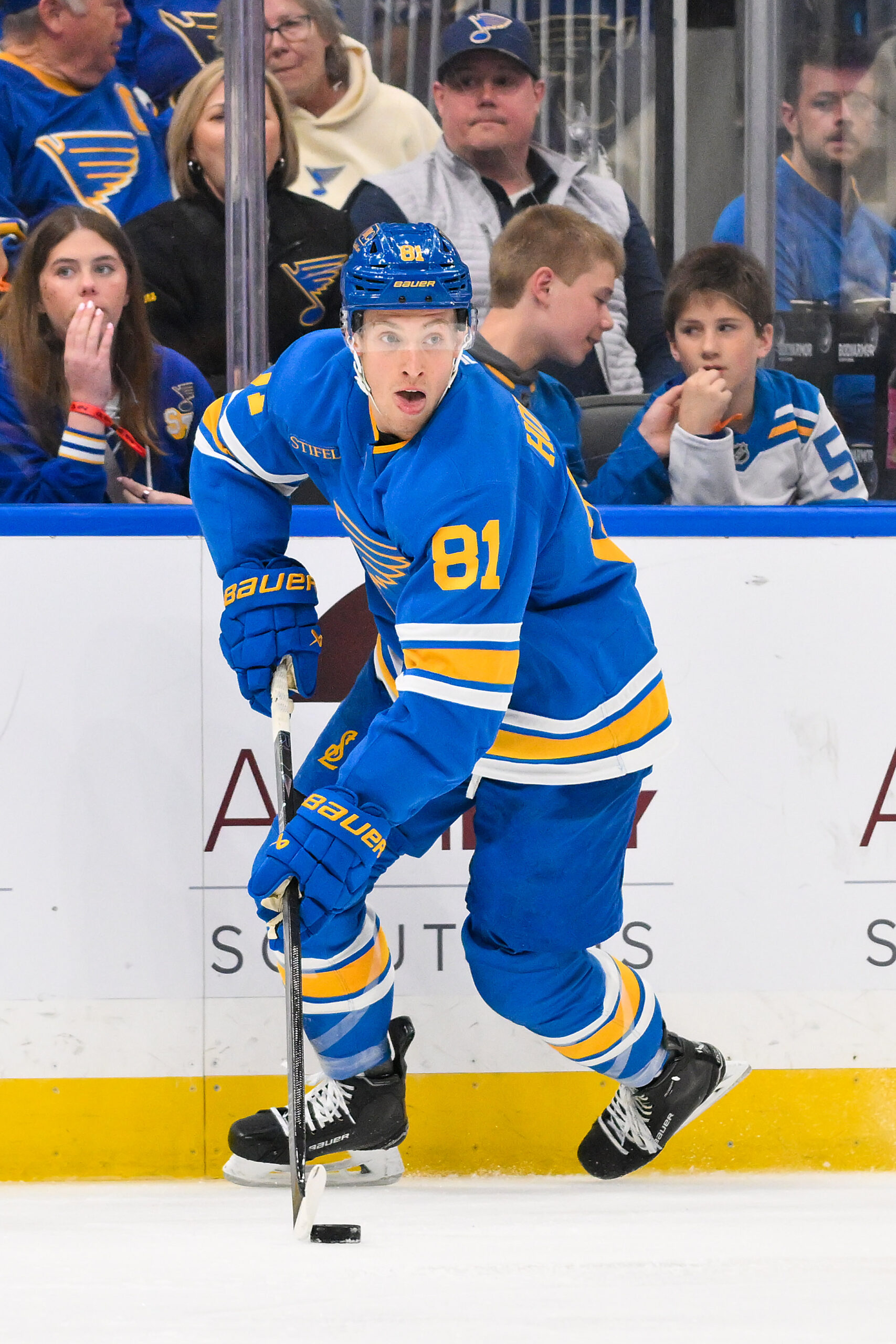 Per PuckPedia, Holloway’s deal includes a 20-team no-trade clause in 2029-30 and a 15-team no-trade clause in 2030-31, the only two seasons of the deal in which he’s eligible for trade protection. The deal is paid entirely in base salary (no signing bonuses) and will earn him $10MM next season, $9MM in year two, $7.5MM in year three, $6.25MM in year four, and $6MM in its final season.
An article on the Blues’ site just yesterday expressed Holloway’s willingness to sign a long-term extension. His wish has come to fruition in short order. The contract buys up his remaining RFA years and takes him two seasons past when he would have initially been eligible for unrestricted free agency in 2029. He’ll be 29 years old upon expiry – likely at a point when his market value will never be higher – while joining a massive class of 2031 UFAs in St. Louis that includes Pavel Buchnevich, Jordan Kyrou, and Robert Thomas.
It was clear the Blues would be on the hook for a big payday as soon as he hit the ground running in the Show-Me State two years ago. Plucked from the Oilers alongside defenseman Philip Broberg on a two-year, $4.58MM offer sheet in August 2024, the 2020 first-round pick broke out to finish third on the Blues in scoring with 63 points in 77 games, posting a +21 rating while helping fuel the franchise to its first playoff experience in three years.
Things did not go nearly as smoothly for Holloway at the beginning of 2025-26. His offensive struggles were in line with those of the rest of his Blues teammates. By the time he sustained an ankle injury on Dec. 12, he had been limited to eight goals and 17 points in 33 games with a -11 rating. He would only play one more game before the Olympic break, re-aggravating his injury and virtually missing over two months.
The fully healthy version of Holloway that emerged, however, looked more like a perennial All-Star contender than the high-end middle-six piece he was drafted to be. He was easily St. Louis’ MVP down the stretch, but they ultimately failed to make a late push for a postseason berth. His 14 goals and 34 points through his final 25 games ranked t-12th and t-7th in the league, respectively, following the Olympic break, while no one had a better rating than his +26 mark in that span. Only Nikita Kucherov had more even-strength points (30) than Holloway’s 29. It was an absolutely dominant run of play for a new-look first line of himself, Thomas, and Jimmy Snuggerud that should be set to reprise itself in training camp next fall – assuming Thomas sheds the trade rumors that dogged him leading up to this year’s deadline.
That run brought Holloway’s season totals up to a 22-29–51 scoring line in 59 games – an even better points-per-game pace than last season despite his early struggles. He’s averaging 29 goals and 69 points per 82 games in a Blues uniform. The deal comes in a little north of AFP Analytics’ $7.2MM projection on a five-year deal, but as Dom Lusczyszyn of The Athletic relays, his superb 5-on-5 defensive impacts mean his deal should age quite well for the Blues, at least until he’s owed another sizable raise at the beginning of the next decade.
St. Louis doesn’t have much other roster management to do before the fall. Holloway’s extension already brings them up to 20 players on next season’s projected active roster with $15.85MM in cap space still available, per PuckPedia. The Blues’ list of notable remaining RFAs for this year starts and ends with Jonatan Berggren and Matthew Kessel.
Image courtesy of Jeff Curry-Imagn Images.
Anze Kopitar Officially Retires After 20 Seasons
April 26th: Kopitar’s career has officially ended following a four-game sweep by the Colorado Avalanche in Round One of the Stanley Cup playoffs. The Slovenia-born center finishes his career with 452 goals and 1,316 points in 1,521 regular-season games. He retires first in games played for the Kings, first in assists, first in points, and third in goals. Additionally, Kopitar scored 27 goals and 89 points in 106 career playoff games, helping Los Angeles win two Stanley Cup championships in 2012 and 2014.
Sept. 18th: Kings franchise center Anze Kopitar will retire following the 2025-26 campaign, he said in a press conference Thursday. He confirms what he alluded to last month as he enters the final season of the two-year, $14MM extension he signed in 2023.
It’s a trying day for L.A. sports fans, who also saw MLB’s Dodgers announce future Hall of Fame pitcher Clayton Kershaw will retire at the end of the 2025 campaign. “This will be my last year in the NHL,” Kopitar said. “[My family has] been by my side for 20 years. They now deserve a husband and a dad. I want to get this announcement out of the way now, so it’s not a distraction. I don’t want the attention on me. The moves we made made us better. I can’t wait to start.”
Like his baseball counterpart, Kopitar was a first-round pick by his club and spent his entire career in Los Angeles. The 11th overall pick of the 2005 draft from Sweden’s Södertälje SK wasn’t only the first player from Slovenia to be drafted in the first round, he was the first to even make his NHL debut when he arrived in North America one year later. He hit the ground running in 2006-07, breaking camp with the Kings and immediately stepping in as their top-line center with 61 points in 72 games while seeing north of 20 minutes per game as a rookie. That wasn’t enough to make him a Calder Trophy nominee in a stacked class that included Evgeni Malkin, Paul Stastny, and Jordan Staal, though.
That marked the beginning of what will be a 20-year career, one of the most consistent of its kind. Kopitar continued to flirt with the point per game mark in his second year, making the All-Star Game after tallying 77 points in 82 appearances. He spent a few years struggling to carry the burden of a Kings club that was exiting a rebuild, but after he made the playoffs for the first time in 2010, he finished top 15 in Selke Trophy voting for eight consecutive seasons, cementing himself alongside Patrice Bergeron as the best two-way forward of the 2010s.
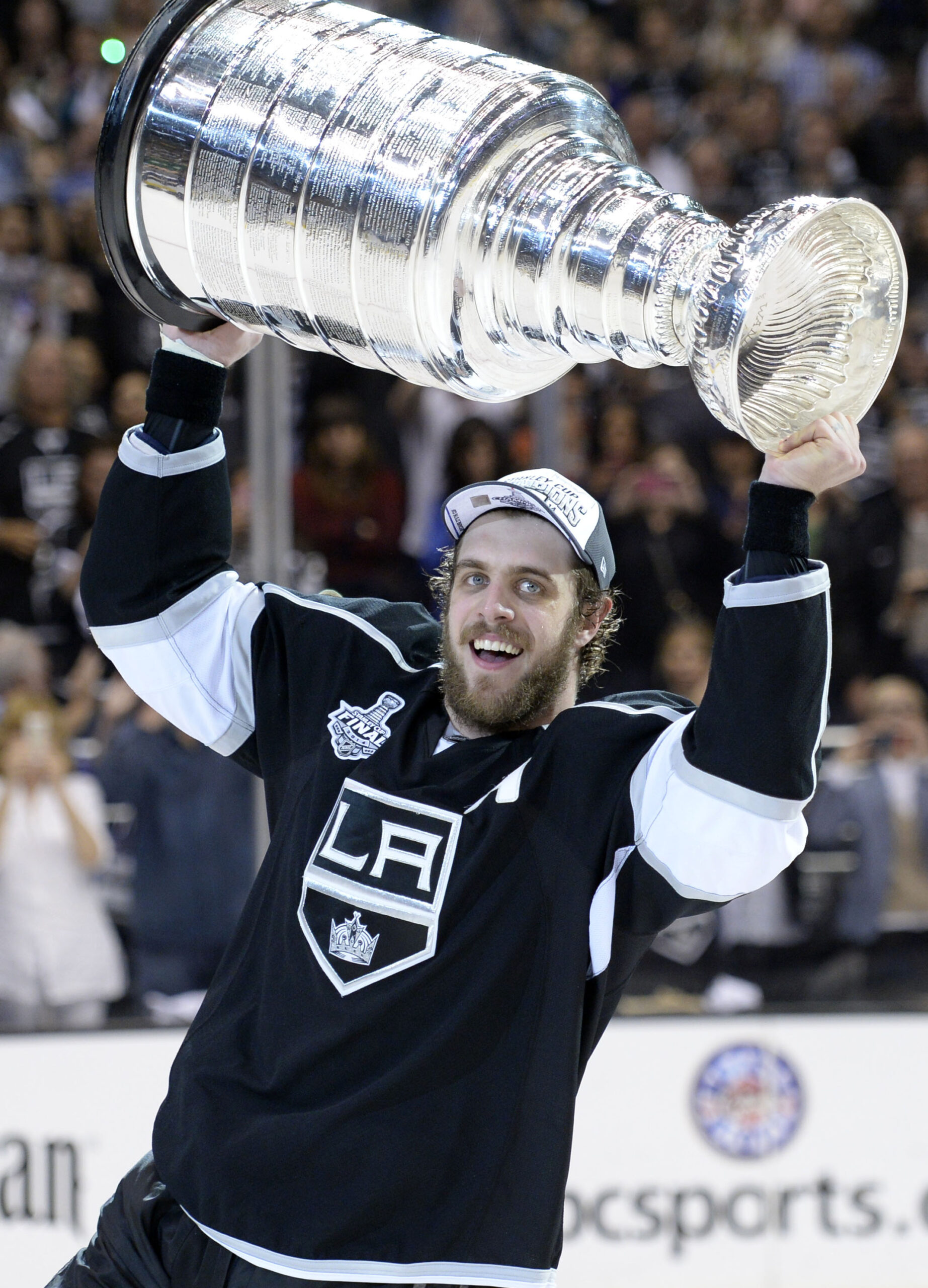 While the Kings have had some star power in their lengthy franchise history, Wayne Gretzky notwithstanding, it was Kopitar who first managed to bring the Stanley Cup to Hollywood. The Kings advanced to three straight Western Conference Finals from 2012-14 and ended up converting those into championships on the first and last occasion. During that three-year run, Kopitar’s 188 points in 211 regular-season games ranked 12th in the league, and his +60 rating ranked ninth. No one had more playoff points than Kopitar’s 55 in 64 games during that span.
L.A. had rewarded Kopitar nicely coming off his entry-level deal, giving him a seven-year, $47.6MM commitment following his sophomore season. Before that deal was due to expire in the summer of 2016, the Kings extended him on his big payday – an eight-year, $80MM contract that coincided with him assuming the captaincy from Dustin Brown. While the Kings’ team success dipped in the latter half of the 2010s, that contract saw Kopitar have his career year in 2017-18. He posted a 35-57–92 scoring line in 82 games, remarkably his only time over the point-per-game threshold, with a +21 rating to take home his second Selke Trophy and finishing third in MVP voting, his highest-ever finish for the Hart.
Even as Kopitar enters his age-38 season, he remains an effective top-six center. The slow signs of decline are there, though. His 21 goals and 67 points in 81 games last season tied for his lowest output since 2019, and his usage has ‘dwindled’ to a few ticks under 19 minutes per game. He’s still one of the league’s best faceoff men, winning 57.2% of his draws last year, and has continued to rattle off four consecutive top-10 Selke finishes. One noticeable dropoff is his willingness to deliver and take contact. While never an overtly physical center, he recorded a career-low 31 hits in 2024-25. The tradeoff is durability – he’s only missed four games in the last eight seasons.
Those hoping for Kopitar to be a part of the Kings’ bench or front office next year will be disappointed. He’s planning on moving his family back to Slovenia after the season ends and isn’t leaving the door open to change his mind on retirement, he told Dennis Bernstein of The Fourth Period. Nonetheless, he’ll retire sitting right alongside Gretzky, Marcel Dionne, and Luc Robitaille as the most impactful players in franchise history, and he’s the only one to spend his entire career in California. His 1,278 career points rank second in franchise history behind Dionne’s 1,307, so he’ll end up as the franchise’s all-time leading scorer barring a highly disappointing sendoff campaign. With two Cups, two Selkes, and likely over 1,300 career points when all is said and done, he’s a virtual lock to be inducted into the Hall of Fame when he’s eligible in the class of 2029.
Kopitar now looks to deliver at least a playoff series win in his final season, something the Kings haven’t accomplished since winning the Cup 11 years ago. He’ll do so as his successor as the club’s leading offensive producer, winger Adrian Kempe, is also a pending unrestricted free agent.
All of us at PHR congratulate Kopitar on a spectacular career.
Image courtesy of Gary A. Vasquez-Imagn Images.
Canadiens’ Alexander Zharovsky Remaining In KHL For 2026-27
The Canadiens’ young lineup still has a few notable pieces on the way. They’ll have to wait at least one more season to see one of them, though. Winger Alexander Zharovsky, last year’s 34th overall pick, confirmed Sunday that he’s remaining with Salavat Yulaev Ufa in the Kontinental Hockey League to honor the final season of his contract in Russia (via Marco D’Amico of RG).
Zharovsky already looks like one of the steals of the 2025 class. Touted as a late-first-round talent by a few, most still expected him to be available with the Habs’ pick at 34.
He responded with a spectacular rookie season in the KHL this year after playing out his draft season in Russia’s junior circuit. Zharovsky was a three-time Rookie of the Month and was named to the league’s All-Star Game. With 16 goals and 42 points in 59 games, Zharovsky ranked third on Salavat in scoring and was second in points per game.
Even with some big-time names graduating over the last two seasons, the Habs still have a top-10 prospect pool in the league. Zharovsky’s standout 2025-26 campaign was enough to elevate him to #3 in the organization, per The Athletic’s Scott Wheeler – ahead of stagnating 2023 fifth overall pick David Reinbacher – and have him well-positioned to be a top-six contributor for Montreal in a couple of years’ time.
But unlike some high-profile Russian names over the past couple of years, it doesn’t appear there will be an early exit from Zharovsky’s overseas contractual obligations. Since the NHL doesn’t have a transfer agreement with the KHL, teams can’t sign their Russian prospects while they’re actively under contract with KHL clubs. Doing so requires the player and club to agree to terminate the deal – often at great cost to the player if not agreed to mutually.
Golden Knights Recall Braeden Bowman, Trevor Connelly
The Golden Knights announced Sunday that they’ve recalled forward prospects Braeden Bowman and Trevor Connelly from AHL Henderson. Both will likely be available for Monday’s Game 4 against the Mammoth if necessary, but they’re likely just getting a few days of playoff practice with the big club before returning to Henderson for its Pacific Division Semifinal series against Colorado, which doesn’t begin until Friday.
Bowman, 22, has quickly become a great story for the Knights. Undrafted, he had to settle for a minor-league deal with Henderson in 2024 when his junior career ended.
The 6’1″, 205-lb right hit the ground running, finishing second on the Silver Knights in scoring last season with 36 points in 68 games en route to quickly earning an entry-level contract. He more than doubled his AHL points per game rate here in 2025-26 and actually spent most of the campaign on the NHL roster in a decently high-leverage role.
Recalled for the first time in November, Bowman spent a good chunk of the year as a top-line injury fill-in for captain Mark Stone. He was reasonably productive, churning out an 8-18–26 scoring line in 54 outings while averaging a shade over 14 minutes per game, seeing some power-play reps in the process. Bowman’s defensive impacts, though, left much to be desired. He finished with a -16 rating, only controlled 49.6% of shot attempts at 5-on-5 despite starting nearly 60% of his shifts in the offensive zone, and barely throws the body given his stocky frame (he had just 19 hits).
All that contributed to Bowman being left on the outside of the playoff lineup, especially after the Knights moved to add Nic Dowd and Cole Smith at the trade deadline. After a four-game pointless stretch in March, Bowman was scratched on several occasions before eventually being returned to Henderson at the beginning of April.
Bowman finished the AHL regular season on an absolute tear with 14 points in eight games. He also had a goal and an assist in two games as Henderson made quick work of San Jose in a three-game first-round series. If he is plugged into the lineup, he’ll be doing so with plenty of offensive confidence.
As for Connelly, Vegas’ 2024 first-round pick has yet to make his NHL debut. Still viewed as their clear-cut #1 prospect, he made an exceptional transition to pro hockey this year after an underwhelming and injury-plagued one-and-done freshman season at Providence College.
Connelly didn’t play a full season this year, either, only suiting up in 46 out of a possible 72 AHL games. He nonetheless was one of four Silver Knights to exceed the point per game mark in an offensively surging season for the oft-struggling affiliate. He ended up with a 14-35–49 scoring line and had five points in their two-game series in over San Jose last week.
If Connelly dresses, he would be the first player in Golden Knights history to make their NHL debut in the postseason.