Salary Cap Deep Dive: St. Louis Blues
Navigating the salary cap is one of the most important tasks for a front office. Teams that can avoid total cap chaos by walking the tightrope of inking players to deals that match their value (or compensate for future value without breaking the bank) remain successful. Those who don’t often see struggles and front office changes.
PHR will look at every NHL team and give a thorough look at their cap situation for the 2025-26 season. This will focus more on players who are regulars on the roster versus those who may find themselves shuttling between the AHL and NHL. All cap figures are courtesy of PuckPedia. We’re currently covering the Central Division, next up are the Blues.
St. Louis Blues
Current Cap Hit: $94,874,849 (below the $95.5MM Upper Limit)
Entry-Level Contracts
D Logan Mailloux (one year, $875K)
F Jimmy Snuggerud (two years, $950K)
Potential Bonuses
Snuggerud: $800K
Snuggerud joined St. Louis for the stretch run last season after his college campaign ended and made a solid first impression with four points in seven games while adding four more in their first-round loss to Winnipeg. He should land a middle-six role, giving him a shot at reaching some of his ‘A’ bonuses. He’s someone that, if all goes well, they’d want to sign long-term but with several other core youngsters up by then, can they afford to do so?
Mailloux came over from Montreal in a one-for-one swap for Zachary Bolduc in a swap of 2021 first-round picks. He has shown plenty of offensive promise in his first two seasons and should have a chance to come in and be a secondary contributor on their back end. At this point, it’s likely he’ll land a bridge agreement which, depending on his production this season, could plausibly run anywhere between $1.5MM and $2.5MM.
Signed Through 2025-26, Non-Entry-Level
D Philip Broberg ($4.581MM, RFA)
D Cam Fowler ($4MM, UFA)*
F Dylan Holloway ($2.29MM, RFA)
D Matthew Kessel ($800K, RFA)
F Mathieu Joseph ($2.95MM, UFA)
F Oskar Sundqvist ($1.5MM, UFA)
F Alexandre Texier ($2.1MM, RFA)
F Alexey Toropchenko ($1.7MM, UFA)
F Nathan Walker ($775K, UFA)
*-Anaheim is retaining an additional $2.5MM on Fowler’s contract.
Joseph was acquired from Ottawa with St. Louis picking up a third-round pick to take on the rest of his contract. He wasn’t particularly impactful in his first season with the Blues and while he’s only a year removed from a 35-point year, a similar showing in 2025-26 could have his next deal coming closer to half of this amount. On the other hand, Holloway is on the rise. Acquired for a third-round pick via the offer sheet (not the one they got to take on Joseph), he had a breakout year with 63 points, good for third on the team in scoring. With arbitration rights next summer, a similar showing this season could have him more in the $7MM range on a long-term deal. What a difference a year can make after being limited on the depth chart in Edmonton.
Texier was also brought in last summer with the hopes that a change of scenery could help him most consistently show the upside he briefly displayed with Columbus. Instead, injuries were once again an issue and his playing time was a career-low when he was in the lineup. At this point, he might be a non-tender candidate or needing to sign for close to his $2.1MM qualifying offer. Toropchenko surprisingly signed this one-year deal last October and while he brought plenty of physicality, he also only scored four goals in 80 games. A small raise could nonetheless come his way but if he remains around the 20-point range, he should land somewhere around the $2.25MM mark next year.
Sundqvist has been an effective bottom-six center for a good chunk of his two stints with St. Louis but still had to settle for a minimum contract just two summers ago. He’s done enough to earn a small raise but given his market limitations the last time he tested the market, it might only be worth a few hundred thousand per season. Walker had his best season in 2024-25, becoming more of an every-game player but his overall track record remains that of a depth piece. The increase to the minimum salary guarantees him a raise to $850K and it’s possible he can do a little better than that.
 Broberg’s offer sheet was much riskier than Holloway’s given the higher cap hit associated with it and what was at the time a very limited track record. But the opportunity to play regular minutes in the top four for the first time in his career helped him break out and look more like the player Edmonton hoped he’d be when they drafted him eighth overall in 2019. Now, the deal has gone from a risky one to a team-friendly pact. Also like Holloway, Broberg will be arbitration-eligible next summer, putting him in a position for a big jump again. A long-term pact will likely run them past the $7MM mark while if they needed short-term flexibility, a one-year deal could be an option but still might check in around $6MM.
Fowler was an impactful pickup by GM Doug Armstrong early in the season as he stepped right into a top-four role. For the portion that they’re paying him, he’s a nice bargain. While he’s unlikely to command a price tag at the full portion of his current deal ($6.5MM), it’ll take more than what the Blues are currently paying him to keep him around. A two-or three-year deal around the midpoint of those two numbers might be enough. Kessel technically needs to play in ten NHL games to remain a restricted free agent, otherwise he’s a Group Six unrestricted free agent. Last season wasn’t as good as the year before in the NHL but he’s now waiver-eligible and should be up with St. Louis for the full campaign. If he can lock down a full-time role, he could plausibly double his current cost. If he’s more of a depth option, then something a little over the $1MM mark might make sense.
Signed Through 2026-27
G Jordan Binnington ($6MM, UFA)
F Nick Bjugstad ($1.75MM, UFA)
D Justin Faulk ($6.5MM, UFA)
G Joel Hofer ($3.4MM, RFA)
D Torey Krug ($6.5MM, UFA)
F Jake Neighbours ($3.75MM, RFA)
F Pius Suter ($4.125MM, UFA)
D Tyler Tucker ($925K, UFA)
Suter had a breakout year with Vancouver and with so few centers on the open market, it looked like he was poised to cash in. Instead, while he landed a nice raise over the $1.6MM he made in each of the last two years, only securing two seasons was a bit surprising. If he reverts to being more of a third liner as he has been, it’s still not really an overpay, making it a low-risk addition. Clearly, teams want to see him repeat his 46 points before committing big term and big dollars.
 Neighbours continued to show steady improvement but St. Louis wasn’t in a spot to give him a long-term deal, making it another bridge pact. His production hasn’t quite taken off as much as Holloway’s but as a power forward, even maintaining a point total in the mid-40s would have him set for a notable raise on his $4MM qualifying offer. If he continues to progress, he could very well double his current cap charge. Bjugstad had a strong first year in Arizona but struggled last season with Utah which hurt his market. Still, he has been more of a bottom-six producer for the most part in recent years and at this price tag, there isn’t much risk.
Let’s get Krug out of the way quickly. He won’t play this season and probably won’t play next year, meaning he’ll again be LTIR-eligible. Under the new rules, St. Louis would get the full allotment of LTIR room (minus any amount they’re below the cap when they place him there.) Doing so means they can’t accrue cap space and any bonuses hit roll over to 2026-27 so their preferred method at this point is probably trying to avoid it. But while the LTIR change will affect a lot of teams and players this season, Krug will be one of the exceptions.
Faulk is not the higher-end offensive threat he was in his prime and as he nears the 1,000-game mark with the minutes he’s logged, he could start to wear down before too much longer. Nonetheless, he was still an all-situations top-pairing piece in terms of usage last season so even with the drop in production, they’ve still received a reasonable return in recent years. But if the drop continues, he will wind up with a drop of a couple million or so on his next contract. Tucker cleared waivers back in October but wound up playing a relatively regular role in the second half on the third pairing, a role he might be able to reprise. If he can become a full-timer, things will be looking up two years from now when doubling this could be an option. But if he remains more of a reserve player, he’ll stay in that range of being a little above the minimum salary.
It hasn’t always been pretty with Binnington on this contract with there being more ups and downs than teams typically like from their starter. But the good generally has outweighed the bad while he has been one of the workhorses around the league in recent years. Since he’s not in that top tier, he probably isn’t going to be able to reach the $8MM level that a few have hit but another multi-year pact at or even a little above this price point is feasible. As the Blues have done several times with their players, Hofer also received a bridge deal, one that gives them more time to assess if he can ultimately supplant Binnington as the starter. If so, he could land around where Binnington is now. If not, he likely wouldn’t get a big jump off where he is now as the high-end backup ceiling isn’t much higher than this at the moment.
Signed Through 2027-28
F Brayden Schenn ($6.5MM, UFA)
After two of his better offensive seasons in 2021-22 and 2022-23, Schenn’s production has come down over the last couple of years to more around the 50-point mark. Considering his physicality and the fact he plays center, this still isn’t a terrible price tag for someone who is deployed as a second liner. But with over 1,000 games under his belt now and the style he plays, there are going to be some concerns about his ability to provide similar value over these final three years.
Salary Cap Deep Dive: Nashville Predators
Navigating the salary cap is one of the most important tasks for a front office. Teams that can avoid total cap chaos by walking the tightrope of inking players to deals that match their value (or compensate for future value without breaking the bank) remain successful. Those who don’t often see struggles and front office changes.
PHR will look at every NHL team and give a thorough look at their cap situation for the 2025-26 season. This will focus more on players who are regulars on the roster versus those who may find themselves shuttling between the AHL and NHL. All cap figures are courtesy of PuckPedia. We’re currently covering the Central Division, next up are the Predators.
Nashville Predators
Current Cap Hit: $86,158,961 (below the $95.5MM Upper Limit)
Entry-Level Contracts
F Zachary L’Heureux (one year, $863.3K)
F Fedor Svechkov (one year, $925K)
F Matthew Wood (two years, $950K)
Potential Bonuses
Svechkov: $212.5K
Wood: $500K
Total: $712.5K
Wood signed late last season after finishing up his college campaign and held his own in limited action. Assuming he remains in his bottom-six role to start this year, it seems unlikely he’ll hit either of his ‘A’ bonuses and that would have him safely on the path to a bridge deal. Svechkov came up in late November and never looked back although his production was rather limited. It seems likely he’ll get a bigger opportunity this season which could give him an outside chance at his ‘A’ bonus. But barring a huge uptick in production, he’s also likely heading for a bridge deal, one that should push past the $2MM mark if he remains a regular this season.
L’Heureux spent most of the season with the Predators where he brought plenty of physicality but not a ton of production to the table, understandable given his limited role. Like the others, the offense simply isn’t there to justify a long-term deal so he’s also heading for a bridge deal, one that again should come in around $2MM if this season is a repeat of last.
Signed Through 2025-26, Non-Entry-Level
G Justus Annunen ($837.5K, RFA)
D Justin Barron ($1.15MM, RFA)
D Nick Blankenburg ($775K, UFA)
F Michael Bunting ($4.5MM, UFA)
D Andreas Englund ($775K, UFA)
F Erik Haula ($3.15MM, UFA)
F Michael McCarron ($900K, UFA)
D Jordan Oesterle ($775K, UFA)
F Cole Smith ($1MM, UFA)
D Spencer Stastney ($825K, RFA)
Bunting was brought in near the trade deadline with GM Barry Trotz opting for a player-for-player swap instead of being a straight seller. He hasn’t had the same type of success offensively since leaving Toronto and will need to push that point total more toward the mid-40s if he wants any sort of notable raise. Otherwise, another contract in this range seems likely. Haula came over from New Jersey this summer following a tough year although he’s averaged 40 points over the previous three seasons. If he gets back to that range, he should be able to get a raise and another multi-year pact, even at 35, which he’ll be in March. If this winds up being a repeat of last season, he might still be able to get two years but it’d be surprising to see him match let alone beat this price tag.
Smith saw his point total drop by nearly half last season despite nearly identical playing time. Still, he’s a big part of their penalty kill and throws the body around. A late-bloomer (he wasn’t a regular until 27), Smith has enough of a track record now that he could conceivably double his current price tag even with the limited output. McCarron hasn’t lived up to his draft billing but has settled in as a serviceable bottom-six checking center who is above-average at the faceoff dot and plays with an edge. Those elements will be appealing which could plausibly allow him to push past $2MM next summer.
Barron was acquired from Montreal midseason in another player-for-player swap, this time with veteran Alexandre Carrier going the other way. While the change of scenery allowed Barron to play a much bigger role, he didn’t do a whole lot with it. Still, he’s likely to push past the 200-game mark this coming season and will have arbitration eligibility this time around with a $1.2MM qualifying offer. Doubling that might be tough but he could come close.
The other four blueliners are all in a similar boat. They’ve been fringe third-pairing defenders in recent years while also seeing time in the minors. Two or three will make the team and if one stands out, he could push past $1MM next summer. The rest will likely stay at the league minimum salary which jumps to $850K in 2026-27. Notably, Stastney will need to play in at least 29 NHL games this season to retain his RFA rights. Otherwise, he’ll become a Group Six unrestricted free agent.
 Annunen played a little better after coming over in an early-season trade from Colorado but his numbers were still below average. Just 25 with a fairly limited track record at the top level, it’s not a situation where Nashville should be looking to give up on him but he hasn’t shown enough to earn a long-term pact either. He has one RFA-eligible year left after this and the prudent move for both sides might be another two-year deal, one that would push the price to around $1.5MM, giving him a bit of stability while allowing the team a bit more time to evaluate his longer-term fit as the second-string option. If he bounces back with more of an NHL-average year, the cost could come closer to $2MM on that deal.
Signed Through 2026-27
D Nicklaus Perbix ($2.75MM, UFA)
F Ryan O’Reilly ($4.5MM, UFA)
As was the case with most of their veterans last season, O’Reilly underachieved offensively but he was still a two-way contributor. Between that and his contract, he was highly sought after at the trade deadline but nothing materialized. Even with the drop in production, this is a more than acceptable price tag for O’Reilly for now but at 34 with a lot of miles on him, that could change. Assuming he stays in this range a little longer, he could still beat this on a short-term deal two years from now.
Perbix comes over from Tampa Bay where he saw his playing time drop by more than two minutes a game last season. However, he has shown himself to be a capable third-pairing option, with some underlying numbers suggesting he could be capable of more. This contract suggested teams weren’t willing to bank on that just yet but if he can latch on to a bigger role, his next deal could land closer to the $3.75MM mark. If not, this is a reasonable floor for a third-pairing right-shot piece.
Signed Through 2027-28
D Roman Josi ($9.059MM, UFA)
F Steven Stamkos ($8MM, UFA)
Stamkos leaving the Lightning last summer was quite a surprise for many but his performance last season suggests Tampa Bay was wise to hold firm to their number which was lower than what Stamkos wanted. While 53 points is still respectable, that’s not worthy of an $8MM price tag and at 35, there is some concern that the decline will continue. If so, this could be a troublesome contract before long while a rebound would only delay those concerns a little longer.
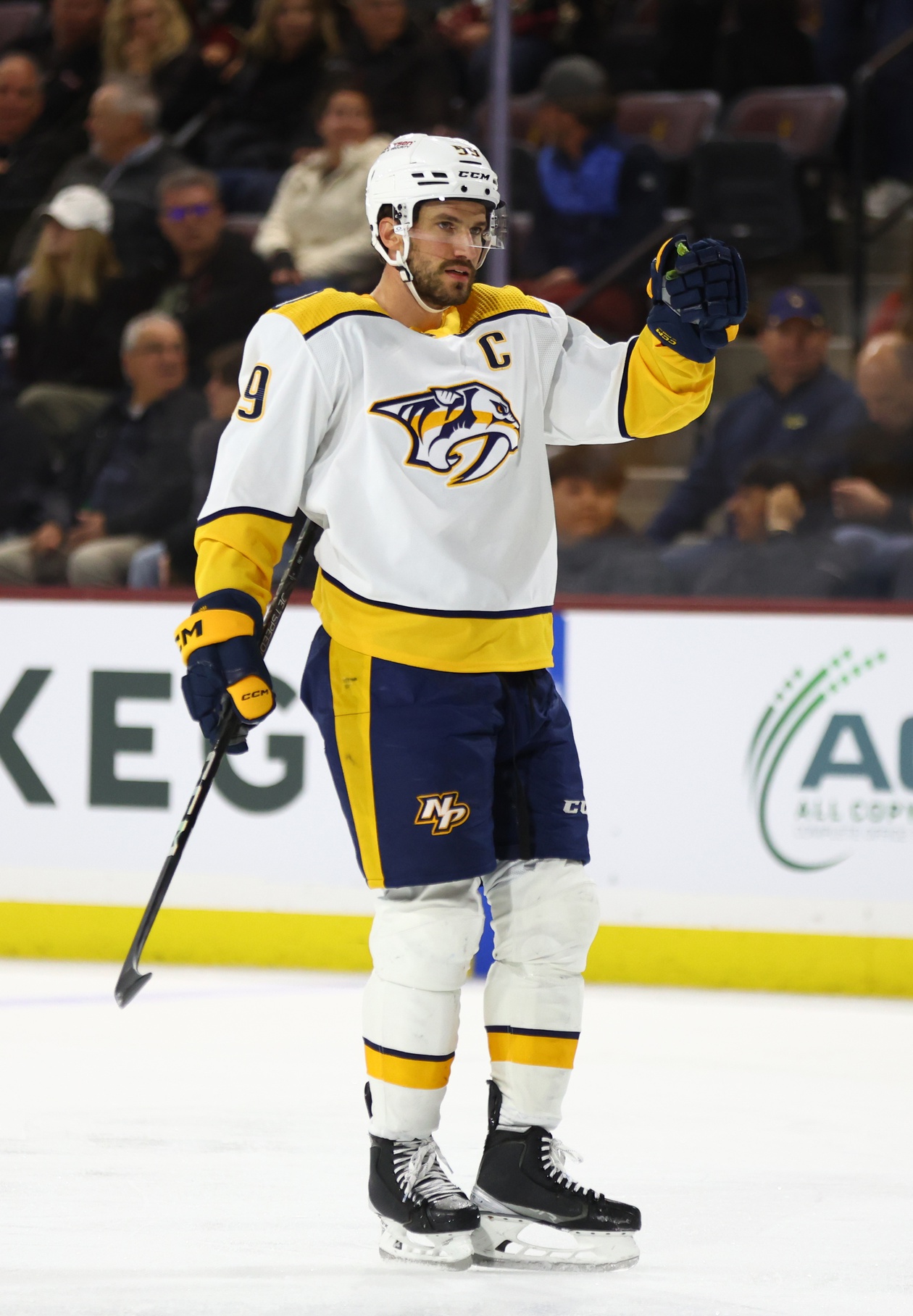 When healthy, Josi remains a legitimate all-situations number one defenseman. And this price tag for that type of role is a team-friendly one. However, Josi missed a big chunk of last season with what was eventually labelled as Postural Tachycardia Syndrome and while the team announced that he is recovering well and should be ready to start this season, it’s something that doesn’t have a cure, only treatments. Now 35, a decline in performance should be coming at some point soon and there could be some lingering concern from his diagnosis. With that in mind, it wouldn’t be surprising to see the team try to manage Josi’s minutes a bit more moving forward, perhaps not having him in that high-end number one role.
Salary Cap Deep Dive: Minnesota Wild
Navigating the salary cap is one of the most important tasks for a front office. Teams that can avoid total cap chaos by walking the tightrope of inking players to deals that match their value (or compensate for future value without breaking the bank) remain successful. Those who don’t often see struggles and front office changes.
PHR will look at every NHL team and give a thorough look at their cap situation for the 2025-26 season. This will focus more on players who are regulars on the roster versus those who may find themselves shuttling between the AHL and NHL. All cap figures are courtesy of PuckPedia. We’re currently covering the Central Division, next up are the Wild.
Minnesota Wild
Current Cap Hit: $91,088,165 (below the $95.5MM Upper Limit)
Entry-Level Contracts
D Zeev Buium (two years, $966.5K)
D David Jiricek (one year, $918.3K)
F Liam Ohgren (two years, $886.7K)
F Danila Yurov (three years, $950K)
Potential Bonuses
Buium: $1MM
Jiricek: $1MM
Ohgren: $500K
Yurov: $2MM
Total: $4.5MM
Yurov is coming off a bit of a tough year in the KHL after a breakout 49-point effort in 2023-24 but he’s still expected to come in and play a regular role with Minnesota right away. His $1MM in ‘B’ bonuses are unlikely while he’ll need to play regularly in the top six if he is going to have a shot at his $250K ‘A’ bonuses, of which there are four of them. Ohgren’s first season in North America didn’t go quite as well as the Wild had hoped. He was a solid scorer with AHL Iowa but didn’t fare particularly well with the big club. Projected as more of a depth player this season, his ‘A’ bonuses seem unlikely while he’d be trending toward a bridge deal if he winds up in that limited role this year.
Buium was a late-season addition, getting into four playoff games where he held his own. Without a ton of firepower on the back end, he should be able to play an important role this season, including seeing some action on the power play. Reaching a couple of his ‘A’ bonuses should be doable while if things go as planned, he could be the type of player that they want to sign long-term quickly. Jiricek, on the other hand, feels likely for a bridge as well. He has yet to establish himself as a full-time NHL player and while he should get there this year, that won’t be enough to land a long-term pact. If he can lock down a regular third-pairing spot, he could potentially double his current price tag although his bonuses are unlikely to be hit.
Signed Through 2025-26, Non-Entry-Level
D Zach Bogosian ($1.25MM, UFA)
G Filip Gustavsson ($3.75MM, UFA)
F Marcus Johansson ($800K, UFA)
F Kirill Kaprizov ($9MM, UFA)
F Vladimir Tarasenko ($4.75MM, UFA)
F Mats Zuccarello ($4.125MM, UFA)
The timing of the multi-year cap increase couldn’t have been any better for Kaprizov. Already poised for a multi-million-dollar raise, his market value will only go up now. Recent speculation has a possible offer landing in the $16MM per season range which feels a bit much on the high side but if it gets a deal done, expect GM Bill Guerin to do it. When healthy, he’s one of the elite wingers in the league. Tarasenko was brought in from Detroit in a cap-clearing move from the Red Wings and is coming off a rough year that only saw him record 33 points, the lowest full-season total of his career. A rebound this season could keep him in this price range but if he has a similar showing in 2025-26, landing half of this could be tough.
Zuccarello saw his production dip last season but he still managed 54 points, a solid return on the first season of this contract. Now 38, it’d be surprising to see him land another two-year pact but if both sides are happy, he could land another one-year agreement. His next deal would be a candidate to be bonus-laden if Minnesota needs some extra flexibility next summer with an overall price checking around this one. Johansson opted to take just above the minimum to ensure he stayed with the Wild. He probably could have beaten that on the open market with something more in the $1.5MM range based on the season he had but as long as he’s content in Minnesota, they could keep him around at a price close to the minimum if he has a similar role this season.
Bogosian wasn’t quite as impactful last season as he was in his first year with the team but he still held down a steady third-pairing role while taking a regular turn on the penalty kill. This type of salary for that type of role is reasonable value but it would be surprising if he landed this much on his next deal when he’s 36. By that point, he may be better off in a seventh defender role who steps in when injuries arise.
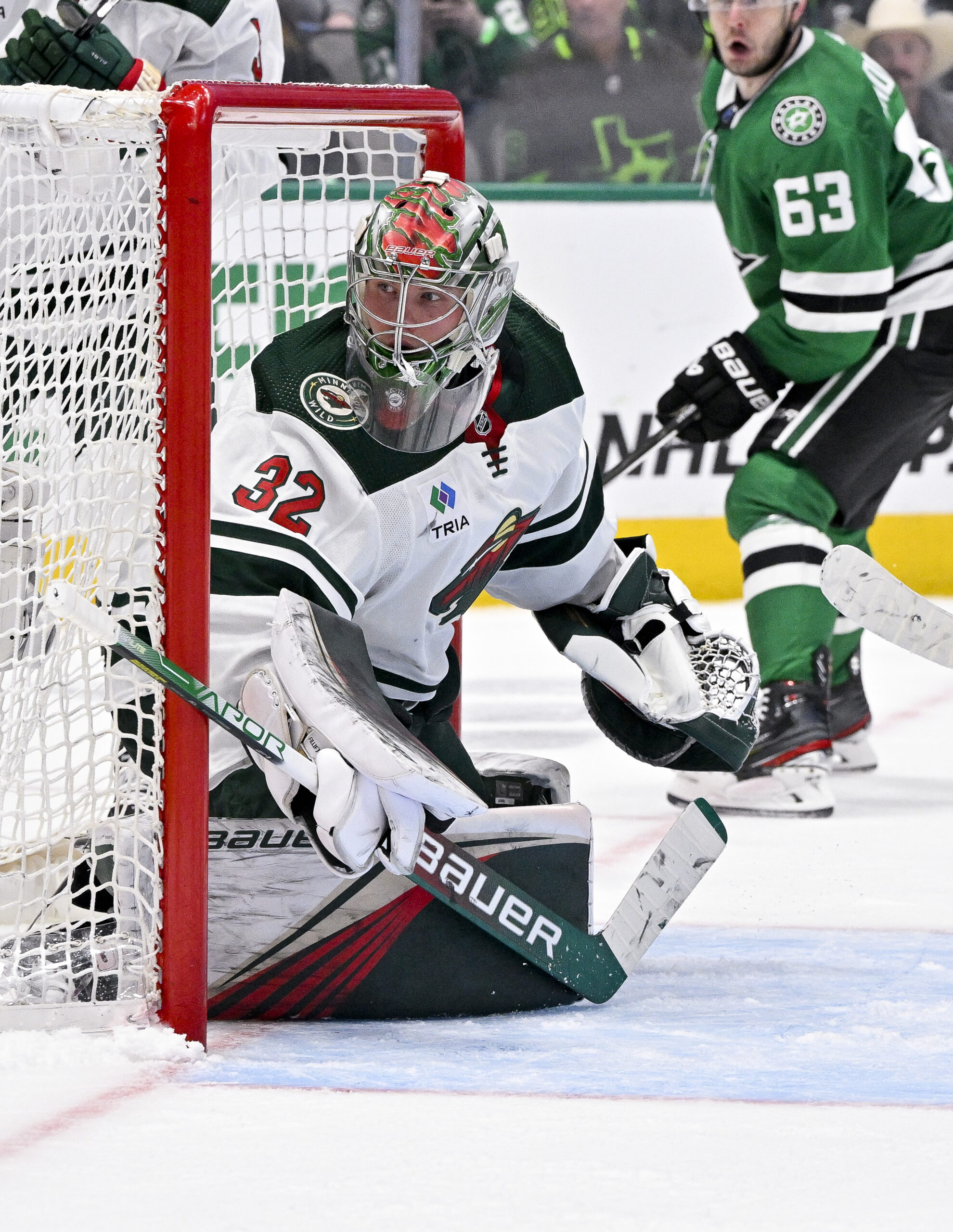 While plenty has been said about Kaprizov’s situation (and justifiably so), Gustavsson’s expiring contract also looms large. After a tough 2023-24 showing that saw him lose the starting job at times to Marc-Andre Fleury, he rebounded quite nicely, making a career-high 58 starts while finishing sixth in Vezina Trophy voting. The starting goaltender market has gotten a lot more expensive over the last 18 or so months and while he’s not in the same echelon as the starters who passed the $8MM mark recently (Linus Ullmark, Jeremy Swayman, Jake Oettinger, and Thatcher Demko), there’s a case to make that he’s in the tier below them. That could allow him to push for $7MM on a long-term agreement which would be another sizable jump on their books.
Signed Through 2026-27
F Ryan Hartman ($4MM, UFA)
D Jared Spurgeon ($7.575MM, UFA)
F Nico Sturm ($2MM, UFA)
G Jesper Wallstedt ($2.2MM, RFA)
Hartman has shown some flashes of being a legitimate top-six threat over his six seasons with the Wild which earned him this vote of confidence. However, the first year of the deal wasn’t great while he has now dealt with injury issues in four of those six years. Still, a center who has 20-goal upside when things are going well should be able to command at least a little more than this on the open market two years from now on another multi-year deal. Sturm was Minnesota’s most notable UFA signing this summer, coming over from Florida to help the penalty kill and play in the bottom six. He’ll need to get back into the 20-point range with Minnesota to avoid being cast more into the fourth-line role which would lower his market value.
Spurgeon has been a big-minute, all-situations player for a long time but it has started to catch up with him in recent years. They’ve managed his minutes a bit more lately to the point where he was fourth in ATOI among Minnesota’s blueliners. While that’s an appropriate role for his age, this contract is definitely on the expensive side for someone in that role. If there’s an extension two years from now, it could be worth closer to half this amount, including incentives.
Wallstedt’s deal was a headscratcher when it was signed and it looks even worse now. Following San Jose’s path when they signed Yaroslav Askarov early, he struggled considerably with AHL Iowa last season, posting a .879 SV%. Had they waited, they probably could have signed him for half this amount. Nonetheless, he’s still viewed as a quality prospect and if he performs to those expectations, they should still get a good return on this deal. He’ll need to cut into Gustavsson’s playing time if he wants to get more than an incremental raise in 2027.
Signed Through 2027-28
D Jonas Brodin ($6MM, UFA)
F Marcus Foligno ($4MM, UFA)
F Marco Rossi ($5MM, RFA)
F Yakov Trenin ($3.5MM, UFA)
 Few players were in as much trade speculation as Rossi was this summer. For months, it had been well known that he wanted a long-term, big-money contract while Guerin’s preference was a bridge deal. A suitable trade offer wasn’t made, nor did an offer sheet materialize and in the end, Rossi moved toward Minnesota’s preferred option. Coming off a 60-point season, this isn’t bad value for the Wild and notably, the contract is back-loaded, carrying a $6MM salary in 2027-28; that number becomes his qualifying offer when he’ll also have arbitration rights. If all goes as planned in his development, the big payday coming his way will be even higher than the contract he was originally seeking this summer.
Foligno also got an early extension a couple of years back like Hartman did. Unlike Hartman, the offensive upside isn’t there as he has only reached 30 points once in his 14-year NHL career nor does he play center. He’s still an effective third liner but this is on the high side of things for someone who is best known for his physicality. Considering he’ll be 37 when his next contract starts, he’ll probably be year-to-year on his next deals at a lower cost than this. Trenin’s deal was baffling at the time as giving someone who is best suited as a fourth liner this term and money was not necessarily the best of ideas. Clearly, they were banking on a bounce-back offensively and that didn’t come. Trenin can contribute, sure, but his value might be closer to half of this.
Brodin has been a key shutdown defender throughout his 13-year NHL career, playing big minutes and anchoring the penalty kill. Those players typically don’t get big contracts but Brodin, being one of the better players in that role, was the exception with this deal. As market values increase with the cap, this contract will hold up just fine, as long as he stays healthy. Unfortunately, that has been a consistent challenge for him lately.
Salary Cap Deep Dive: Dallas Stars
Navigating the salary cap is one of the most important tasks for a front office. Teams that can avoid total cap chaos by walking the tightrope of inking players to deals that match their value (or compensate for future value without breaking the bank) remain successful. Those who don’t often see struggles and front office changes.
PHR will look at every NHL team and give a thorough look at their cap situation for the 2025-26 season. This will focus more on players who are regulars on the roster versus those who may find themselves shuttling between the AHL and NHL. All cap figures are courtesy of PuckPedia. We’re currently covering the Central Division, next up are the Stars.
Dallas Stars
Current Cap Hit: $95,094,916 (below the $95.5MM Upper Limit)
Entry-Level Contracts
D Lian Bichsel (two years, $918K)
Potential Bonuses
Bichsel: $500K
Bichsel split time between Dallas and AHL Texas last season before being a regular for them in the playoffs, albeit with limited playing time. He should crack the roster on a full-time basis this year but still in a third-pairing role, which doesn’t bode well for reaching his bonuses. Given their longer-term cap situation which we’ll get into as we go along, it would be surprising if his next deal isn’t a short-term bridge contract, likely around the $2MM range.
Signed Through 2025-26, Non-Entry-Level
F Nathan Bastian ($775K, UFA)
F Jamie Benn ($1MM, UFA)
F Mavrik Bourque ($950K, RFA)
D Thomas Harley ($4MM, RFA)
D Nils Lundkvist ($1.25MM, UFA)
D Alexander Petrovic ($775K, UFA)
F Jason Robertson ($7.75MM, RFA)
Potential Bonuses
Benn: $3MM
Robertson’s situation has garnered plenty of attention with his name coming up in trade speculation. He’s averaging over a point per game for his career and has notched at least 79 points in four straight seasons. That’s top-line numbers and he’ll be looking for top-line money next summer which should push his cap charge well past the $10MM mark. Notably, his qualifying offer is $9.3MM with salary arbitration rights. Benn re-signed this bonus-laden deal to allow Dallas to keep cap-compliant this season, one that is team-friendly even with the bonuses. $2MM of that is games-played based while the other $1MM is based on team playoff success. If he wants to remain with the Stars beyond this season, it’s probably going to be on a similarly structured agreement.
Bourque was a speculative offer sheet candidate this summer but agreed to this deal before the draft to take that off the table. Had he tested restricted free agency, he’d have landed more than this but the one-year term sets him up for arbitration eligibility and a shot to triple this or more next summer if all goes well. Bastian was a recent signing from the Devils and has been a physical fourth liner throughout his career but his offensive production has largely been limited. That should keep him around the minimum salary barring a big jump in output.
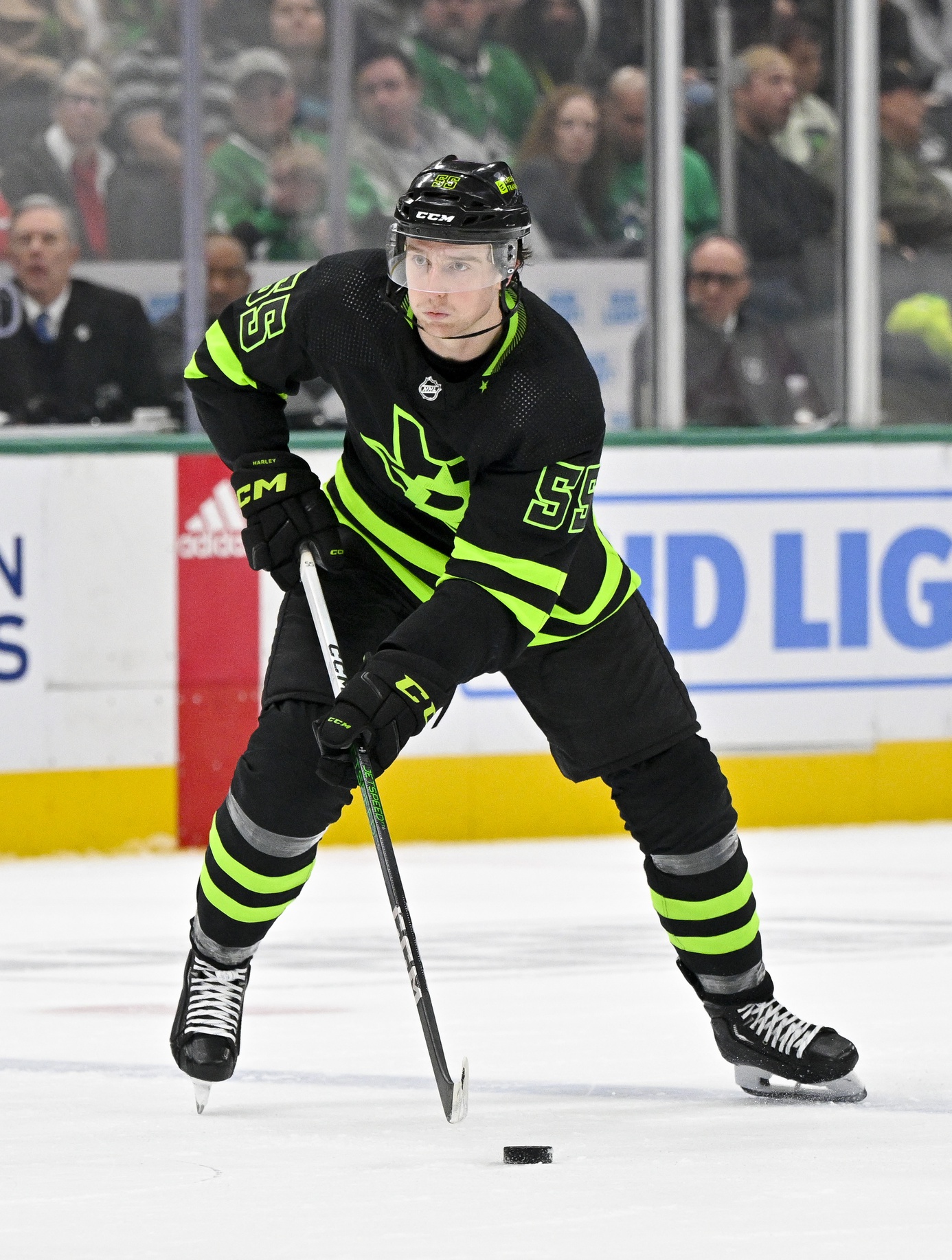 While Robertson’s case has garnered the majority of the attention for next year’s free agency, Harley’s is arguably just as significant. He showed last season that his 2023-24 breakout effort was no fluke, taking on an even bigger role and being just as productive. He is now a legitimate top-pairing player. As a result, this could be a situation where his pay increase next summer is higher than what Robertson’s is going to be. Noah Dobson’s eight-year, $9.5MM AAV contract signed this summer looms large as a viable comparable while ticking past $10MM per season is a real possibility as well. Notably, he’s not UFA-eligible until 2029 so one option that could be considered is another two-year bridge deal more in the $7MM range which could allow their reported desire to work within an internal cap to happen. That would buy them a bit of short-term flexibility at a time when cap space is going to be tight so GM while Jim Nill likely doesn’t prefer to go that way, he might have to.
Lundkvist looked to be heading toward a non-tender to duck arbitration rights for the second straight year before signing this contract for the same amount he made last season. Between some struggles and injuries, 2024-25 was largely a write-off so he’s getting near the point of either needing to take that step forward or understanding that he might not be more than the depth player he currently is. Petrovic spent most of last season in the minors before playing in most of the playoffs in Dallas which should give him a leg up for a full-time spot to start this year. Even so, his track record has only been that of a depth defender thus far and at 33, that’s unlikely to change. He should stay around the minimum salary moving forward although a full year in the NHL could flip his next deal to a one-way pact.
Signed Through 2026-27
F Oskar Back ($825K, UFA)
F Colin Blackwell ($775K, UFA)
G Casey DeSmith ($1MM, UFA)
D Ilya Lyubushkin ($3.25MM, UFA)
F Tyler Seguin ($9.85MM, UFA)
F Sam Steel ($2.1MM, UFA)
A hip issue sidelined Seguin for most of last season although he was a little over a point per game in his limited action. However, he has generally been more in the 50-point range in recent years and this price tag for that type of production isn’t great. He’ll be 35 when his next deal starts and while a multi-year pact should still be doable then, it’s going to come with a multi-million-dollar drop in AAV. Steel inked this deal back before the trade deadline in the midst of his fourth straight season with at least 20 points. Between that and his ability to kill penalties, he should be able to provide decent value on this contract but unless his point production starts to go up, he might not be able to go too much higher than this.
Back had a decent rookie year, getting into 73 games while holding his own in a bottom-six role to secure this deal at a rate that will be below the minimum salary next season. Assuming he remains a regular in this type of role for them, this should work out just fine while Back should be able to push more into the $1.25MM range on his next deal. Blackwell fit in nicely in a depth role last season, earning this new contract along the way. While he had a couple of years in the past with a seven-figure salary, he’s someone who should be staying around the minimum salary on any future contracts.
Lyubushkin was brought in to bring some physicality to the back and stabilize the bottom pairing. He was able to do that for the most part although this contract is on the higher side for that type of role which led to some speculation about his future when they needed to open up cap space. It would be surprising to see him beat this by any significant amount two years from now but another contract in this price range might be doable.
DeSmith is certainly at the lower end of the salary scale for backup goalies as he opted for stability and a winning environment over trying to get the highest price tag. He certainly had a solid first year with numbers that should have him toward the higher end of the backup scale (more in the $3.5MM territory). He’ll be 36 when this deal expires so it’s unlikely that he’ll find a contract in that range but value-wise, he should double this if he looks for top dollar next time out.
Signed Through 2027-28
F Radek Faksa ($2MM, UFA)
Faksa returns after a one-year stint in St. Louis after Dallas needed to clear his contract last summer. While he showed some offensive upside early in his career, he has settled into more of a pure checking role in recent seasons. Between his penalty killing utility and his faceoff skills, he should be able to provide a good return on this contract, even with the points remaining hard to come by. But unless his production improves, he likely won’t command much more than this moving forward.

Salary Cap Deep Dive: Colorado Avalanche
Navigating the salary cap is one of the most important tasks for a front office. Teams that can avoid total cap chaos by walking the tightrope of inking players to deals that match their value (or compensate for future value without breaking the bank) remain successful. Those who don’t often see struggles and front office changes.
PHR will look at every NHL team and give a thorough look at their cap situation for the 2025-26 season. This will focus more on players who are regulars on the roster versus those who may find themselves shuttling between the AHL and NHL. All cap figures are courtesy of PuckPedia. We’re currently covering the Central Division, next up are the Avalanche.
Colorado Avalanche
Current Cap Hit: $94,170,000 (below the $95.5MM Upper Limit)
Entry-Level Contracts
F Ivan Ivan (one year, $835K)
There was no shortage of entry-level players trotted out on the fourth line at times last season and chances are that some of them will be back and forth once again. But Ivan got into 40 games with the Avs in 2024-25 and projects to have a similar role this season. Given his limited output, he’s someone who shouldn’t be able to command much more than this on his next deal, especially if he lands a one-way pact.
Signed Through 2025-26, Non-Entry-Level
D Brent Burns ($1MM, UFA)
F Jack Drury ($1.725MM, RFA)
F Daniil Gushchin ($775K, RFA)
F Joel Kiviranta ($1.25MM, UFA)
D Sam Malinski ($1.4MM, UFA)
F Martin Necas ($6.5MM, UFA)
F Victor Olofsson ($1.575MM, UFA)
G Scott Wedgewood ($1.5MM, UFA)
Potential Bonuses
Burns: $4MM
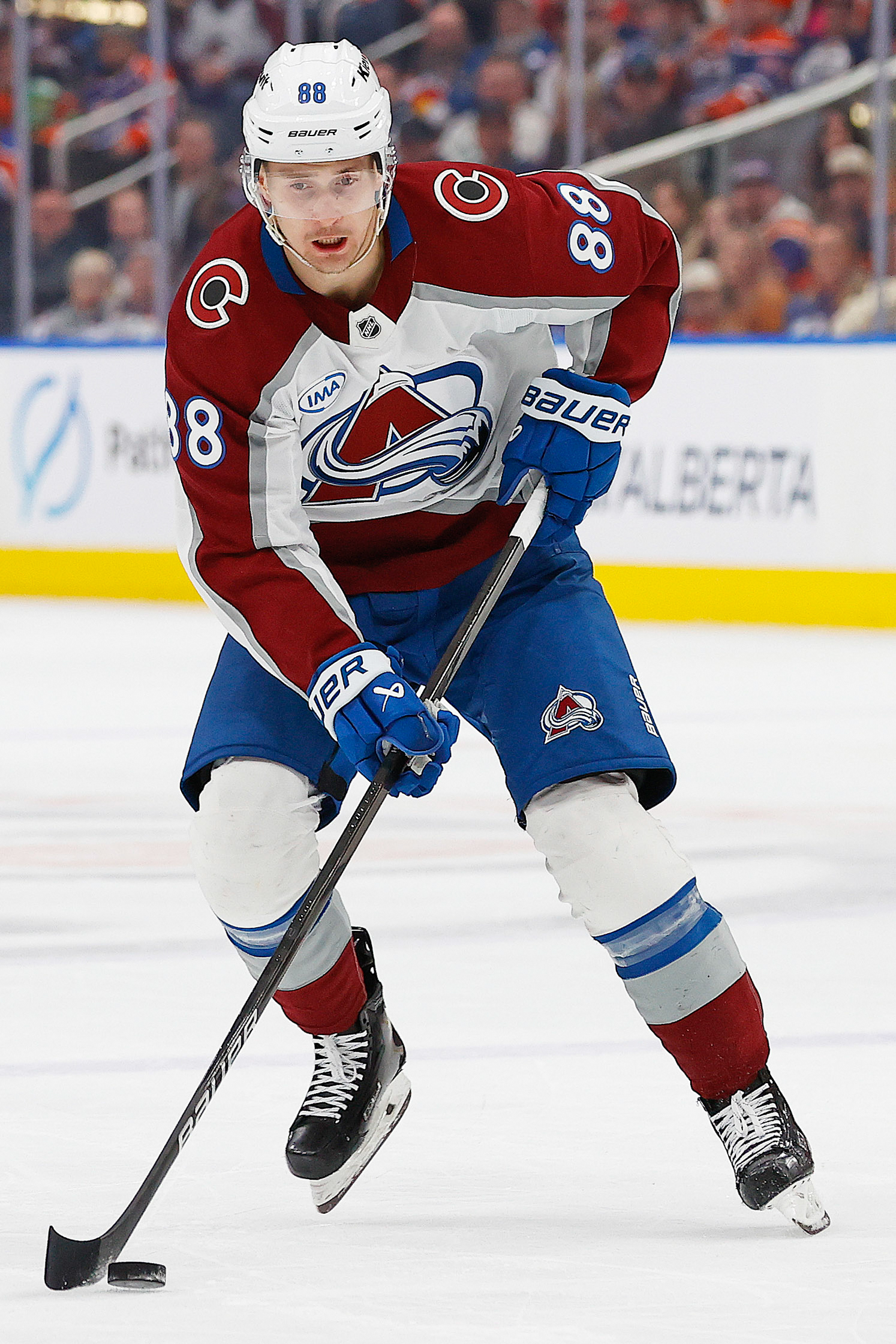 After being unable to agree to terms with Mikko Rantanen on an extension and not wanting to run the risk of losing him for nothing in free agency, GM Chris MacFarland opted to move him for Necas (and Drury). A year later, they might be in the same situation. Necas is coming off a career year and couldn’t agree to terms on a long-term pact last summer in Carolina with the belief that he wanted to test the open market. Now, that price tag has only gone higher given the year he had and the pending changes to the cap. It wouldn’t be shocking to see a long-term contract creep close to the $10MM mark now and if Colorado doesn’t want to pay that, they might have to look into moving him during the season.
Drury wasn’t as impactful of an acquisition as Necas but he certainly gave them some needed extra depth down the middle. He wasn’t able to repeat his 2023-24 performance offensively, however, which could limit his earnings upside. His qualifying offer checks in at $1.675MM with arbitration rights and while he should be able to beat that on another short-term deal, it won’t be a significant increase barring a breakout year. Olofsson had a decent season with Vegas in a supporting role and should have a similar type of role this season. He has had to settle for one-year deals in his first two trips through unrestricted free agency. Barring an uptick in production, he’ll either stay on that path or have to settle for a multi-year pact at a lower price tag than the $4.75MM he was making at the end of his time with Buffalo.
Kiviranta had a career year last season, notching 16 goals. By comparison, his previous personal best in points was 11. Not surprisingly, teams weren’t willing to pay him much more than his usual contract, being unconvinced that this improvement is repeatable. If he can match that this season, he might be able to land closer to $2MM. If he goes back to normal, he’ll be back in league minimum territory for 2026-27. Gushchin is one of many players who will be fighting for a back-of-the-lineup spot but given his production in the minors last year with AHL San Jose and the fact he’s now waiver-eligible, he might have a small leg up on the competition for a spot. Given his limited NHL opportunities so far and the likelihood of limited playing time given how Jared Bednar deploys his fourth line, Gushchin should stay around the minimum salary for next season even if he locks down a roster spot.
Burns comes over from Carolina in a deal that was set up to work within Colorado’s limited cap flexibility. Of the $4MM in bonuses, he’ll each $3MM with his tenth game of the season while the other million will be harder to reach (70 GP with over 23 minutes per contest). While he’s 40, he has shown himself to be capable of still playing in the top four which should make his base salary quite a bargain; they’ll be paying off the bonuses next season though. This type of contract structure could come his way again if he plays beyond this season. Malinski held his own in his first taste of full-time NHL action last season on the third pairing. If he has that same role this year, he should push past the $2MM mark if he remains as effective as he was in 2024-25.
Wedgewood signed this contract with Nashville last summer but he wasn’t there for long, being moved to Colorado not even two months into the season. He thrived in limited action with the Avs and while that probably isn’t repeatable, he’s establishing himself as a late-bloomer in terms of being a legitimate backup option. That should be enough to push him past $2MM per season on his next deal if he can give them even an adequate level of goaltending this year.
Signed Through 2026-27
F Ross Colton ($4MM, UFA)
D Samuel Girard ($5MM, UFA)
F Artturi Lehkonen ($4.5MM, UFA)
D Cale Makar ($9MM, UFA)
D Keaton Middleton ($775K, UFA)
Lehkonen has found another level offensively since being acquired from Montreal while still being a strong defensive player. Now producing as a top-six forward (and playing top-line minutes), his price tag should shoot up on his next deal. Given his quality of linemates though (a quality that few teams can match), that could be a limiter on a new contract, especially if he makes it to the open market. If Colorado re-signs him, a cap charge starting with a six should be doable. Colton wasn’t able to sustain the hot start he had last season but stayed within a similar goal and point-per-game range as he had the previous three years. At this point, that starts to become the trend, not the outlier. He didn’t play much at center last season but his ability to do so will also be a boost to his value. As long as he stays around the half-point-per-game range, Colton should be able to land closer to $5MM on his next contract knowing the demand that will be out there for help down the middle.
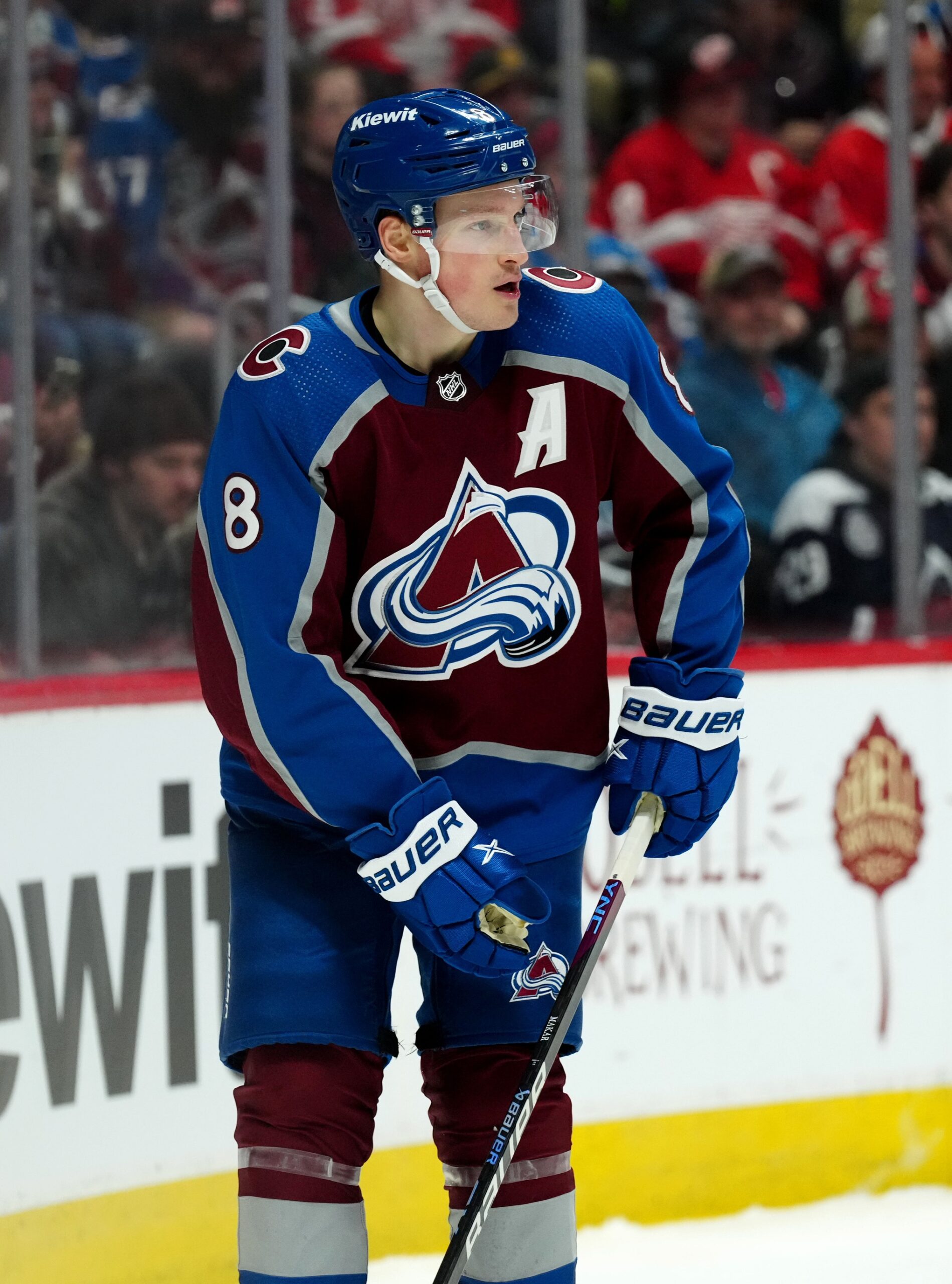 It’s hard for a $9MM contract to be a bargain but Makar more than fits the bill. At a time when older top blueliners landed $11MM or more several years ago, Makar has outproduced them since then and has a couple of Norris Trophies under his belt, putting his contract several million below market value already. He will be in line to sign a record-setting contract for a defenseman and while the Avs might prefer to operate on an internal cap and not have him make more than their top forward, that could be a tough sell knowing where the Upper Limit of the cap will be in 2027 (around $113.5MM). $14MM or $15MM on a max-term agreement certainly feels achievable at this point, especially as new benchmarks get set over the next couple of years.
Girard has been a steady second-pairing defender for the bulk of his eight-year career at a time when consistency is highly valued. However, given that he is one of the smallest blueliners in the NHL, his name has been speculated as a possible trade candidate for a while now. Meanwhile, with a lot of teams currently aiming for their back ends to get bigger, that could limit Girard’s earnings potential. Based on his performance, a raise past $6MM should be doable but if his market cools because of his size, that could make reaching that a challenge. Middleton is a depth defender who projects to be the seventh option more often than not. Those players tend to stay close to the minimum salary and that should be the case for him as well on his next contract.
Signed Through 2027-28
D Josh Manson ($4.5MM in 2025-26, $3.95MM in 2026-27 and 2027-28)
F Brock Nelson ($7.5MM, UFA)
Nelson didn’t exactly play great after being acquired but with the Avalanche looking to shore up a second center position that has been in flux as of late, they paid a high price to keep him from hitting the open market. Frankly, given the dearth of impact centers in this year’s class, he likely would have received this or more had he tested free agency. He’ll be 36 (nearing 37) when this deal is up and assuming his production starts to decline by then, he might be more in the $4MM to $5MM range on his next contract which could still be a multi-year pact.
Manson is still a capable physical defensive defender when healthy. But staying healthy has been an issue as he hasn’t made it to 70 games in a season since 2018-19 and that’s factored into the cost of the extension, a small pay cut. It’s on the high side for someone who should be more of a fifth option by then but if they can afford it, it’s not a bad luxury to have.
Salary Cap Deep Dive: Chicago Blackhawks
Navigating the salary cap is one of the most important tasks for a front office. Teams that can avoid total cap chaos by walking the tightrope of inking players to deals that match their value (or compensate for future value without breaking the bank) remain successful. Those who don’t often see struggles and front office changes.
PHR will look at every NHL team and give a thorough look at their cap situation for the 2025-26 season. This will focus more on players who are regulars on the roster versus those who may find themselves shuttling between the AHL and NHL. All cap figures are courtesy of PuckPedia. We’re currently covering the Central Division, first up are the Blackhawks.
Chicago Blackhawks
Current Cap Hit: $76,837,976 (below the $95.5MM Upper Limit)
Entry-Level Contracts
D Nolan Allan (one year, $825K)
F Connor Bedard (one year, $950K)
D Kevin Korchinski (one year, $918.3K)
D Artyom Levshunov (two years, $975K)
F Frank Nazar (one year, $950K)
D Sam Rinzel (two years, $941.7K)
Potential Bonuses
Bedard: $3.5MM
Korchinski: $1MM
Levshunov: $3.25MM
Nazar: $900K
Rinzel: $500K
Total: $9.15MM
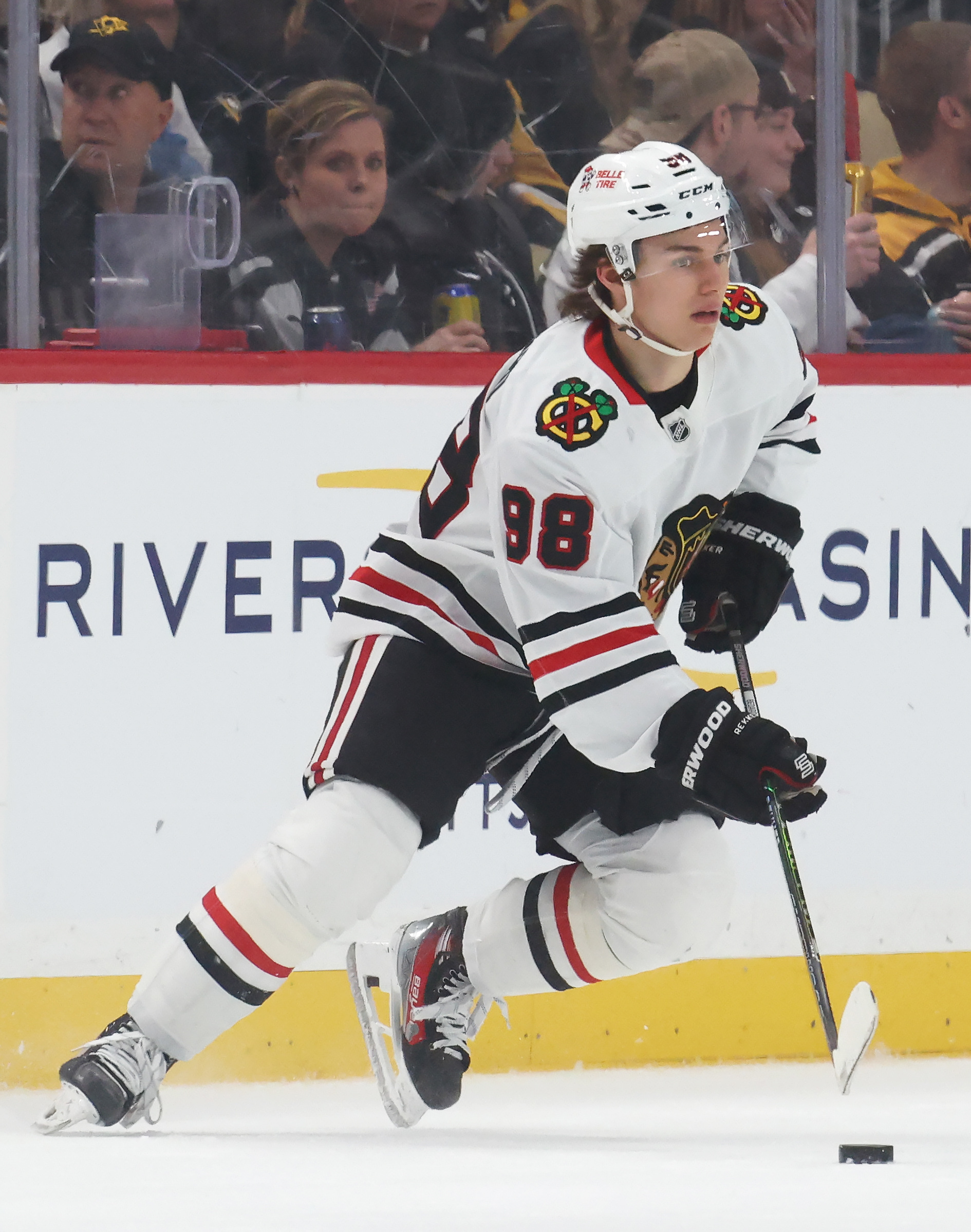 Bedard’s second contract has long been a discussion point. Frankly, it was already being speculated about before he even signed his first deal. But while he has led Chicago in scoring in each of his first two NHL seasons, he hasn’t been as dominant as some thought he might be. Still, he’s tracking to be worth $10MM or more on a long-term deal, an amount that could go up if he gets closer to the point-per-game mark this season. However, knowing there are big jumps coming to the cap for at least the next two years, this might be a case where a bridge deal makes sense, setting him up to cash in a couple of years from now when he’s ideally more established as an elite player. A bridge agreement would still likely run past the $7MM mark. He should hit his $1MM in ‘A’ bonuses while the ‘B’ ones are unlikely.
Nazar earned himself a quick recall and never looked back as he got better as the second half of the season went on. He just signed a new deal which we’ll get to later on but for here, some of his four ‘A’ bonuses should be achievable.
Levshunov played enough to officially burn the first year of his deal but not accrue a season toward UFA eligibility, meaning the Blackhawks still have seven seasons of club control. Assuming they push him to play the full NHL season this time around, he should have a chance at a couple of his ‘A’ bonuses and could have him in a position to bypass a bridge deal and sign a long-term contract. It’s a bit early to predict that one but we’ve seen post-ELC contracts for key blueliners push past $8MM in recent years. Rinzel got his feet wet at the NHL level late last season and was quite impressive, putting him in line to have a full-time spot barring a rough training camp. Like Levshunov, it’s too early to predict a deal (he’s only nine games into his pro career) but if he progresses as expected, his second contract could be pricey while his ‘A’ bonuses will be reachable.
Korchinski was a regular with Chicago in his first professional season but spent the bulk of last season with AHL Rockford. He could go back to the IceHogs but if he stays with the Blackhawks, it’s likely to be in a third-pairing role. If that happens, a short-term second contract would make sense for both sides, one that should check in below $2MM. He has four A’ bonuses in his deal but it seems unlikely he’ll reach any unless he plays a bigger role than expected and is quite productive. Allan split time between the NHL and AHL last season as well although he played twice as many NHL games as AHL ones. He had limited minutes when he was in the lineup and projects to have a similar role this season. That has him in line for a bridge contract in the $1.5MM range.
Signed Through 2025-26, Non-Entry-Level
G Laurent Brossoit ($3.3MM, UFA)
F Jason Dickinson ($4.25MM, UFA)
F Nick Foligno ($4.5MM, UFA)
G Spencer Knight ($4.5MM, RFA)
F Sam Lafferty ($2MM, UFA)
F Ilya Mikheyev ($4.038MM, UFA)*
D Connor Murphy ($4.4MM, UFA)
F Lukas Reichel ($1.2MM, RFA)
D Shea Weber ($7.857MM, UFA)
*-Vancouver is retaining an additional $712.5K on Mikheyev’s deal.
When Chicago re-signed Foligno to a short-term contract, they knew they were likely to be paying a bit of a premium for him. But he wound up playing a fair-sized role while being reasonably productive. He seems like a candidate to be moved by the trade deadline and if he wants to take one last chance at a Stanley Cup when he’s nearing the age of 39, it will need to be a much cheaper deal although some of that can be recovered with some reasonably achievable bonuses. Dickinson was kept at a similar premium and after a couple of decent seasons, last year was a step in the wrong direction as he dealt with injuries while his output was closer to the other years in his career. If he remains that type of player next season, his next deal might be closer to half of this amount.
It wasn’t always pretty for Mikheyev last season but he did put up a 20-goal performance and took a regular turn on the penalty kill, a reasonable showing for someone acquired as a cap dump. It would be surprising to see him beat his current price tag next year but a multi-year agreement in the $3.5MM range wouldn’t be shocking. Lafferty had a particularly rough season with Buffalo last year and a repeat of that performance could have him in PTO territory next summer. Assuming he goes back to the level of previous seasons, a small dip in pay would be more realistic. Reichel seems to be tracking in the wrong direction as his ice time dropped to under 12 minutes a night last season with middling offensive numbers. With him not being UFA-eligible until 2029, another two-year bridge deal might be coming his way, one that would likely check in below $2MM per season if this season is similar to last.
Weber is with his fourth different organization since it was determined that his playing days were over back in 2021. He’s LTIR-eligible but with how far Chicago is below the cap, they shouldn’t need to put him on there. He’ll quietly come off the books next year and that will be that.
Knight was the centerpiece of the Seth Jones trade back around the trade deadline. For a player who was touted as a future starter at the time he was drafted, he has less than 100 NHL appearances over parts of six seasons. Still, he showed last season that he could still be on that trajectory. He isn’t UFA-eligible until 2028 so another short-term deal is possible, one that should check in a little above his current price tag. Meanwhile, a long-term agreement likely pushes past $6MM per season. Brossoit didn’t play at all last season due to a knee injury. Assuming he’s cleared for this year, he might have to start in the minors which wouldn’t bode well for his future earnings. But if he’s able to stay healthy in the minors, he could still surpass the $1MM mark on a one-year deal next summer. If he’s up in the NHL and fares well, something a little less than this might be doable.
Signed Through 2026-27
F Andre Burakovsky ($5.5MM, UFA)
D Louis Crevier ($900K, RFA)
F Landon Slaggert ($900K, RFA)
G Arvid Soderblom ($2.75MM, UFA)
F Teuvo Teravainen ($5.4MM, UFA)
Burakovsky was acquired from Seattle in a cap-clearing move this summer. He isn’t the 61-point forward he was a few years ago with Colorado but they’ll be counting on him to be a floor-raiser in the middle six. That’s a fair bit of money for someone in that role but they’re clearly comfortable paying it. Teravainen was brought in to be a floor-raiser himself last summer and was one of the team’s top point-getters. They have to be pleased with how the first year went and if Teravainen can stay around the same point total, he could probably land another three-year pact in this price range. Slaggert has been up and down since turning pro but the one-way nature suggests he might be eyed as a regular in Chicago this season, albeit in a limited role. If he can stick as even a fourth liner, arbitration eligibility could give him a shot at doubling this in 2027.
Crevier has shown some promise in his limited time on the third pairing over the past two seasons and his size (six-foot-eight) is something that few blueliners possess. He may ultimately be someone with limited overall upside but if he can carve out a niche as a physical penalty killer and hold his own on the third pairing, he can carve out a reasonable career for himself. If he does that over the next couple of years, he could land closer to the $2.5MM mark.
Soderblom bounced back relatively well last season after a 2023-24 campaign that was nothing short of a disaster. Even though the overall numbers weren’t great (he didn’t have the greatest of teams in front of him, after all), Chicago saw fit to give him a longer look. He should have the inside track on the backup spot over Brossoit and will need to take another step forward if he wants a shot at beating this contract two years from now.
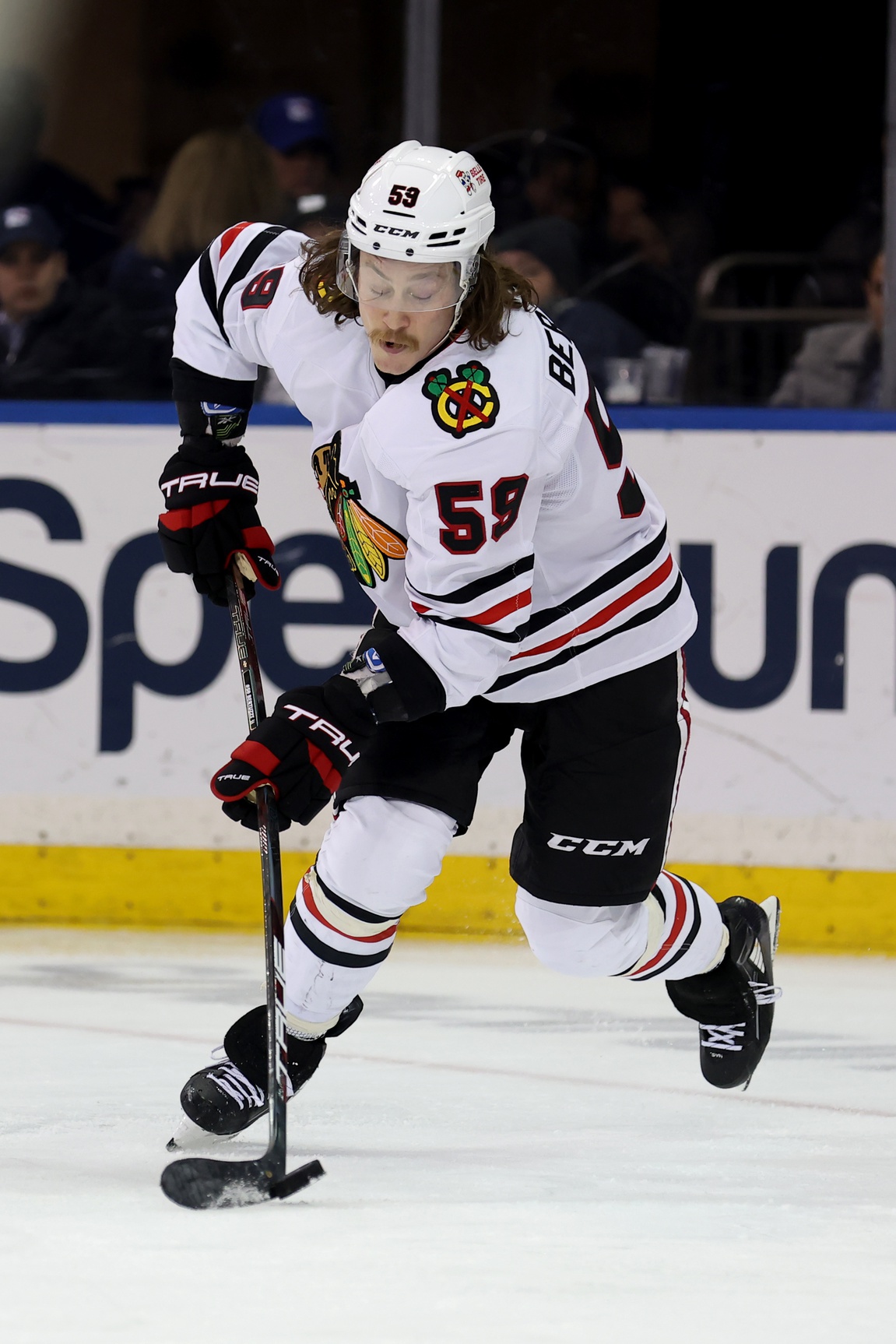
Salary Cap Deep Dive: Washington Capitals
Navigating the salary cap is one of the most important tasks for a front office. Teams that can avoid total cap chaos by walking the tightrope of inking players to deals that match their value (or compensate for future value without breaking the bank) remain successful. Those who don’t often see struggles and front office changes.
PHR will look at every NHL team and give a thorough look at their cap situation for the 2025-26 season. This will focus more on players who are regulars on the roster versus those who may find themselves shuttling between the AHL and NHL. All cap figures are courtesy of PuckPedia. We’re currently covering the Metropolitan Division, last up are the Capitals.
Washington Capitals
Current Cap Hit: $91,375,000 (below the $95.5MM Upper Limit)
Entry-Level Contracts
F Ryan Leonard (two years, $950K)
Potential Bonuses
Leonard: $1.5MM
As expected, Leonard joined the Capitals once his college season came to an end and while he was largely a regular moving forward, they limited his minutes. That probably won’t be the case this season as a middle-six role seems likely. That should give him a chance to maybe hit one or two of his ‘A’ bonuses worth $250K apiece.
Signed Through 2025-26, Non-Entry-Level
D John Carlson ($8MM, UFA)
F Brandon Duhaime ($1.85MM, UFA)
F Hendrix Lapierre ($850K, RFA)
F Connor McMichael ($2.1MM, RFA)
F Sonny Milano ($1.9MM, UFA)
F Alex Ovechkin ($9.5MM, UFA)
D Trevor van Riemsdyk ($3MM, UFA)
 After a rough first half in 2023-24, Ovechkin was better down the stretch that year and carried it over into last season where he went back over a point per game and broke Wayne Gretzky’s goal record. Even at this stage of his career (he’s 39), he still provided above-average value on his contract, something he has largely done even as the most expensive winger in NHL history in terms of total earnings. There has been plenty of speculation as to whether Ovechkin will want to play beyond the upcoming season and if he did, it wouldn’t be shocking to see the Capitals ponder offering a deal with some incentives if they wanted to try to load up for one last kick at the end. Alternatively, returning to finish his career back home in Russia is a very realistic possibility as well.
McMichael had to settle for a bridge deal last season with cap space pretty tight for a Capitals team that spent all of the year in LTIR. The good news is that he had a career year and remains a key part of their long-term plans. With arbitration rights next summer, he’s well on his way to tripling his current price tag if he winds up around the 55-point mark again. Milano missed most of last season due to injury and ran hot and cold in the first year of the deal. As a bottom-sixer counted on to produce as a secondary scorer, that’s a hard niche to maintain. Barring a 15-goal, 30-point season or somewhere thereabouts, Milano could find himself making closer to half of this on his next contract.
Duhaime’s first season with the Capitals was a successful one as he locked down a bigger role and set a new personal best in points. He’s still someone who is more of an energy player than a scorer though which won’t help his value. That said, as an effective bottom-six checker, he should be able to push past the $2MM mark on his next agreement. Lapierre didn’t do much in limited action last season and if it weren’t for the fact he’s now waiver-eligible, he’d probably be on the outside looking in at a roster spot. But waiver eligibility should give him a long leash and now it’s up to him to establish himself as an every-game regular. If he can do that, doubling this contract could be realistic.
Carlson continues to be an above-average offensive performer who can still be counted on to play big minutes. It’s telling, however, that GM Chris Patrick indicated back in the spring that there were no plans to hold offseason extension talks. He’ll be 36 when his next deal starts and while a decline is bound to happen at some point, he still could get a multi-year pact in the $6MM or so range. With what they have tied up in their back end already, perhaps that’s not something they’re willing to do just yet. As for van Riemsdyk, he has fit in well on their third pairing for the last several seasons. Being a right-shot defender, the side that’s always highly coveted, a small increase even heading into his age-35 year seems reasonable.
Signed Through 2026-27
F Anthony Beauvillier ($2.75MM, UFA)
D Declan Chisholm ($1.6MM, UFA)
F Nic Dowd ($3MM, UFA)
D Dylan McIlrath ($800K, UFA)
F Justin Sourdif ($825K, RFA)
Dowd has been a slow developer but he has worked his way from a depth player to a trusted checker who has reached double-digit goals in five straight years. That was enough to more than double his current AAV in exchange for a reasonable two-year term at 35. It would be surprising to see him beat that in 2027 unless the point production heads more toward the 40s than the mid-20s. Beauvillier rebounded a bit after a tough 2023-24 campaign and his playoff showing certainly helped his marketability as well. Barring him getting back to the 40-point threshold, it’s difficult to see his market being too much stronger two years from now. Sourdif is an interesting case with just four NHL games under his belt. The Capitals paid a fairly high price for him (a second-round pick plus a sixth) so they clearly feel he’s capable of being a full-time contributor. If he is, he’ll have arbitration rights in 2027 which would set him up nicely for his next contract.
Chisholm came over from Minnesota at the draft and quickly signed with Washington looking to avoid an arbitration hearing. Last season was basically his first as being a regular so he didn’t have a great case to make for a big raise. But he looks like a late bloomer and if he continues as a regular with the Capitals, he could move past the $2MM mark next time. McIlrath has primarily been an AHL player in recent years, leading to this price just above the minimum. He’s likely to be in a reserve role this season once again which should keep the cost low moving forward.
Signed Through 2027-28
G Charlie Lindgren ($3MM, UFA)
F Dylan Strome ($5MM, UFA)
It took a few years for Strome to establish himself but he has turned into quite the center in recent years for the Capitals, posting a point-per-game showing last season. That type of production for the price of a second liner is quite the bargain. If he can stay around this level of points over the next three seasons, his price tag could move more into the $8MM to $9MM range on his next contract.
Lindgren didn’t have the best of seasons in 2024-25 but his body of work with Washington has been that of an above-average backup. This price comes in a little below the top of the backup market so if he can bounce back a bit relative to last season, Washington should do fine here.
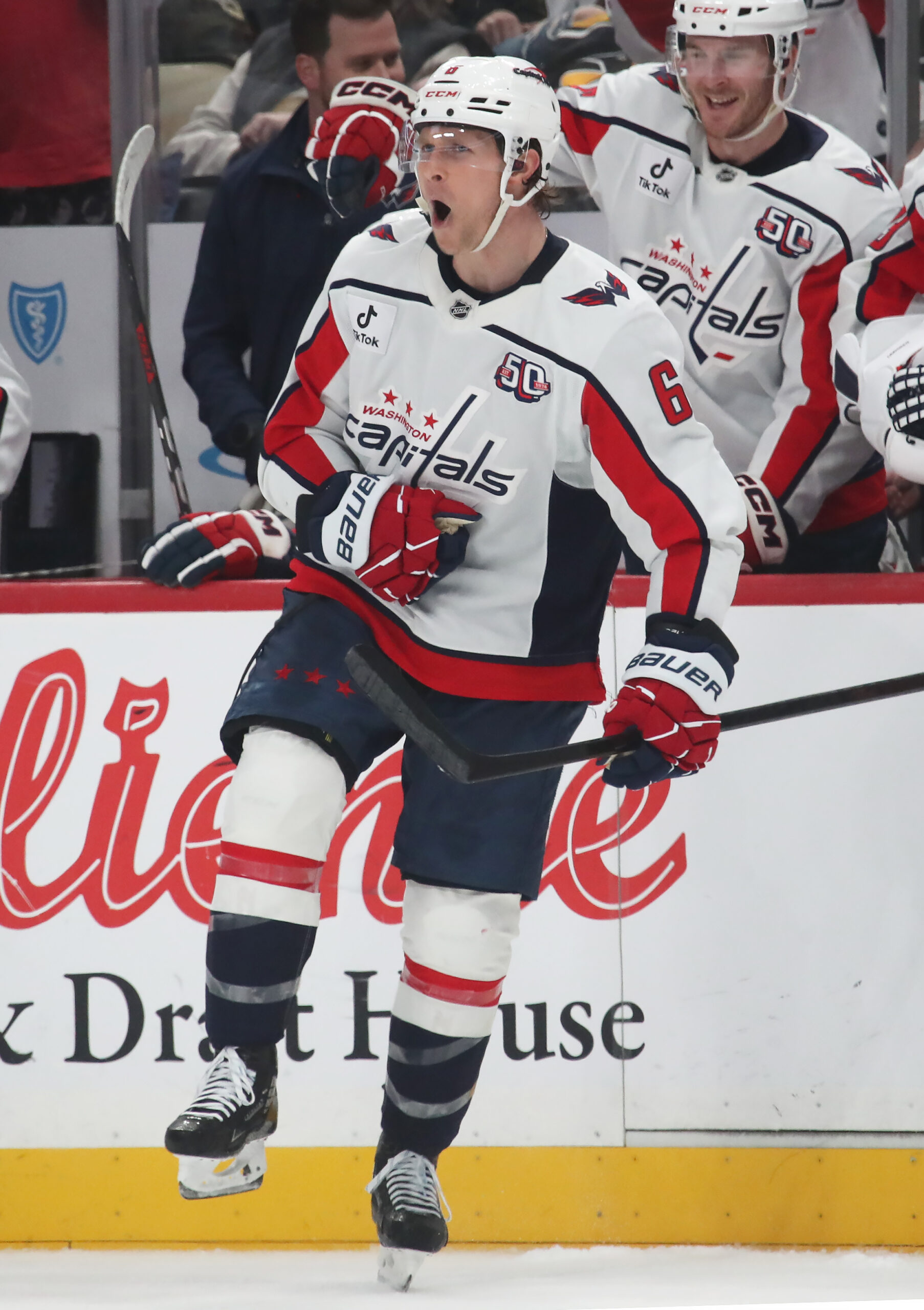
Salary Cap Deep Dive: Pittsburgh Penguins
Navigating the salary cap is one of the most important tasks for a front office. Teams that can avoid total cap chaos by walking the tightrope of inking players to deals that match their value (or compensate for future value without breaking the bank) remain successful. Those who don’t often see struggles and front office changes.
PHR will look at every NHL team and give a thorough look at their cap situation for the 2025-26 season. This will focus more on players who are regulars on the roster versus those who may find themselves shuttling between the AHL and NHL. All cap figures are courtesy of PuckPedia. We’re currently covering the Metropolitan Division, next up are the Penguins.
Pittsburgh Penguins
Current Cap Hit: $82,466,429 (below the $95.5MM Upper Limit)
Entry-Level Contracts
F Rutger McGroarty (two years, $950K)
D Owen Pickering (two years, $886.7K)
Potential Bonuses
McGroarty: $500K
Pickering: $250K
Total: $750K
The hope was that McGroarty would lock down a full-time spot last season but it didn’t happen. Instead, he spent most of the season with Wilkes-Barre/Scranton but showed well down the stretch which could give him a chance amidst a fairly deep group of depth forwards. Even if he does play regularly, he’s unlikely to hit his two ‘A’ bonuses.
Pickering might be in the mix on the back end but their offseason defensive depth additions make it likely as things stand that he starts in the minors. With 25 NHL games last season, he’s tracking towards a bridge deal, especially if he spends a good chunk of the year in the AHL.
Signed Through 2025-26, Non-Entry-Level
F Noel Acciari ($2MM, UFA)
D Alexander Alexeyev ($775K, RFA)
D Connor Clifton ($3.333MM, UFA)
F Connor Dewar ($1.1MM, UFA)
D Mathew Dumba ($3.75MM, UFA)
F Kevin Hayes ($3.571MM, UFA)*
F Danton Heinen ($2.25MM, UFA)
F Blake Lizotte ($1.85MM, UFA)
F Evgeni Malkin ($6.1MM, UFA)
F Anthony Mantha ($2.5MM, UFA)
D Ryan Shea ($900K, UFA)
G Arturs Silovs ($850K, RFA)
F Philip Tomasino ($1.75MM, RFA)
*Philadelphia is retaining an additional $3.571MM on Hayes’ deal.
Potential Bonuses
Mantha: $2MM
Let’s face it, this is quite the long list and that’s by design for GM Kyle Dubas who is setting up for maximum flexibility over the next couple of summers.
 One part of that flexibility will be the end of Malkin’s contract. A deal that took way longer than expected to hammer out, giving him four years at the age of 35 seemed to carry some risk but it has held up alright as he has notched 200 points in 232 games over that stretch although he is slowing down now. With that in mind, he might not provide a particularly strong return on this final season but overall, they did reasonably well on this contract. Malkin’s future with Pittsburgh and the NHL in general will be in question after this as the Penguins might not want to keep a player who would be 40 on a team that’s trying to rebuild while Malkin may not want to go elsewhere after spending what will be 20 years with the Penguins. If he does, a one-year pact with lots of performance bonuses will be the deal other teams will offer.
The hope was that a change of scenery for Hayes might get him going after a tough year in St. Louis but instead, his role was reduced further and his performance dipped more. It’s hard to see that changing but his track record is still good enough that he could land around $3MM or so on another short-term deal as long as this season is around how he did last year. Mantha comes over from Calgary following an injury-riddled year that caused him to miss the final 69 games due to ACL surgery. When he’s on, he can be an effective top-six piece but has done so sporadically to the point where he needed a one-year deal last summer coming off an inconsistent season. If he rebounds, he could get back to the $4MM range but that’s far from a given. His bonuses are fairly simple; he’ll receive $250K at every ten-game increment he plays from 10 to 80.
Heinen was acquired from Vancouver as part of the Marcus Pettersson trade last season and did okay with his new team. He’s capable of putting up decent production from a bottom-six role which earned him this contract last summer but he’s not far removed from having to take a PTO either. If he hovers around the 30-point mark again, he could command a similar price tag to this on the open market next summer. Acciari’s first two seasons in Pittsburgh haven’t lived up to expectations. More of an impactful player offensively in 2022-23, his production the last two years hasn’t added up to that mark. He’s still a physical fourth liner who can kill penalties and win faceoffs but barring an uptick in output this season, Acciari is likely heading for a small dip in pay.
From a point-per-game perspective, last season wasn’t bad for Lizotte but the injury bug got him again for the second straight year. While he can be a 30-point player when healthy, he needs to show he can stay in the lineup for closer to a full 82 games to have a shot at besting this deal next summer. Tomasino had some decent moments after being picked up from Nashville. It’s too early to say that he could be part of their longer-term plans which is why the one-year pact made sense for both sides. He was non-tendered to avoid arbitration rights in June before re-signing and that could be his fate again unless there’s an uptick in his production. Dewar also went through the non-tender process six weeks ago but, like Tomasino, quickly re-signed. After seeing low minutes in Toronto, he fared better down the stretch but will need to be more of a third liner than a fourth if he wants to get to another level in terms of his contract instead of going year-to-year at only a bit above the league minimum.
Dallas signed Dumba last summer, feeling that he could still be a serviceable second-pairing player. That didn’t happen. Instead, he struggled in a very limited role before being scratched entirely in the playoffs and traded away with draft compensation for taking on the final year of his deal. It’s possible that he rebounds but it’s also possible that he has a very limited role again. At this point, he’d be hard-pressed to reach half of what he’s making now. Clifton wasn’t able to establish himself as more of a third-pairing option with Buffalo in his two seasons with them before being moved in an offseason swap as well. He’s a more reliable option than Dumba at this point and his market should be okay next summer, just with a price tag closer to the $2MM mark instead of more than $3MM once again.
Shea is a success story from Group Six free agency. While not many of those players find better opportunities elsewhere, he did just that, going from never seeing NHL action in Dallas to playing in 70 games with Pittsburgh over the last two seasons, landing him two straight one-way deals. With still a limited role, it’s hard to see him going much higher than this but it’s still a nice turnaround for someone earmarked as a full-time AHLer just a couple of years ago. Alexeyev hardly played at all last season, leading to a non-tender from Washington. He’ll need to at least establish himself as more of a viable sixth option or he could be heading toward two-way offers moving forward. He’s still arbitration-eligible but unless he breaks out and has a big year, he’s a safe bet to be non-tendered again next offseason.
Silovs was brought in via a recent trade with Vancouver to take a run at a full-time NHL backup spot. He had that going into last season with the Canucks but struggled mightily. However, he had a solid year with AHL Abbotsford before playing a key role in their Calder Cup victory, making it unlikely he’d slip through waivers. If he can establish himself as being at least a suitable full-season backup, doubling this price tag with arbitration rights is doable.
Signed Through 2026-27
F Justin Brazeau ($1.5MM, UFA)
F Sidney Crosby ($8.7MM, UFA)
D Erik Karlsson ($10MM, UFA)*
F Thomas Novak ($3.5MM, UFA)
D Parker Wotherspoon ($1MM, UFA)
*-San Jose is retaining an additional $1.5MM on Karlsson’s contract.
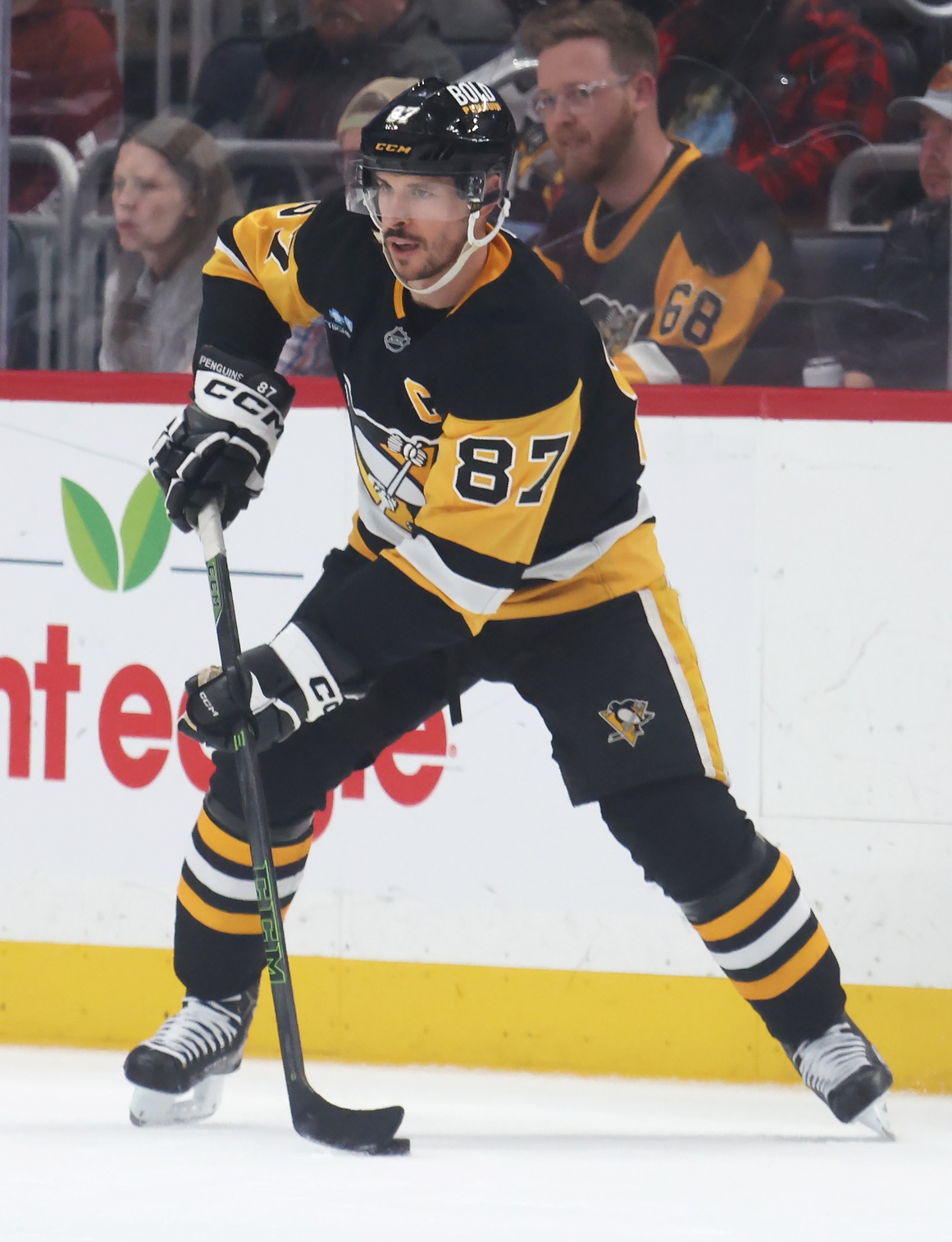 Crosby is quietly beginning a new contract with the Penguins this season although it’d be easy to miss that considering he has had the same cap hit since 2008, a price tag he has provided significant surplus value on. At 38, he might still provide plenty of value on this contract coming off a 91-point season which shows he still has plenty left in the tank. He’s been featured in plenty of trade speculation given that he’s nearing the end of his career and the Penguins aren’t close to contention but with full trade protection, Crosby will get to decide his fate. But no matter where he winds up (and staying in Pittsburgh remains the overwhelmingly likely outcome), he’s a safe bet to continue to provide positive value money-wise.
Novak was brought over near the trade deadline in a trade with Nashville. He didn’t come close to reaching the 40-point mark for the third straight year, instead barely amassing half of that despite some solid underlying numbers. If he can even get into the mid-30s offensively, this deal should hold up well given the high demand for centers. Brazeau was a full-time minor leaguer just a couple of years ago and only has one full NHL season under his belt. However, he did well enough to land this deal in free agency. If he puts up another couple of double-digit goal campaigns, he should be able to push past $2MM in 2027.
Karlsson hasn’t been able to come close to reaching 100 points again as he did in his final season in San Jose but he has remained one of the better offensive blueliners in the NHL. His defensive warts notwithstanding, he’s someone who can still handle big minutes and while his price tag is an overpayment for his current performance, it’s probably only a few million above market value at most. If he’s still an above-average offensive threat two years from now, a two-year deal even at 37 could be doable, albeit at a significantly lower price tag. Wotherspoon had his best showing last season with Boston, holding his own in 55 games with the Bruins to earn the first seven-figure deal of his career. If he can remain a capable third-pairing player over his time on this contract, doubling this price tag could be doable.
Salary Cap Deep Dive: Philadelphia Flyers
Navigating the salary cap is one of the most important tasks for a front office. Teams that can avoid total cap chaos by walking the tightrope of inking players to deals that match their value (or compensate for future value without breaking the bank) remain successful. Those who don’t often see struggles and front office changes.
PHR will look at every NHL team and give a thorough look at their cap situation for the 2025-26 season. This will focus more on players who are regulars on the roster versus those who may find themselves shuttling between the AHL and NHL. All cap figures are courtesy of PuckPedia. We’re currently covering the Metropolitan Division, next up are the Flyers.
Philadelphia Flyers
Current Cap Hit: $95,129,762 (below the $95.5MM Upper Limit)
Entry-Level Contracts
F Alex Bump (three years, $950K)
F Nikita Grebenkin (one year, $875K)
F Jett Luchanko (three years, $942.5K)
F Matvei Michkov (two years, $950K)
Potential Bonuses
Luchanko: $400K
Michkov: $3.3MM
Total: $3.7MM
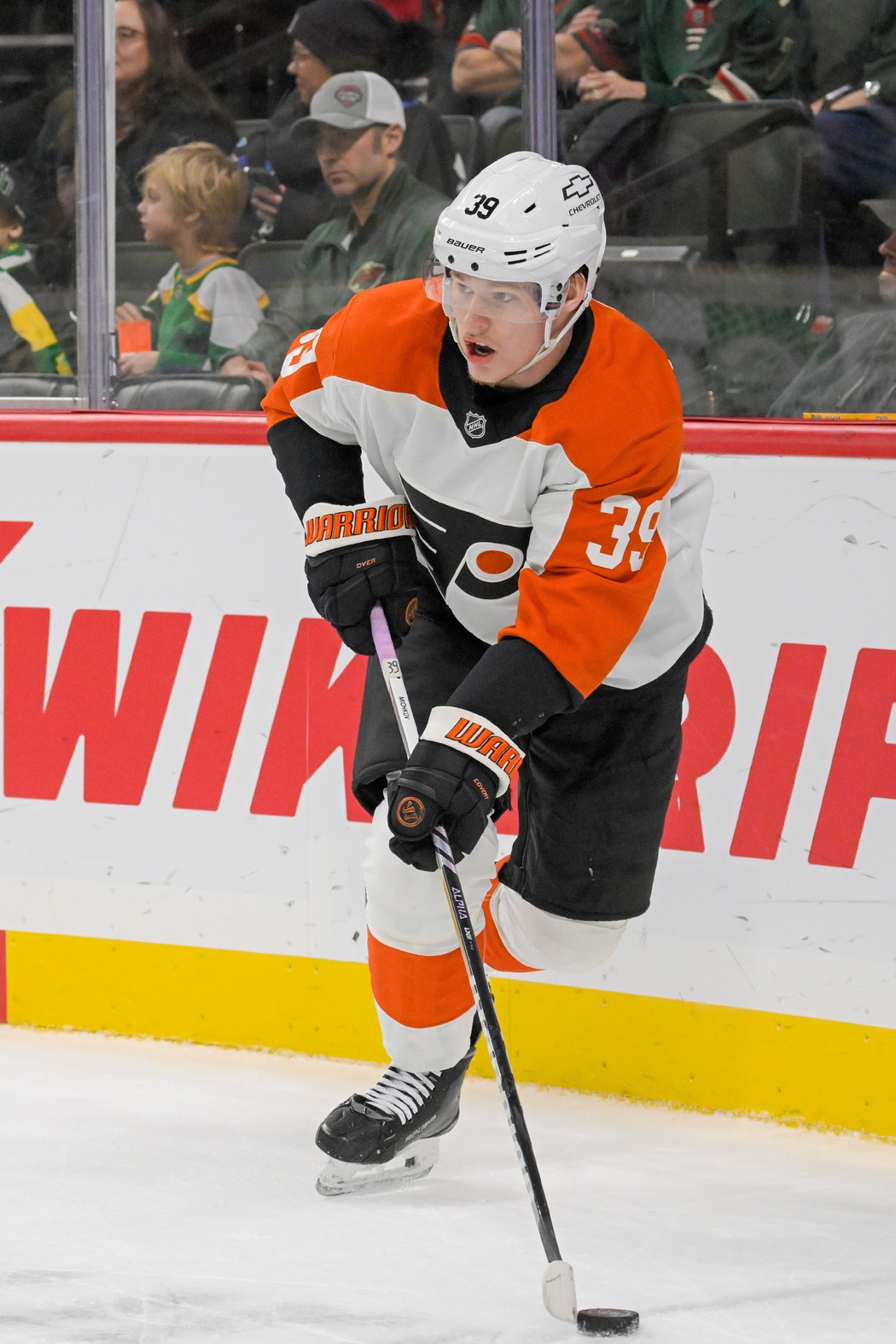 Michkov was able to come to North America two years earlier than expected and didn’t disappoint. While there were some ups and downs, that’s to be expected from a rookie while his 63 points led all rookie forwards (though he finished fourth in Calder Trophy voting). Michkov appears to be well on his way to becoming the type of franchise winger Philadelphia hoped he’d be when they drafted him in 2023 and if he lives up to the hype, a long-term contract could run the Flyers upwards of $9MM. He maxed out on his four ‘A’ bonuses worth $250K apiece last season and as long as he stays healthy, he should be able to do so again this season. The rest of the bonuses are ‘B’ ones and those are unlikely to be reached.
Luchanko surprised many by making the roster out of training camp last season and with at least one forward spot likely up for grabs this time around, he could be in the mix again this year although that nine-game threshold will loom large. That won’t apply for Bump and Grebenkin who should also be in the mix. Luchanko (technically) and Bump haven’t started their contracts yet so it’d be foolhardy to project their next ones while Grebenkin is likely heading for a bridge deal. A one-way pact that keeps the cap hit a little lower – somewhere a little above what he’s making now – would make sense.
Signed Through 2025-26, Non-Entry-Level
F Rodrigo Abols ($800K, UFA)
F Bobby Brink ($1.5MM, RFA)
F Nicolas Deslauriers ($1.75MM, UFA)
D Jamie Drysdale ($2.3MM, RFA)
F Christian Dvorak ($5.4MM, UFA)
G Samuel Ersson ($1.45MM, RFA)
G Ivan Fedotov ($3.275MM, UFA)
D Dennis Gilbert ($775K, UFA)
D Noah Juulsen ($900K, UFA)
D Egor Zamula ($1.55MM, RFA)
F Trevor Zegras ($5.75MM, RFA)
The Ducks decided to pull the plug on Zegras, allowing Philadelphia to step in with an offer that many would qualify as underwhelming but it was enough to get him. He is coming off another injury-riddled season while producing at a 46-point pace, well below the two seasons of 60-plus points he has under his belt from earlier in his career. That, coupled with a high-priced bridge deal, hurt his value. Owed $5.75MM for a qualifying offer with arbitration rights, another season like his last two will make him a non-tender candidate or a club-elected arbitration candidate where they could offer a 15% cut in pay. Dvorak comes over from Montreal in one of the bigger overpayments of the summer for a player who has yet to reach 40 points in his career. However, getting him just on a one-year deal as a bridge veteran required the overpayment. If he can play at a similar level as last season, a multi-year pact in the $4MM range shouldn’t be out of reach if he opts not to do another above-market one-year agreement.
Deslauriers played quite sparingly last season and when he was in the lineup, playing time was rather hard to come by. He was an every-game player when he first joined Philadelphia but that’s no longer the case. Enforcers can still generate some open-market interest but he should check in closer to the minimum salary next summer. Year one of Brink’s bridge deal went quite nicely as he upped his production to 41 points. Assuming he stays around that number, he’ll have a chance at doubling his current price tag with arbitration rights. Abols got his first taste of NHL action last season and the Flyers saw fit to hand him a small raise on a one-way deal, suggesting that they view him as a roster regular this year. At 29, it’s a bit late for a breakout year but if he can grab a full-time spot and have some success, getting a seven-figure pact next summer might be achievable.
Drysdale managed to stay healthier last season compared to the previous two seasons but staying in the lineup on an every-game basis continues to be a challenge. He still has three more RFA years left which presents an opportunity for effectively a second bridge deal next summer. If that happens, he could land in the $3.5MM per season range with arbitration rights. Alternatively, if the sides want to work out a longer-term agreement, it might take closer to $6MM per year on the AAV to get that done. Barring a breakout year, another short-term deal might make the most sense for both sides.
Juulsen came over in free agency this summer after spending the last four seasons in Vancouver. He has largely filled the seventh spot over that span and is likely to have a similar role with the Flyers, ensuring that he’ll stay relatively close to the minimum next summer as well. Gilbert was also brought in via free agency after splitting last season between Buffalo and Ottawa. Like Juulsen, his role has largely been limited at this stage of his career so unless he can establish himself as a full-time regular, he should be staying in this price range as well.
At the time Ersson signed his contract, it seemed a little strange with it being a bridge deal that came a year early. But since then, he has become their undisputed starter. He hasn’t necessarily thrived in that role but he’s gaining enough experience to put together a decent case as he becomes arbitration-eligible next summer. It would be surprising to see GM Daniel Briere hand him a long-term deal but a short-term pact with a price tag at more than double his $1.6MM qualifying offer is realistic. Fedotov quickly signed this deal soon after coming over from Russia, an agreement that seemed to be in place when he first came to North America. Unfortunately, it hasn’t worked out. He struggled in his first full NHL campaign as a backup and it’s quite possible that he’s waived in training camp and sent to the minors where his cap hit would drop to $2.125MM if he clears. Given his previous track record, there might be a team or two who wants to give him a look next summer on a cheaper deal but it would likely fall closer to the $1MM mark.
Signed Through 2026-27
D Ryan Ellis ($6.25MM, UFA)
F Tyson Foerster ($3.75MM, RFA)
F Garnet Hathaway ($2.4MM, UFA)
G Daniel Vladar ($3.35MM, UFA)
Foerster has reached the 20-goal mark in his first two full NHL seasons and finished one behind Michkov for the team lead in that department last season. But the Flyers elected to kick the can down the road on a long-term pact, working out this bridge deal that gives him a $4MM qualifying offer and arbitration rights at the end of it. If he stays on this trajectory, he could land closer to $7MM on his next deal. Hathaway got a small raise to sign an early extension last summer. An impactful fourth liner, he ultimately might have left a bit of money on the table doing so but he stays in a spot he’s comfortable with. Given he’ll be 35 when he begins his next contract, it would be surprising to see him land more than another two-year agreement in 2027, one that should land around this price point.
Ellis hasn’t played since November 2021 due to ongoing back trouble and isn’t expected to play again. He’s LTIR-eligible but if he winds up on there, the Flyers will have to contend with a bonus carryover penalty for whatever bonuses their youngsters (like Michkov) achieve, one that would count against their 2026-27 cap. Of course, keeping him on the books in full this year limits their flexibility. Neither outcome is particularly appealing but they’ll have to decide what’s the lesser of two evils.
Vladar came over in free agency from Calgary with Briere trying to do something to shore up a goaltending position that has been a big weak spot. He showed some flashes at times with the Flames although he’s not the most proven player either, allowing the Flyers to get him at a backup-level price tag. If he can establish himself as being part of the solution, pushing past $5MM next time is feasible. If he remains more of a mid-level backup, then he’s likely to remain more in this range.
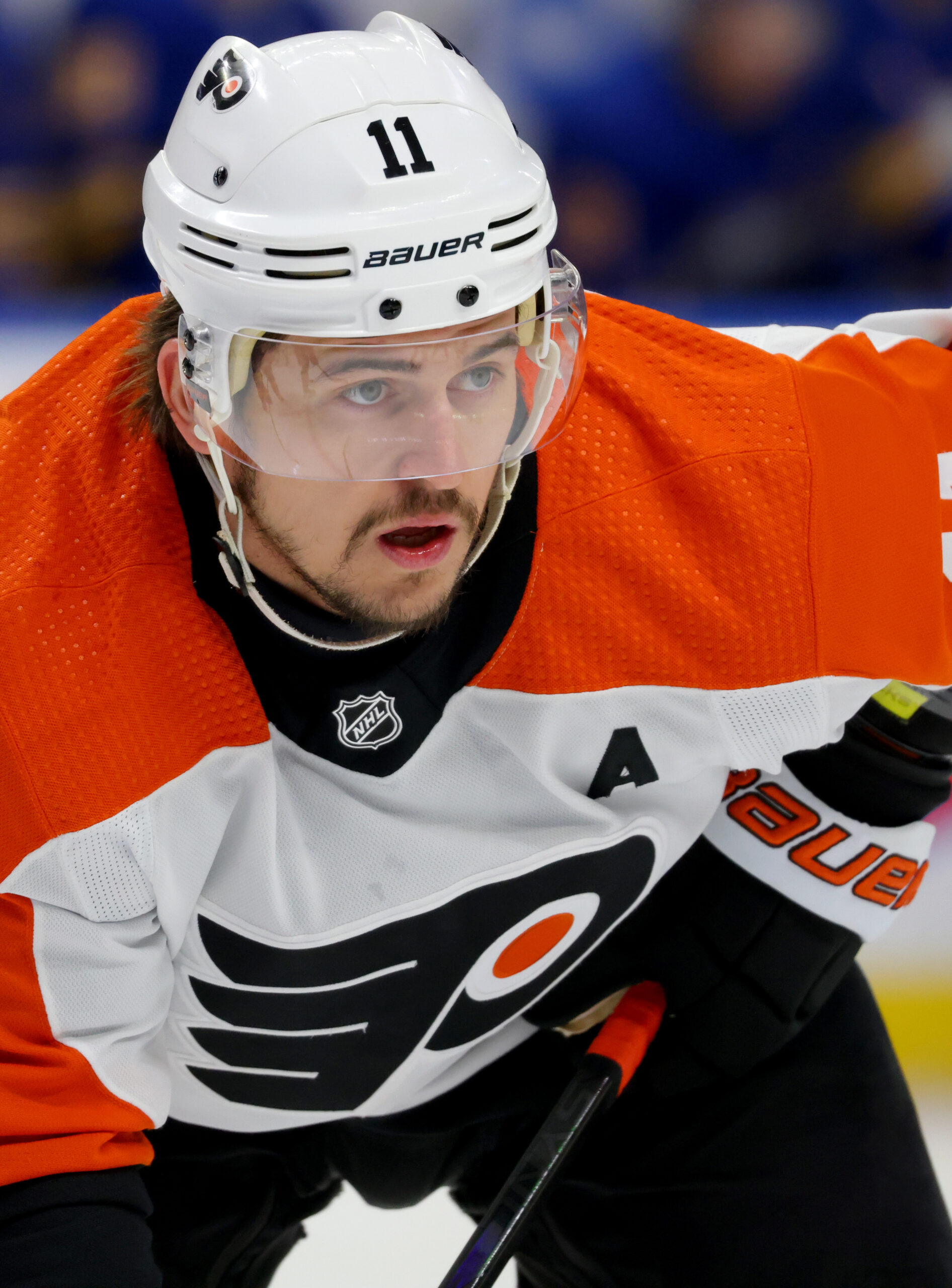
Salary Cap Deep Dive: New York Rangers
Navigating the salary cap is one of the most important tasks for a front office. Teams that can avoid total cap chaos by walking the tightrope of inking players to deals that match their value (or compensate for future value without breaking the bank) remain successful. Those who don’t often see struggles and front office changes.
PHR will look at every NHL team and give a thorough look at their cap situation for the 2025-26 season. This will focus more on players who are regulars on the roster versus those who may find themselves shuttling between the AHL and NHL. All cap figures are courtesy of PuckPedia. We’re currently covering the Metropolitan Division, next up are the Rangers.
New York Rangers
Current Cap Hit: $94,722,024 (below the $95.5MM Upper Limit)
Entry-Level Contracts
D Scott Morrow (one year, $916.7K)
Potential Bonuses
Morrow: $350K
Morrow was part of the return for K’Andre Miller earlier this summer and he will look to establish himself as a full-time NHL player with his new team after playing sparingly with the Hurricanes. Unless he can become a regular inside the top four, it’s unlikely his bonuses will be reached. A bridge deal is likely down the road with a good showing this season potentially pushing that price past the $2MM mark.
Signed Through 2025-26, Non-Entry-Level
F Jonny Brodzinski ($787.5K, UFA)
F Artemi Panarin ($11.643MM, UFA)
G Jonathan Quick ($1.55MM, UFA)
D Braden Schneider ($2.2MM, RFA)
D Carson Soucy ($3.25MM, UFA)
Potential Bonuses
Quick: $300K
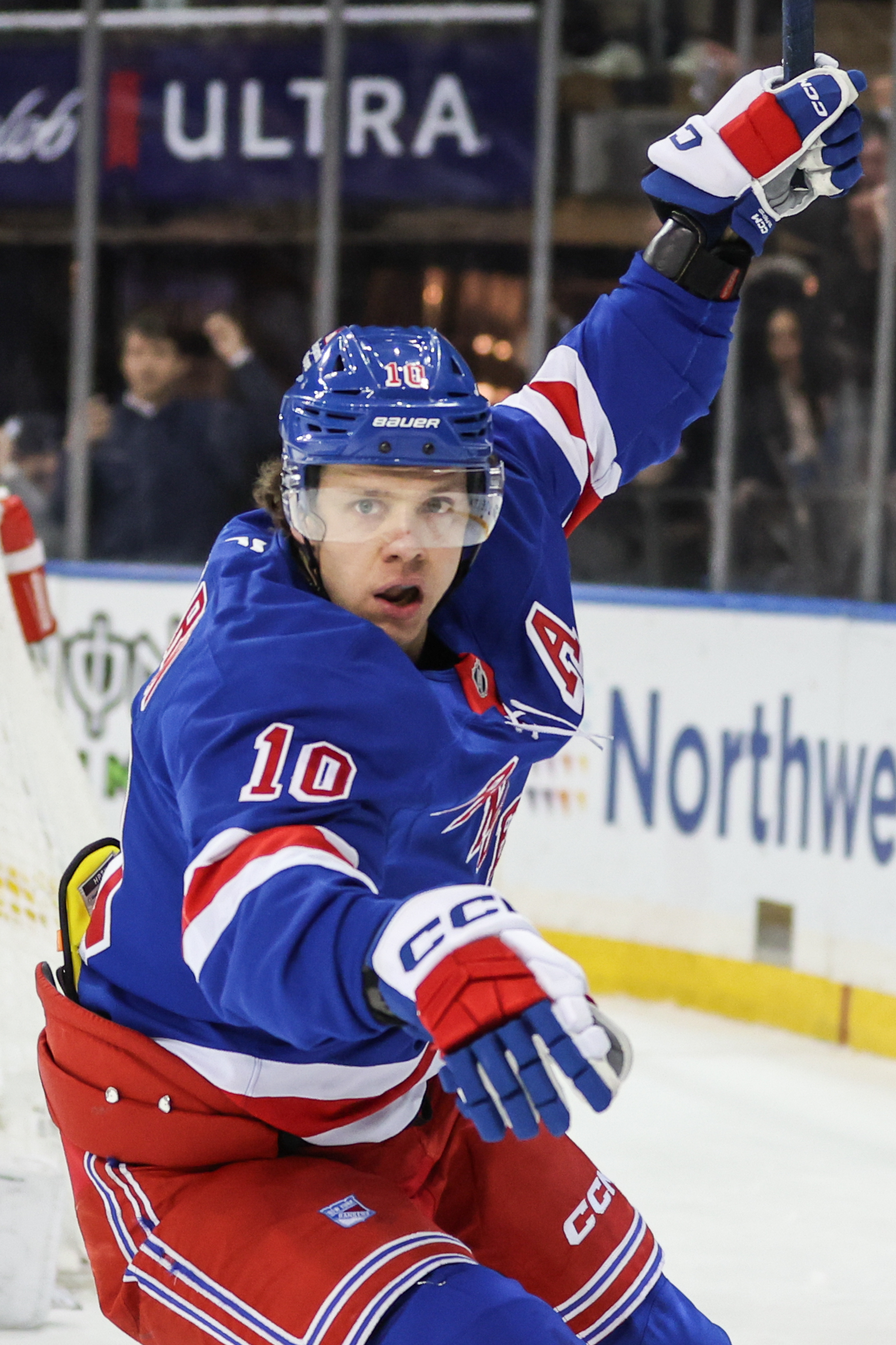 Panarin’s pending free agency is shaping up to be one of the more intriguing ones. Signed to a record-setting deal the last time he hit the open market back in 2019, that won’t be the case next summer but he should still have strong value. Panarin has produced more than a point per game in each of his six seasons with the Rangers, while he’s fourth among all NHL players in points over that stretch, behind Connor McDavid, Leon Draisaitl, and Nathan MacKinnon. Pretty good company to be in. However, he’ll also be 34 and nearly 35 when his next contract starts so his best days will soon be behind him. A more medium-term agreement (three or four years) makes sense here and it’s possible such an agreement could land around the $10MM mark per season.
Brodzinski has done well the last couple of years, establishing himself as a back-of-the-roster player with a bit of offensive skill as he’s coming off a double-digit goal season. Capable of playing center and the wing, he’s the type of lower-cost role player that could get a bit more interest next summer, giving him a chance to push past the $1MM mark for the first time in his career.
Soucy was acquired near the trade deadline in a move GM Chris Drury might already be regretting as he played limited minutes down the stretch. He’s pricey for a sixth defender, especially with the team being tight to the Upper Limit. That said, Soucy might still land close to this amount on the open market next summer. Schneider had a solid first season of his bridge contract while locking down a top-four role for the first time. He’s someone they’d probably like to sign to a longer-term deal next time out but that might run them closer to $6MM. If they can’t afford that, then a one-year pact closer to $4MM might be the short-term fix.
Quick is back for his third season with the Rangers on his third one-year deal, an agreement that keeps going up in price each year. His base salary isn’t likely to go too much higher, at least with New York as they look to keep the second-string spot affordable. His bonuses are games played and performance-based but none of them are freebies; he’ll have to play with some regularity and perform well to get some of them.
Signed Through 2026-27
F Sam Carrick ($1MM, UFA)
F William Cuylle ($3.9MM, RFA)
F Justin Dowling ($775K, UFA)
F Adam Edstrom ($975K, RFA)
F Juuso Parssinen ($1.25MM, RFA)
F Taylor Raddysh ($1.5MM, UFA)
F Matt Rempe ($975K, RFA)
D Urho Vaakanainen ($1.55MM, UFA)
With the Rangers concerned about a possible offer sheet for Cuylle, they were able to get this done quickly enough to avoid the chance of that happening. It’s on the higher end for a player who only has 66 career points under his belt but power forwards get paid early and often and this deal should hold up fine. A long-term pact with arbitration rights next time out could come close to doubling this cost. Raddysh came over in free agency from Washington where he managed a respectable 27 points in largely a limited role. He’s not that far removed from a 20-goal campaign back with Chicago either but he’s likely to fill a regular spot in the bottom six. Unless he can get back to that offensive form he briefly showed with the Blackhawks, Raddysh is likely to remain in this price range.
Parssinen’s stock has dropped after a season that saw him slide down the depth chart in Nashville and Colorado before being moved to the Rangers at the trade deadline where he still didn’t reach 10 minutes a night of playing time. On the other hand, he’s still just 24 and has some room to stabilize. He’ll be owed a $1.3MM qualifying offer with arbitration rights so he’ll need to show he can lock down a full-time role over the next two years or become a potential non-tender candidate as New York will want to keep its back-of-roster spots cheap. Carrick was a low-cost add in free agency last summer and fared pretty well in a depth role, picking up 20 points and winning over 54% of his faceoffs. If he can do that for two more years, he could set himself up for a jump closer to the $1.75MM mark.
Edstrom and Rempe both had brief stints with Hartford last season in between seeing largely fourth-line minutes with the Rangers, making bridge deals the obvious way to go. They received identical contracts that buy the team more time to assess how much upside there still is. If they progress, something in the $1.5MM after arbitration rights could be doable. Dowling comes over from New Jersey after playing in a career-high 52 NHL games last season. He’s someone whose roster spot could be a little tenuous while history has shown that he’s likely to stay at the minimum salary moving forward.
Vaakanainen came over from Anaheim as part of the Jacob Trouba trade and got an opportunity to play largely a regular role upon returning from an injury. The 2017 first-round pick has been more of a depth player throughout his career but had arbitration rights which was enough to land him a small raise to avoid the risk of going to a hearing. He’ll need to show he can be more than a depth option if he wants to get more than this moving forward.