
Trade Deadline Primer: Ottawa Senators
With the All-Star break in the rearview, the trade deadline looms large and is now just two weeks away. Where does each team stand, and what moves should they be looking to make? We continue our look around the league with the Ottawa Senators.
This season has not gone according to plan for the Sens. A popular pick to push for a playoff spot, they have instead languished for most of the year and find themselves at the basement of the Atlantic Division even after a coaching and GM change. Despite that, there is still a capable young core to try to build around so GM Steve Staios might not necessarily operate as a true seller in his first trade deadline at the helm.
Record
24-27-3, 8th in the Atlantic
Deadline Status
Seller and Light Buyer
Deadline Cap Space
$109.9K on deadline day, 1/3 retention slots used, 47/50 contracts used, per CapFriendly.
Upcoming Draft Picks
2024: BOS/DET 1st* OTT 1st^, OTT 2nd, DET 4th, OTT 4th, TB 4th, OTT 5th, OTT 6th
2025: OTT 1st^, OTT 2nd, OTT 3rd, OTT 4th, OTT 5th, OTT 6th, OTT 7th
*-Ottawa will receive the lowest of Boston and Detroit’s first-round picks as part of the Alex DeBrincat trade.
^-Ottawa must forfeit its own first-round pick in either 2024, 2025, or 2026 as punishment for failure to disclose Evgenii Dadonov’s no-trade list in a voided 2022 trade.
Trade Chips
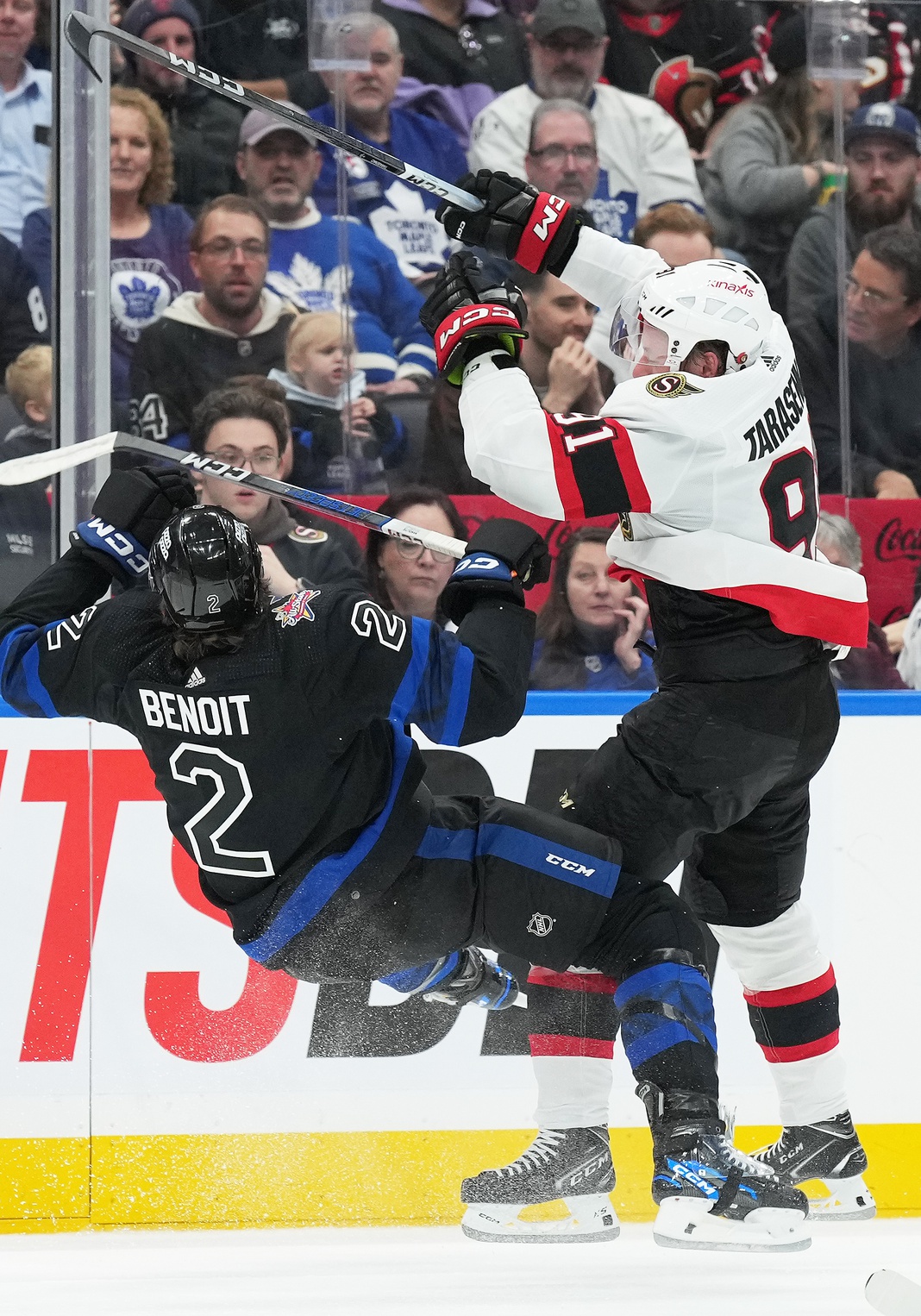 From the moment that they signed Vladimir Tarasenko to a one-year, $5MM contract, speculation began regarding a possible trade if Ottawa found itself out of the playoff race as it clearly is. After being one of the prizes of the deadline a year ago, he could be a key pickup again for someone this time around as he has 37 points in 52 games so far. However, he does have a full no-move clause so he can control where he goes and he has recently changed agents. The Sens are believed to value his off-ice contributions with their young core group so it’s not a guarantee that he moves. If he does, Ottawa will likely need to retain the maximum 50% of his contract to maximize their return, one that should get them a fairly high draft pick.
The Senators added Dominik Kubalik from Detroit as part of the DeBrincat trade but he has struggled. After putting up 20 goals and 45 points last season, he has been limited to just nine tallies and a dozen points overall. At a $2.5MM price tag, the Sens likely won’t be able to get much for him but he could be a buy-low candidate with a bit of upside for a team looking for depth.
On the non-rental side, Jakob Chychrun’s name has come up in plenty of speculation as well. The Senators have made it clear that they’re not shopping him but with the 25-year-old having another year of team control at an affordable $4.6MM, they’re going to get plenty of calls. Chychrun has 30 points so far, the second-most of his career while he’s averaging nearly 23 minutes a night. If a team strikes out on landing Calgary’s Noah Hanifin, Chychrun could very well be a fallback plan although the price to get him should be high; it’s not out of the realm of possibility that they match the return they gave up for him a year ago (a first-round pick and two second-rounders).
Another non-rental option is blueliner Erik Brannstrom. While he’s on an expiring contract, he’s controllable through restricted free agency through the 2026-27 campaign. An offensive defenseman at the lower levels, Brannstrom has failed to make a significant impact on that front, notching just 12 in 48 games so far while he’s averaging just 15:43 per game. Owed a $2MM qualifying offer, it feels like he’s trending toward non-tender territory if he stays in Ottawa so he’d be a potential buy-low candidate if a team wants to take an early look to see if he’d fit better in another system.
Other Potential Trade Chips: F Mathieu Joseph, F Mark Kastelic, F Jiri Smejkal, D Lassi Thomson
Team Needs
1) Cap Space – If Ottawa wants to try to add a piece, they need to free up cap room. If they need to call up a player for the stretch run, they need cap room. Basically, the Sens need to move out someone first to give themselves some much-needed flexibility before they can attempt to do much of anything else.
2) Veteran Leadership – This has been a long-reported goal since Staios took over for former GM Pierre Dorion. While the Senators have some veterans including Claude Giroux and Travis Hamonic, this is still a fairly young core for the most part. They believe that bringing in the right veteran piece or two could help this team take a step forward. They’re known to have interest in Chris Tanev as the type of veteran addition they want for the back end but that would make more sense for an offseason move than an in-season one. But if they can find a bottom-six forward that fits the bill, it wouldn’t be shocking to see them try to add that piece now.
Photo courtesy of USA Today Sports Images.
Trade Deadline Primer: New York Rangers
With the All-Star break in the rearview, the trade deadline looms large and is now just a month away. Where does each team stand, and what moves should they be looking to make? We continue our look around the league with the New York Rangers.
The New York Rangers have once again found themselves in a rare position atop the standings, while still having the cap space to make a splash at the Trade Deadline. They clearly enjoyed this position last season, making seven different trades between the start of February and the March 3rd deadline. That included their acquisitions of Vladimir Tarasenko, Tyler Motte, and Patrick Kane. But their building didn’t lead to much, with New York losing in the first round of the 2023 Stanley Cup Playoffs. Their busy deadline last season has limited the assets they have to work with this year, though New York are still undeniable favorites to add to their roster once again.
Record
37-16-3, 1st in the Metropolitan Division.
Deadline Status
Buyers
Deadline Cap Space
$4.383MM on deadline day, 0/3 retention slots used, 45/50 contracts used, per CapFriendly.
Upcoming Draft Picks
2024: NYR 1st, NYR 2nd, NYR 4th, NYR 5th, NYR 6th
2025: NYR 1st, DAL 4th, NYR 5th, MIN 5th, NYR 6th, NYR 7th
Trade Chips
Despite the Rangers undergoing a dramatic coaching change this summer, they’re on pace to score just two fewer goals and allow 10 more goals than they did last year. And they’re achieving that scoring in a very similar manner – through dominate performances from Artemi Panarin and his top-line co-leads being offset by productive second-liners and a strong defense. Their outlook for the playoffs is largely similar to what it was this time last season, and thus the Rangers need to be prepared to leverage draft capital as their main bargaining piece once again. First-round draft picks have been the starting point in a lot of trade rumors, as well as both the Elias Lindholm and Sean Monahan deals, and that’s certainly where teams will start talks with the Rangers, who still have their top selections in each of the upcoming three draft classes. New York will need to be ready to part with at least one of those selections at the Deadline.
If they’re steadfast on keeping first-round picks, the Rangers’ trade negotiations will have to start with their prospect pool. New York has plenty of promising defensive prospects, including hard-hitting, two-way defenders in Matthew Robertson and Brandon Scanlin. Neither player has scored much this season – boasting 19 and 14 points respectively – but they’ve each earned NHL attention thanks to their long reach and ability to shut down play in their own zone. They are each awaiting their NHL debut as well, which could entice other teams looking to bank on unrealized potential. The Rangers also boast a trio of highly-discussed forward prospects in Brett Berard, Ryder Korczak, and Adam Sýkora. Berard likely offers the most value of this group, largely thanks to his 16 goals and 31 points in 47 games as an AHL rookie this season, but the less-productive rookies Sykora and Korczak could serve as secondary options in negotiations. New York could also dangle 6’8″ forward Adam Edstrom who, unlike the aforementioned trio, has already made his NHL debut. Regardless of how they go about it, future capital will be the focus of any Rangers deal.
Team Needs
1) Prioritize Depth First – The Rangers threw off the chemistry of their top-six last season, bringing in two high-end wingers in Kane and Tarasenko that each demanded their own ice time. They should be hesitant to make that mistake again this year, with Vincent Trocheck and Alexis Lafrenière serving well as supports to the team’s stars. It’s depth scoring that will really turn the tides for the Rangers, who don’t currently have a bottom-six forward with 20 or more points. Bringing in proven talents like Scott Laughton or Adam Henrique to fill the role left open by Filip Chytil would provide New York with a much-needed punch down their lineup, while also lifting up low-scoring bottom-six pieces like Kaapo Kakko or William Cuylle. Both Henrique and Laughton also offer leadership qualities that would go a long way towards blending the lineup ahead of playoffs, rather than eating away at the ice time of top producers. Both players fit within New York’s cap space, with Henrique making $5.825MM and on an expiring contract, while Laughton makes $3MM through the end of the 2025-26 season.
2) Don’t Be Afraid To Make A Splash – A focus on adding cohesive depth shouldn’t distract the Rangers from shooting for the stars. Former-Ranger Pavel Buchnevich is reportedly available for the right return, which could be as much as two first-round picks. That’s a steep price to pay for a 28-year-old player set to become a free agent in 2025 but Buchnevich’s point-per-game scoring and familiarity with Madison Square Garden may make it worth it. There is a vacant spot on New York’s productive second-line, currently being manned by Jimmy Vesey, who has just 18 points in 54 games this season. Replacing his spot with Buchnevich would fill the Rangers’ top-six with dangerous scorers, without overcommitting to too many stars like the team did last season. It would also give the Rangers much more room to rotate different talents into their bottom-six, able to feature efficient forwards like Jonny Brodsinski or Cuylle or focus on heavy-hitting and grit through the likes of Matt Rempe and Adam Edstrom. Depth has proven to be the X-factor to countless Stanley Cup winners, and earning this degree of flexibility on top of adding a high-end scorer would add tremendous value to the Rangers lineup. Buchnevich is set to make $5.8MM through the end of next season, meaning the Rangers would likely have to part with a lineup piece in order to remain cap-compliant. Acquiring Buchnevich could also eat away at the short list of assets New York is prepared to trade. But the potential rewards of bringing in such a potent winger could be too great to ignore for a Rangers team sat on the cusp of greatness.
Photo courtesy of USA Today Sports Images.
Trade Deadline Primer: New York Islanders
With the All-Star break in the rearview, the trade deadline looms large and is now just a month away. Where does each team stand, and what moves should they be looking to make? We continue our look around the league with the New York Islanders.
The New York Islanders have already made their big splash of the new year, hiring legendary goaltender Patrick Roy to take over for Lane Lambert, who was in his second year with the team. Roy has provided energy and spunk to an Islanders team that needed a jolt. He’s also boosted the ice time of key players like Mathew Barzal and Noah Dobson, helping give the team clear leaders to follow. Unfortunately, Roy hasn’t seen the on-ice results just yet. New York is 3-3-3 under their new brass, which also features new coach Benoit Desrosiers, and has seen a dip in their scoring, averaging an even 3.00 goals-per-game under Roy, a step down from the 3.13 goals-per-game they averaged since the start of December under Lambert. This lack of improvement has kept the Islanders on the outside of the Eastern Conference playoff race, six points behind the second Wild Card, currently held onto by Detroit. The Islanders will look to bring in whatever help they can at the looming Trade Deadline but it seems the real difference-maker may have to come from within.
Record
22-18-14, 5th in the Metropolitan Division.
Deadline Status
Conservative Sellers
Deadline Cap Space
$0.0MM on deadline day, 0/3 retention slots used, 45/50 contracts used, per CapFriendly.
Upcoming Draft Picks
2024: NYI 1st, NYI 2nd, NYI 4th, NYI 5th, NYI 6th
2025: NYI 1st, NYI 2nd, NYI 3rd, NYI 4th, NYI 5th, NYI 6th, NYI 7th
Trade Chips
The Islanders are bound by the cap this Deadline, and unlikely to make any move if they can’t clear out space first. There are plenty of options for high-cap hits that they could move out, though each would likely need a hefty sweetener attached that New York might not be able to pay. Jean-Gabriel Pageau may be the most likely cap clearance. The 31-year-old centerman makes a hefty $5MM through the end of the 2025-26 season but has just 22 points and a -11 through 54 games this season to show for it. Pageau has served a proud role as a middle-six centerman for the  Islanders, and scored a commendable 13 goals and 40 points last season, but decreased production this year could make the cap space more valuable than Pageau’s role. The same could be said about newcomer Pierre Engvall, whose $3MM cap hit is slightly less daunting and whose role as a middle-six winger is slightly easier to fill. Engvall has just 17 points in 48 games this season, bringing his point totals with the Islanders up to 26 across a combined 66 games. He’s looked strong at times but may better fit on a contender looking to add depth. Teams could also be flattered by Engvall’s long-term contract, with the 27-year-old winger signed through the next seven seasons.
Unfortunately, New York doesn’t boast much future capital to make any cap clearance work. The team does have both their first and second-round picks in the next two drafts, and general manager Lou Lamoriello has shown little hesitancy in moving top picks for immediate solutions, but the asking price to move out such hefty contracts could be a little too sweet. Ruslan Iskhakov could be a strong incentive for other teams. The 23-year-old centerman currently leads the AHL’s Bridgeport Islanders in scoring with 13 goals and 35 points. It’s his second season in the AHL, with Iskhakov netting 51 points in 69 games last year. He’s an established pro, with experience in Finland’s Liiga and Germany’s DEL, where he again proved to be one of his team’s most productive players. The 2018 second-round pick has yet to receive the first call-up of his career, though he certainly seems poised to make an impact when given the chance. The prospects of what could be from such a productive, young professional could excite teams enough to take some of New York’s baggage.
Team Needs
1) Build For The Future – The season isn’t doomed for the Islanders, but it’s certainly not looking as optimistic as past years. With the team locked into so many long-term deals with veterans, it’s time they turn their attention towards the future and bank whatever draft capital or young prospects that they can. The Islanders currently have the fourth-oldest roster in the NHL, behind Pittsburgh, Washington, and Edmonton. While clearing cap space will give them the chance to bring change-makers into the NHL lineup quickly, building out their prospect pool will help New York slowly add youth back into the fold. Their best bet may be to find lucrative options, like trading for lucrative and emerging prospects like Florida seventh-round pick Jack Devine, who has 44 points in 30 NCAA games this year. The Islanders could also look to reel in some of the young targets on the open market, like Arthur Kaliyev, Philip Broberg, or Kaapo Kakko. Each 22-year-old has their own degree of uncertainty but may be able to carve out a long-term NHL role with a change of scenery. Finding options to fit the team in two or three years would be a good start to an Islanders team currently without much reinforcement.
2) A Solution On Defense – The Islanders have surprisingly struggled to keep pucks out of the net, even despite star goaltender Ilya Sorokin‘s .910 save percentage in 39 games this season. That problem has remedied itself a little bit under Patrick Roy – with New York’s average goals allowed sat at 3.22 over their last nine games, as opposed to 3.61 in Lambert’s final 23 games. But they’re still being outscored at a steady pace and rank as one of the NHL’s worst teams at mounting a comeback, with the eighth-worst win percentage when trailing by two goals. New York tried to remedy this issue earlier in the season, trading for Robert Bortuzzo, but Bortuzzo played in just 11 games with the Islanders before ending up on injured reserve. While they aren’t plagued with the long list of injured defensemen that troubled them earlier in the season, New York is still in need of a more cohesive blue line. They could find cheap ways to address this on the open market by acquiring stalwart defender Ilya Lyubushkin or Andrew Peeke. Both players carry a $2.75MM cap hit, though Lyubushkin is set to be a free agent this summer while Peeke is signed through next season. And while neither would demand a top-pairing role, they could each offer a new face to a struggling Islanders defense. The team could also seek out Flyers defender Nick Seeler, who carries a league-minimum $775K cap hit and enters free agency in the summer. Seeler could similarly help provide consistency to the bottom of New York’s defense, while likely not costing much at all. With very little wiggle room and even fewer assets, the Islanders will have to hope for a cheap deal at the Deadline if they want to make a push for the playoffs.
Photo courtesy of USA Today Sports Images.
Trade Deadline Primer: New Jersey Devils
With the All-Star break in the rear-view, the trade deadline looms large and is now less than a month away. Where does each team stand, and what moves should they be looking to make? We continue our look around the league with the New Jersey Devils.
The New Jersey Devils came into the season with expectations that their young team would contend for a Stanley Cup, however, four and half months into the regular season, the Devils have taken a step backwards and are in a battle for the final Wild Card spot in the Eastern Conference. The Devils made one of the biggest moves of last year’s deadline, acquiring forward Timo Meier from the San Jose Sharks about a week before the trade deadline. The Devils were aggressive in their pursuit of Meier and will likely need to be as aggressive this year if they want to acquire the pieces necessary to get into the playoffs and make some noise in the East. The Devils have some obvious holes in their lineup that have been exposed throughout the regular season, and while it is tough to make moves in-season in a flat cap world, the Devils have shown that they aren’t afraid to pull the trigger on a big deal to bolster their lineup.
Record
28-22-4, 4th in the Metropolitan
Deadline Status
Buyer
Deadline Cap Space
$10,412,500 on deadline day, 0/3 retention slots used, 46/50 contracts used, per CapFriendly.
Upcoming Draft Picks
2024: NJ 1st, NJ 3rd, NJ 5th, COL 5th, NJ 6th, NASH 7th
2025: NJ 1st, NJ 2nd, NJ 3rd, NJ 4th, NJ 6th, NJ 7th
Trade Chips
New Jersey will have some cap space to work with at the deadline thanks to injuries to key players. They could make a big move if they are so inclined and may choose to do so to address their major area of need. The Devils will likely look to move netminder Vitek Vanecek as part of any move to improve their goaltending and could also look to move backup Akira Schmid who has struggled this season after a strong showing last year. New Jersey Devils president of hockey operations and general manager, Tom Fitzgerald has already said he is not comfortable with the Devils goaltending and will likely improve it, which means someone will need to go the other way to open up room for a new acquisition. Vanacek holds almost no value as his -11.1 goals saved above expected is fourth worst in the NHL, and Schmid isn’t faring much better. The Devils may opt to hold onto Schmid and hope he can turn things around.
Forward Alexander Holtz is another roster player that the Devils could dangle at the deadline. The 22-year-old was the seventh overall pick in the 2020 NHL entry draft and has fared pretty well in his first full NHL season sitting third on the Devils in 5v5 points with 21 and goals with 11. As well as he’s played, he hasn’t been able to get much of a look in the Devils’ top six and may not be a fit for head coach Lindy Ruff’s style of play. Holtz could be a solid chip for the team to use to acquire help elsewhere.
Another former first-round pick that the Devils could include in a trade is forward Dawson Mercer. The 22-year-old put up solid offensive numbers in his first two NHL seasons, posting 44 goals and 54 assists in 164 games. However, this season his play has dropped a bit as a slow start has limited him to just 15 goals and 11 assists in 54 games. The native of Carbonear, Newfoundland and Labrador could be the main piece of a trade for a goaltender, as his offensive upside could entice teams who are looking for a young roster player who can contribute right away.
Other Potential Trade Chips: F Josh Filmon F Arseni Gritsyuk F Lenni Hämeenaho
Team Needs
1) A Starting Goaltender: The Devils opted not to make a move for a goaltender last summer but have regretted that decision as indicated by the comments of Devils management. The Devils were reportedly in on Calgary Flames netminder Jacob Markström and could circle back to re-engage in those talks as the deadline nears. Most of the reports on the trade indicated that the Devils plan to look elsewhere for goaltending, but to this point they haven’t found a trade to their liking. The Devils have a desperate need to address this position, and have ample assets to do so. If they come up short it could mean the difference between making the playoffs and missing them entirely.
2) Bottom Six Help: The Devils do have some talented options in their bottom six but would likely prefer not to deploy Curtis Lazar as a third-line center, which has happened on more than one occasion. A top-9 forward would allow some of the Devils’ forwards to shift down the lineup into positions that are more suitable for the skillset and allow Ruff to have more trust in rolling three or four forward lines in a regular rotation. The Devils have dealt with their fair share of injuries this season but probably didn’t envision having the likes of Chris Tierney playing as frequently as he has. Some depth up front would be an additional boost for the Devils in their pursuit of the playoffs.
Photo courtesy of USA Today Sports Images.
Trade Deadline Primer: Nashville Predators
With the All-Star break in the rearview, the trade deadline looms large and is now just a month away. Where does each team stand, and what moves should they be looking to make? We continue our look around the league with the Nashville Predators.
Transitioning out of the David Poile era at last year’s trade deadline, the Predators stole plenty of headlines, shipping out the likes of Mattias Ekholm, Tanner Jeannot, and Nino Niederreiter for a plethora of draft picks. Sporting an expectedly middle-of-the-pack roster, Nashville still holds some assets that could net some solid returns at this year’s deadline as well.
Record
28-25-2, 5th in the Central Division
Deadline Status
Conservative Sellers
Deadline Cap Space
$37.287 MM on deadline day, 2/3 retention slots used, 45/50 contracts used, per CapFriendly.
Upcoming Draft Picks
2024: NSH 1st, NSH 2nd, TB 2nd, WPG 2nd, NSH 3rd, DAL 3rd, NSH 4th, CHI 4th, EDM 4th, NSH 5th, DAL 6th
2025: NSH 1st, TB 1st*, NSH 2nd, NSH 3rd, NSH 4th, NSH 5th, NSH 6th
* A part of the trade that sent Jeannot to the Tampa Bay Lightning, Tampa Bay sent a conditional 2025 first-round selection to Nashville. If the pick falls within the top 10 of that NHL Draft, the Lightning will retain the draft selection.
Trade Chips
For this year’s playoff run, it is going to be incredibly challenging for the Predators to make any headway into the top three of the Central Division, but remain only two points back of the last wild-card spot in the Western Conference. With nine games to go until the trade deadline, the head coach turned General Manager Barry Trotz may still be indecisive when it comes to the organization’s deadline plans. 
If the team ultimately ends up in a playoff position by March 8th, it is unlikely Trotz will deal from the cupboard, as the team has placed a high priority on prospects and draft selections over the last calendar year. More than likely, even if they are competing for a playoff spot, Trotz will choose to sell on the team’s upcoming unrestricted free agents in the hopes of recouping some assets.
In an evergrowing market for goaltenders, Juuse Saros could become the prize of the deadline, but the Predators have been adamant on not only keeping their goaltender but are much more interested in discussing a contract extension. As far as rental pieces that Nashville could dangle, Thomas Novak and Alexandre Carrier have both received interest from contending teams, while defenseman Tyson Barrie was permitted to seek a trade back in early December.
Team Needs
1) Continue To Pile Up Draft Picks – At the 2023 NHL Draft in Nashville, the Predators were able to make 11 draft selections, with six of those coming in the first three rounds. Once again, the team is poised to select six more players in the first three rounds of the 2024 NHL Draft which should certainly help them build up substantial prospect depth through the system. With adequate depth at all three positions at the AHL level, Nashville is once again in a position to deal out expiring contracts without having to take on a player in return.
2) Beef Up Special Teams – If the Predators are convinced they can make some noise in the 2024 Stanley Cup playoffs, their main priority should be to make additions to both sides of the special team units. Currently, the team holds a 19.37% powerplay rate (21st in the NHL) and a 75.43% penalty-kill rate (27th in the NHL). Likely nibbling around the edges of the market if they do choose to buy, the team could look to poach Victor Olofsson from the Buffalo Sabres for powerplay help and Kevin Rooney from the Calgary Flames for a boost to the penalty kill.
Photo courtesy of USA Today Sports Images.
Trade Deadline Primer: Montreal Canadiens
With the All-Star break in the rearview, the trade deadline looms large and is now just a month away. Where does each team stand, and what moves should they be looking to make? We continue our look around the league with the Montreal Canadiens.
An early season-ending injury to top-six forward Kirby Dach derailed the Montreal Canadiens season nearly as soon as it got started. The mantra has followed Montreal, who have also faced significant injury to Christian Dvorak and Rafael Harvey-Pinard. That’s left the team without much bite this season, destined to spend the year focused on developing young talents rather than pushing for the playoffs. But Montreal is prepared for this, boasting one of the youngest lineups in the league and providing ample opportunity to AHL standouts. This includes calling up top prospect Joshua Roy for the first 10 games of his career, signing Brandon Gignac to an extension after AHL success, and rotating a trio of goalies to find their future fit. In a season of failures on the scoresheet, Montreal is still finding ways to improve, and the Trade Deadline could be their chance to really lean into prioritizing the future.
Record
22-25-8, 7th in the Atlantic Division.
Deadline Status
Sellers
Deadline Cap Space
$5.654 MM on deadline day, 2/3 retention slots used, 45/50 contracts used, per CapFriendly.
Upcoming Draft Picks
2024: MTL 1st, WPG 1st, COL 2nd, MTL 3rd, MIN 3rd, MTL 4th, MTL 5th, SJS 5th, MTL 6th, MTL 7th, EDM 7th, WSH 7th
2025: MTL 1st, CGY 1st, MTL 2nd, PIT 2nd, MTL 3rd, VAN 3rd, MTL 4th, DET 4th, MTL 5th, MTL 6th, MTL 7th
Trade Chips
Montreal’s trade chips begins with their goaltenders. General manager Kent Hughes recently shared that the team will need to move out one goaltender, leaving fans to speculate which is likeliest to go. Sam Montembeault seems to have the safest spot, largely thanks to the three-year, $9.45MM contract extension he signed on December 1st. He’s since become Montreal’s de facto starter, setting 12 wins and a .903 save percentage through 26 games. Montembeault is primarily backed up by veteran Jake Allen, who’s set a .894 save percentage in 19 games of his own. Allen likely offers the best trade market value, largely thanks to the experience he’s gathered over 11 years and 414 games in the NHL. Allen also brings championship prowess, winning the Stanley Cup with the St. Louis Blues in 2019. But if teams are dissuaded by the 33-year-old Allen’s $3.85MM cap hit next season, they could also find depth in 24-year-old Cayden Primeau. Primeau – the youngest of any Canadiens goalie – has yet to come into his own in the NHL, totaling 33 games since making his NHL debut in 2019 but managing just eight wins and a .884 save percentage. He does seem to be on good pace this year though, with a .903 save percentage in 12 games of his own. Primeau is signed to a sub-$1MM deal through the end of the 2024-25 season, offering a lot of potential to teams looking for a potential difference-maker.
The Canadiens could also bank on veteran talents, finally finding a trade partner for Josh Anderson or moving away from hometown pro David Savard. Both players have been apart of trade rumors for a while, though Anderson would fetch much, much more of a return than Savard. The 29-year-old winger has just 15 points in 51 games this season, also setting 51 penalty minutes and a -21. It’s a far cry from the 27 goals and 47 points he managed in 82 games in 2018-19. Anderson hasn’t scored more than 32 points in a season since joining Montreal in 2020 but could still offer top-six value thanks to his sturdy frame and drive towards the net. Any trade of Anderson would almost certainly require Montreal to retain salary, using their last salary retention slot. But, with Anderson signed through his age-32 season in 2026-27, any return would be beneficial for the youthful Canadiens lineup.
Team Needs
1) Go Window Shopping – Montreal has the luxury of being able to explore all options at the Trade Deadline. The team is not in a position to win now, but they have all of the draft picks, prospect capital, and role players that a seller could ask for. This could give the Canadiens a lucrative opportunity to go after big names like Pavel Buchnevich or Jakob Chychrun. Both players are under 30 and on generally cheap contracts. While the remainder of their 2023-24 season might end up a bit fruitless, adding a big-market name could be enough to propel the Canadiens into success sooner than they planned for. The NHL is currently witnessing the ascension of the Philadelphia Flyers, who sit comfortably in a playoff spot after the All-Star Break, and Montreal could look to mimic that success next season with a healthy lineup and high-profile additions. The Canadiens likely wouldn’t have to sacrifice much for the additions either – boasting seven picks in the first or second round of the next two drafts. Their wallet is plenty big enough and they shouldn’t be frugal if that means they can bring in a point-per-game veteran forward or an ever-rising young defenseman.
2) Buy Up the Youth – Montreal is, first and foremost, a seller this year thanks to their insistence on a goalie trade and long list of veteran talents. But that position could open them up to sneaky deadline deals. There is plenty of high-profile young talent on the open market, including Trevor Zegras, Arthur Kaliyev, Kaapo Kakko, and Philip Broberg. While each of these players carries with them varying degrees of certainty, they would all make stellar additions to a Montreal lineup that’s already full of young talent. It’s also easy to see the fit that many of them would have with skillful head coach Martin St. Louis. Edmonton’s desperate need for goaltending depth, or New York’s desire for forward depth, could be enough for them to take lesser value in favor of solidifying their lineups now. Montreal could be in the perfect spot to exploit those positions and add major, major value to their future outlook.
Photo courtesy of USA Today Sports Images.
Trade Deadline Primer: Minnesota Wild
With the All-Star break in the rearview, the trade deadline looms large and is now just a month away. Where does each team stand, and what moves should they be looking to make? We continue our look around the league with the Minnesota Wild.
After making the playoffs a total of 10 times in the last 11 seasons, the Wild were once again looking to compete for the Stanley Cup this upcoming spring. Unfortunately, things have not gone according to plan, with Minnesota now on the outside looking in when it comes to the Western Conference playoff race. After a head coaching change earlier in the season, the Wild are certainly still within reach, and will likely look to add around the fringes in the hopes of making Lord Stanley’s tournament.
Record
25-23-5, 6th in the Central Division.
Deadline Status
Conservative Sellers
Deadline Cap Space
$4.53 MM on deadline day, 0/3 retention slots used, 48/50 contracts used, per CapFriendly.
Upcoming Draft Picks
2024: MIN 1st, MIN 2nd, MIN 4th, MIN 5th, BUF 5th, MIN 6th
2025: MIN 1st, MIN 2nd, MIN 3rd, TOR 4th, MIN 6th
Trade Chips
With Minnesota signing most of their would-be trade chips to extensions last offseason, there only remains one veteran on the roster that could attract any sort of interest on March 8th. Now in his 20th year and an unrestricted free agent at season’s end, the Wild could look to peddle goaltender Marc-Andre Fleury with many contending teams looking to improve their situation between the pipes.
Fleury has been relatively productive this season, sporting a 10-9-3 record in 25 contests, carrying a .902 save percentage and 2.83 goals against average. Although he does carry a no-move clause, Fleury may waive that to join a contender in hopes of winning a Stanley Cup to cap off his career. 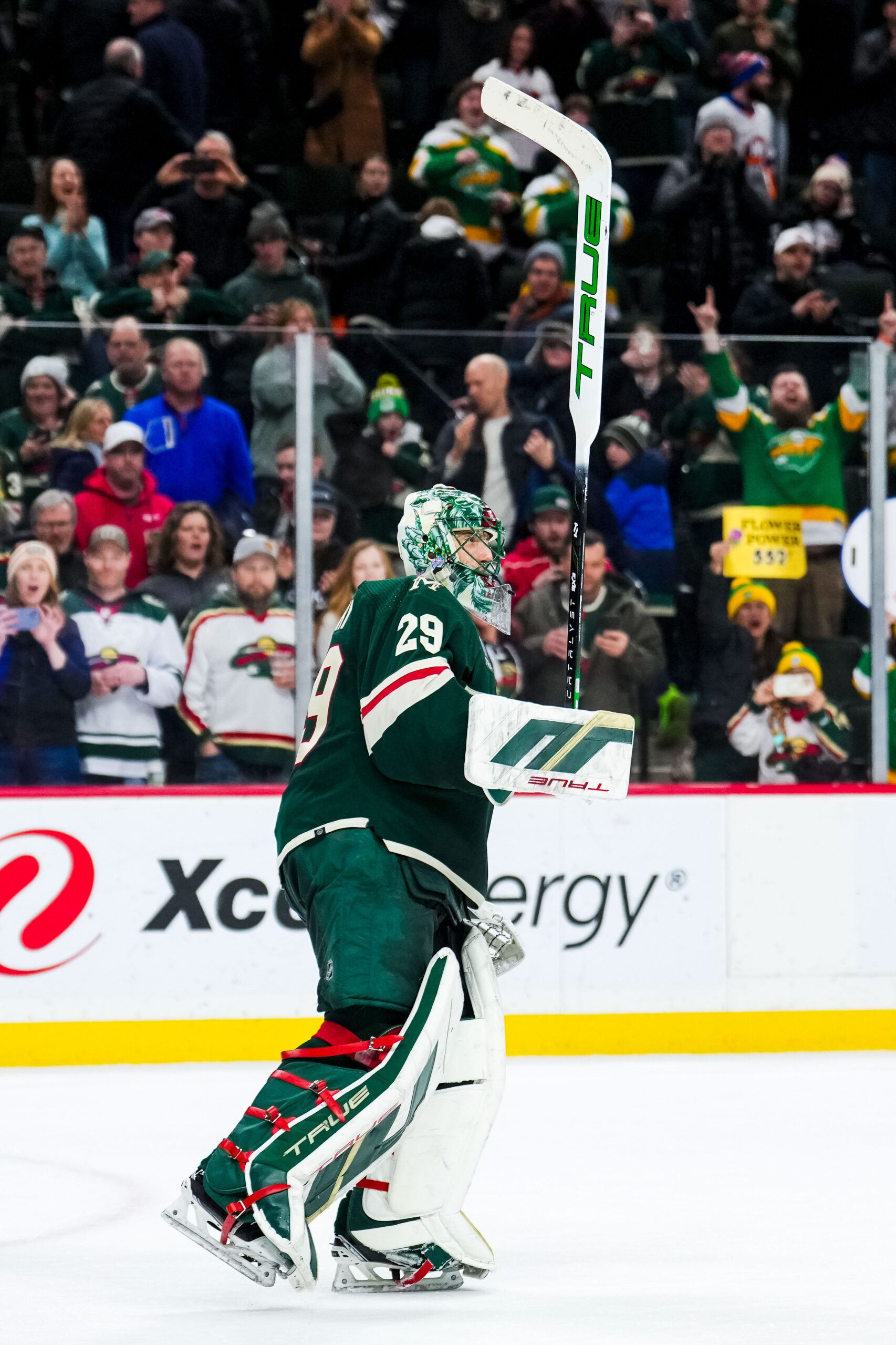
Teams like the Colorado Avalanche, Edmonton Oilers, and Toronto Maple Leafs could be interested in Fleury’s services, where he would primarily be utilized in a backup role to give their regular netminders more rest in between starts. Furthermore, teams such as the Carolina Hurricanes and New Jersey Devils may be in desperation mode when it comes to fixing their goaltending woes and may prefer Fleury to start the majority of games down the stretch.
Outside of Fleury, considering the organization will likely be nibbling around the edges when it comes to the trade market this March, it is unlikely Minnesota will consider moving either of their first-round selections in the next two upcoming NHL Drafts. They may consider moving out a thin pool of mid-round selections, but it will not be enough for the Wild to make any significant improvements to the roster.
Team Needs
1) Get Younger – Currently, the Wild ranks as the fourth-oldest team in the NHL, with the average age sitting at 29.4. Outside of the numerous overseas prospects looking to make the jump to North America next year, Minnesota has defensive prospects Carson Lambos and Daemon Hunt who are certainly on the cusp. Keeping in mind the stardom of goaltender Jesper Wallstedt, the Wild certainly have plenty of young talent ready to bring to the top level. Factoring in these upcoming players, they make the early extensions given to the likes of Ryan Hartman, Marcus Foligno, and Mats Zuccarello more difficult to comprehend, as their contracts are not only difficult to move out, but are blocking a few prospects from regular playing time.
2) A Right-Shot Defenseman – In the short term, if Minnesota is looking to make the playoffs in the 2023-24 season, they need to replace the lost minutes of captain Jared Spurgeon sooner rather than later. Rookie defenseman Brock Faber has certainly held his own on the right side of the top unit, but it quickly falls apart behind him. Last season, the team chose to acquire John Klingberg from the Anaheim Ducks to strengthen the right side of their defense, and they certainly could use another top-four defenseman within that caliber of player.
Photo courtesy of USA Today Sports Images.
Salary Cap Deep Dive: Washington Capitals
Navigating the salary cap is one of the more important tasks for any GM. Teams that can avoid total cap chaos by walking the tightrope of inking players to deals that match their value (or compensate for future value without breaking the bank) remain successful. Those that don’t see struggles and front office changes.
PHR concludes its look at every NHL team and give a thorough look at their cap situation for the 2023-24 season. This will focus more on players who are regulars on the roster versus those who may find themselves shuttling between the AHL and NHL. All cap figures are courtesy of CapFriendly.
Washington Capitals
Current Cap Hit: $85,054,827 (over the $83.5MM Upper Limit)
Entry-Level Contracts
F Connor McMichael (one year, $863K)
F Aliaksei Protas (one year, $789K)
Potential Bonuses
Protas: $82.5K
Last season was a step back for McMichael who went from being a regular in Washington to a regular in Hershey. This year, he’s back to being a regular but hasn’t been all that productive despite seeing a lot of top-six minutes. While he’s still almost certainly part of their future plans, he’s likely heading for a bridge contract around double his current price tag. Protas has already signed a new deal which we’ll cover later but it’s worth noting his bonuses are based on games played. A full-time regular, Protas should max out on those as long as he stays healthy.
Signed Through 2023-24, Non-Entry-Level
F Nicolas Aube-Kubel ($1.25MM, UFA)
D Joel Edmundson ($1.75MM, UFA)*
F Beck Malenstyn ($762.5K, RFA)
F Anthony Mantha ($5.7MM, UFA)
F Max Pacioretty ($2MM, UFA)
D Rasmus Sandin ($1.4MM, RFA)
*-Montreal is retaining an additional $1.75MM on Edmundson’s contract.
Potential Bonuses
Pacioretty: $2MM
After struggling with consistency in Detroit, Mantha hasn’t been able to improve on that with the Capitals. At times, he plays like a top-liner and at others, he’s barely noticeable. While he has played better as of late, it’s hard to see him matching his current contract. A one-year pillow deal could be a viable option while a multi-year agreement likely starts with a four. Pacioretty missed more time than expected while recovering from his second Achilles surgery and has been relatively quiet since returning. Meanwhile, $1.5MM of his games-played bonuses have already been met while the final $500K should be reached this week. There will still be a market for Pacioretty this summer but it’s likely to be a deal structured similar to this one with some performance bonuses in there.
Aube-Kubel cleared waivers at the beginning of the season but has done relatively well with Washington where he has still spent most of the year. That said, as a long-term fourth liner, his earnings upside is going to be limited this summer and a small cut in pay isn’t out of the question. The same can’t be said for Malenstyn who has locked down a full-time roster spot, spending a lot of time on the third line. His offensive numbers are low enough that his next deal won’t be too expensive but he should at least double his current cap hit, especially with arbitration eligibility.
Edmundson battled injury issues early in the season and has been limited to duty on the third pairing since returning. With injuries causing him to miss significant time over the last few years, it wouldn’t be surprising to see Edmundson’s next deal come closer to what Washington is paying him now compared to his full $3.5MM AAV. As for Sandin, he hasn’t been able to keep up the level of production he had down the stretch last year but he is still logging top-four minutes and is a part of their longer-term plans. He’s owed a $1.6MM qualifying offer but could more than double that on a long-term agreement that buys out some of his UFA-eligible seasons.
Signed Through 2024-25
D Alexander Alexeyev ($825K, RFA)
F Nicklas Backstrom ($9.2MM, UFA)
D Ethan Bear ($2.0625MM, UFA)
F Nic Dowd ($1.3MM, UFA)
F Evgeny Kuznetsov ($7.8MM, UFA)
G Charlie Lindgren ($1.1MM, UFA)
F T.J. Oshie ($5.75MM, UFA)
F Michael Sgarbossa ($775K, UFA)
Backstrom was able to return from hip resurfacing surgery last season where he performed relatively well, not so much relative to his contract but simply for coming back and being a top-six player. However, he struggled early on this season before shutting it down with lingering pain. He’s on LTIR and may very well stay there through next year.
The hope was that Kuznetsov would rediscover his offensive touch under new head coach Spencer Carbery after a trade failed to materialize in the summer. Instead, he struggled through the first half of the year and is now in the Player Assistance Program. Assuming he returns from that, it’s quite unlikely that he’ll be able to command anywhere close to this type of contract in 2025; something in the $4MM range might be the more realistic target.
Oshie provided plenty of value on this deal early on but it was always expected that the final couple of years could be a drag on Washington’s cap. He’ll be 38 when this deal is up so if there is another contract for him, it’s likely to be a bonus-laden one with a base price tag between a quarter and a third of what it is now.
Dowd has worked his way from being a depth player to a capable third liner since joining the Capitals. He doesn’t provide enough scoring to really top out his earnings but as a good penalty killer and someone who can hold his own at the faceoff dot, he could plausibly double his current cost on a multi-year deal in 2025. As for Sgarbossa, he’s up with Kuznetsov out of the lineup and has been an AHL recall for several years now. That doesn’t seem likely to change unless he can grab hold of a full-time spot while he’s up.
Bear recently signed this contract and will be looking to rebuild some value after an injury sustained at the Worlds kept him out for nearly half the season. His contract is backloaded – next year’s salary sits at $2.75MM – and that price tag is likely where he’s hoping his next contract will land, assuming he can move into a more prominent spot in the lineup next season. Alexeyev is a waiver-blocked young defender who has had a hard time cracking the lineup so far this season. Until he’s able to grab a hold of a spot, it’s unlikely that he’ll be able to command much more than this.
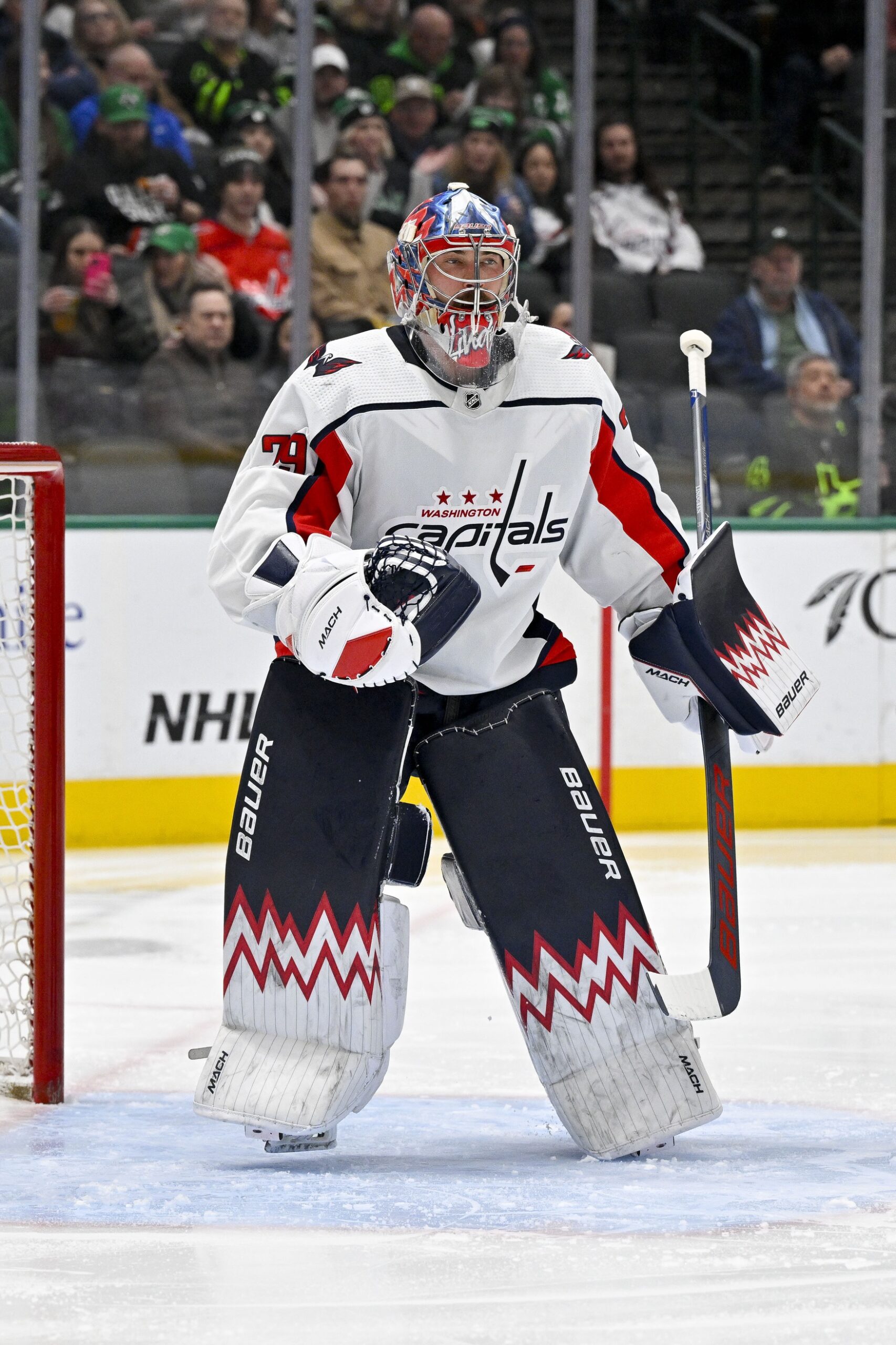 Lindgren has slowly worked his way from a third-string goaltender for the first several years of his professional career to a decent backup early in his time with Washington to now a strong-side platoon netminder as he is in the midst of a career year. Considering the market value for a decent platoon option is three times his current price tag (if not a bit more for some), the Capitals are getting great value here. Meanwhile, if Lindgren can keep up his level of play through next season, he will be in line for a substantial jump in pay, one that could push past the $4MM mark on a multi-year agreement based on contracts handed out to similar netminders in recent years.
Signed Through 2025-26
D John Carlson ($8MM, UFA)
D Martin Fehervary ($2.675MM, RFA)
D Nick Jensen ($4.05MM, UFA)
F Sonny Milano ($1.9MM, UFA)
F Alex Ovechkin ($9.5MM, UFA)
D Trevor van Riemsdyk ($3MM, UFA)
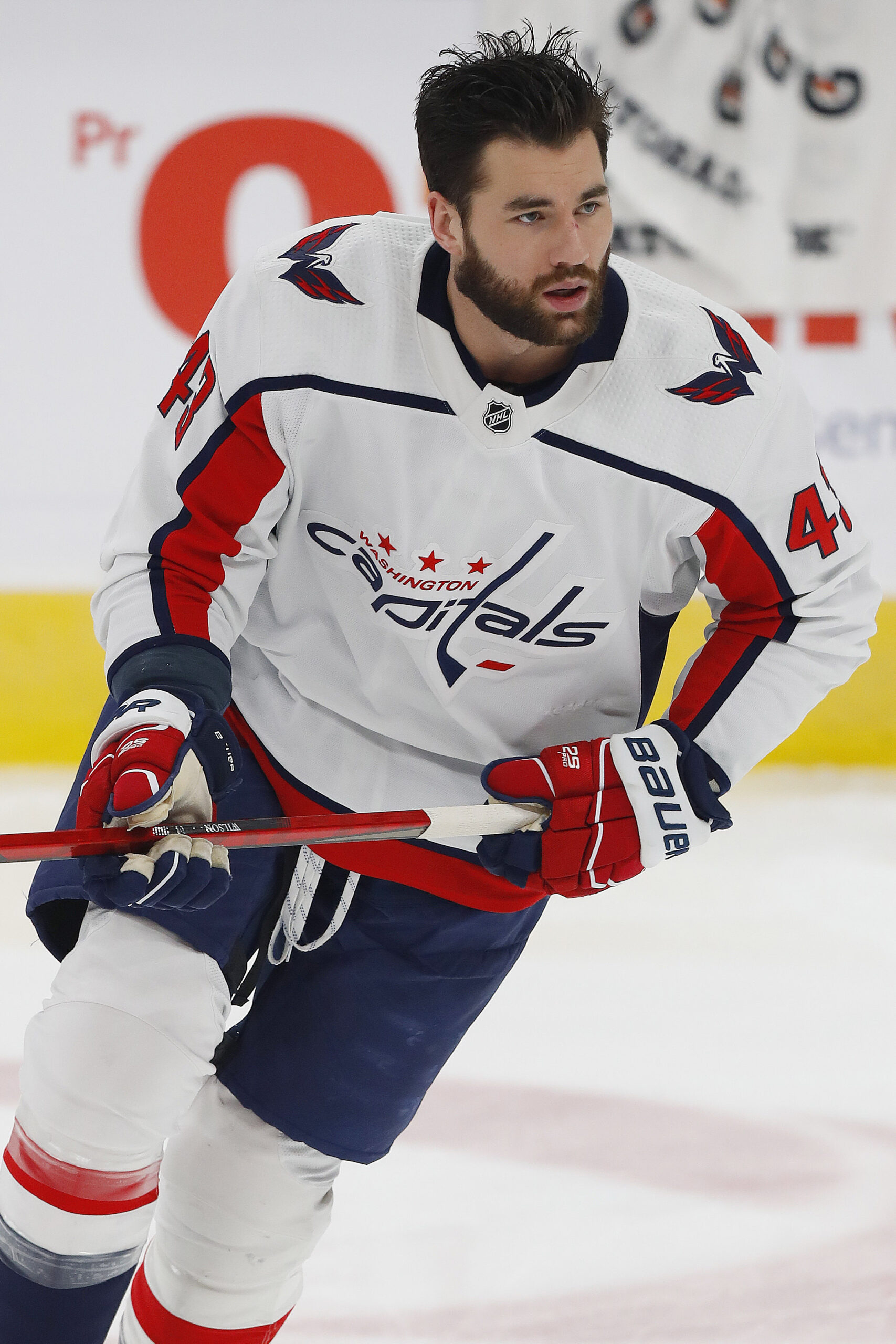
Ovechkin provided a decent return on the first two years of his contract but he has slowed down considerably this season despite a recent hot stretch. This is a legacy deal as he tries to chase down the all-time goal record. It wouldn’t be surprising if this is his last NHL contract unless he winds up just a few tallies short and takes a one-year agreement to take one final crack at Wayne Gretzky’s mark. In that instance, a bonus-laden deal with a much lower base salary would be quite likely. Milano had to settle for a league-minimum contract in-season last year but played well enough to get some stability. A back-to-back 30-plus-point player, he’ll give Washington some good value if he can stay around that level of production while setting himself up for a small raise down the road.
At his peak, Carlson was one of the premier point producers from the back end. Those days are gone now although he’s still above average on that front while logging number one minutes. As long as that continues to be the case, they’ll get a reasonable return on this contract. Having said that, by the time he goes to sign his next deal, it will almost certainly come in a few million below this. Jensen had a career year last season to earn this contract but hasn’t been able to play at the same level. As a right-shot defender who can play on the second pairing, it’s not all bad news but right now, this contract looks like a bit of an overpayment especially with him being 33 already. Accordingly, it’s hard to see him looking at a raise in 2026.
The same can be said for van Riemsdyk who turned his best year into a three-year deal as well but hasn’t been able to repeat it this season. More of a player best suited as a fifth option on a third pairing, this price tag is also a bit on the high side based on van Riemsdyk’s current level of performance. If he stays at that level for the rest of the deal, he’ll be looking at a pay cut as well. Fehervary has become a capable checking blueliner, one that plays with plenty of physicality. With a limited offensive skill set, he won’t produce enough to command a significant raise with his arbitration rights in 2026 but a small one should be coming. With his deal being front-loaded, his qualifying offer checks in at just over $1MM so that won’t be a factor in discussions.
Trade Deadline Primer: Los Angeles Kings
With the All-Star break in the rearview, the trade deadline looms large and is now just a month away. Where does each team stand, and what moves should they be looking to make? We continue our look around the league with the Los Angeles Kings.
The Los Angeles Kings are maintaining their form this season, once again looking like a team that could find their way into the postseason but not one that poses much of a threat. They currently sit atop a tightly-packed Western Conference Wild Card race, with five teams sitting within five points of the Kings. They’ve played the second-fewest games in the conference – 50 – but also boast the eighth-fewest goals in the Conference. The Kings will be hoping that the Trade Deadline can work hand-in-hand with new head coach Jim Hiller – who took over for Todd McLellan in early February – to bring a needed spark to the lineup in the second half of the season.
Record
24-16-10, 4th in the Pacific Division.
Deadline Status
Conservative Buyers
Deadline Cap Space
$2.0 MM on deadline day, 1/3 retention slots used, 43/50 contracts used, per CapFriendly.
Upcoming Draft Picks
2024: LAK 1st, LAK 4th, LAK 6th, LAK 7th
2025: LAK 1st, LAK 2nd, LAK 3rd, LAK 4th, LAK 5th, LAK 6th, LAK 7th
Trade Chips
Los Angeles is approaching the deadline with very little cap to work with and very few picks in the 2024 NHL Draft. Those factors make any trade a challenge for the Kings. But they might be able to leverage the value of former draft capital, with Alex Turcotte and Arthur Kaliyev looking like two of their best bargaining chips. Neither player has found their groove in the NHL since being drafted by the Kings. Kaliyev has spent the last two seasons in and out of the Kings lineup, playing just 38 games and scoring just 14 points this season. Still, he’s been with the NHL lineup for three seasons, scoring 70 points in 175 games over the last four seasons. That’s more of a role than Turcotte has received – with the former fifth-overall pick spending most of the last four seasons in the AHL. He’s played in four NHL games this season and finally recorded his first goal and assist in the league. He also has 23 points in 30 AHL games this season.
While neither 22-year-old has a strong pro resume as it stands, there’s a chance teams could remain hopeful that a change of scenery could bring back their draft day hope. But even if they do, Los Angeles will likely still need to move cap to make any deal work. They may manage that by trading depth forwards like Carl Grundstrom or Blake Lizotte. Grundstrom has continued to operate on the team’s bottom line, playing 50 games and scoring 12 points this season, while Lizotte has played 34 games as a bottom-six centerman. They each carry cap hits below $2.0MM and could bring value to a team looking towards a long playoff run – Lizotte adding center depth and Grundstrom bringing good grit. But it may be hopeful to think that either player will be enough to swing a deal without L.A. also including draft capital.
Team Needs
1) Complementary Depth – The headline of the Kings season has been the struggles of new acquisition Pierre-Luc Dubois. The team traded for the 25-year-old this off-season, sending Gabriel Vilardi, Alex Iafallo, Rasmus Kupari, and a 2024 second-round draft pick back to the Winnipeg Jets. Dubois has since recorded just 21 points in 50 games with the Kings, falling to the team’s third-line center role. He’ll likely receive a productive winger with Viktor Arvidsson returning to the lineup, but the team shouldn’t pass up a chance to get him additional help at the Trade Deadline. Dubois has scored 60 or more points in three of his seven NHL seasons, including each of the last two, and could benefit from skilled wingers that can support his drive into the offensive zone. Los Angeles could seek out options like Anthony Duclair or Morgan Frost, who both carry cheaper cap hits, or they could shoot for a more veteran presence through the likes of Vladimir Tarasenko or Jason Zucker, who would each require additional cap space. But without many trade pieces to work with, it’s unlikely that L.A. could compete for top-of-the-market options like Jake Guentzel.
2) Future Capital – Los Angeles could certainly be a team in the market for a goaltender, or extended defensive depth, but they’ll likely fall flat of offers other teams can make. Instead, their Deadline plan should be to hear out as many offers on young defensemen or top minor-league forwards, looking to bank whatever future capital they could get. The Kings are likely still years away from the top of the standings, something made okay by the fact that they have the fifth-youngest lineup in the league. Dealing away veteran lineup pieces like Andreas Englund could have the benefit of opening space for young prospects like Brandt Clarke, netting the Kings modest compensation while also giving some of their recent top draft picks a chance to shine. That may be all Los Angeles can ask for, as they approach a deadline where they’ll be cap-strapped and looking for a spark.
Photo courtesy of USA Today Sports Images.
The Rental Center Market Has Thinned Out Quickly
Center depth is something that many teams covet at the trade deadline. A key upgrade to balance the lineup could be a key difference-maker in the playoffs while even a useful addition to the bottom six could be helpful. Centers play the premium position up front and teams will often pay a premium to get one.
We saw just that with the recent Elias Lindholm and Sean Monahan trades. Vancouver paid a high price to get Lindholm early and Winnipeg, having seen Lindholm go, was motivated to push a deal for Monahan across the finish line quickly to make sure no one else swooped in. Those two were clearly the best options on the market. What’s left among players that can play higher than the fourth line? Let’s take a look.
Anaheim’s Adam Henrique now stands alone at the top of the rental class. He’s having a decent season offensively with the Ducks, producing at a 25-goal, 57-point pace. He can kill penalties and has been above average at the faceoff dot for six straight years now. He’s not a true top-six player on a contender but he’d be a nice third liner who could move up when needed. But at a $5.825MM cap hit, that will be hard for most teams to acquire, even if the Ducks retain 50%. Still, barring an injury, he’s very likely to be dealt.
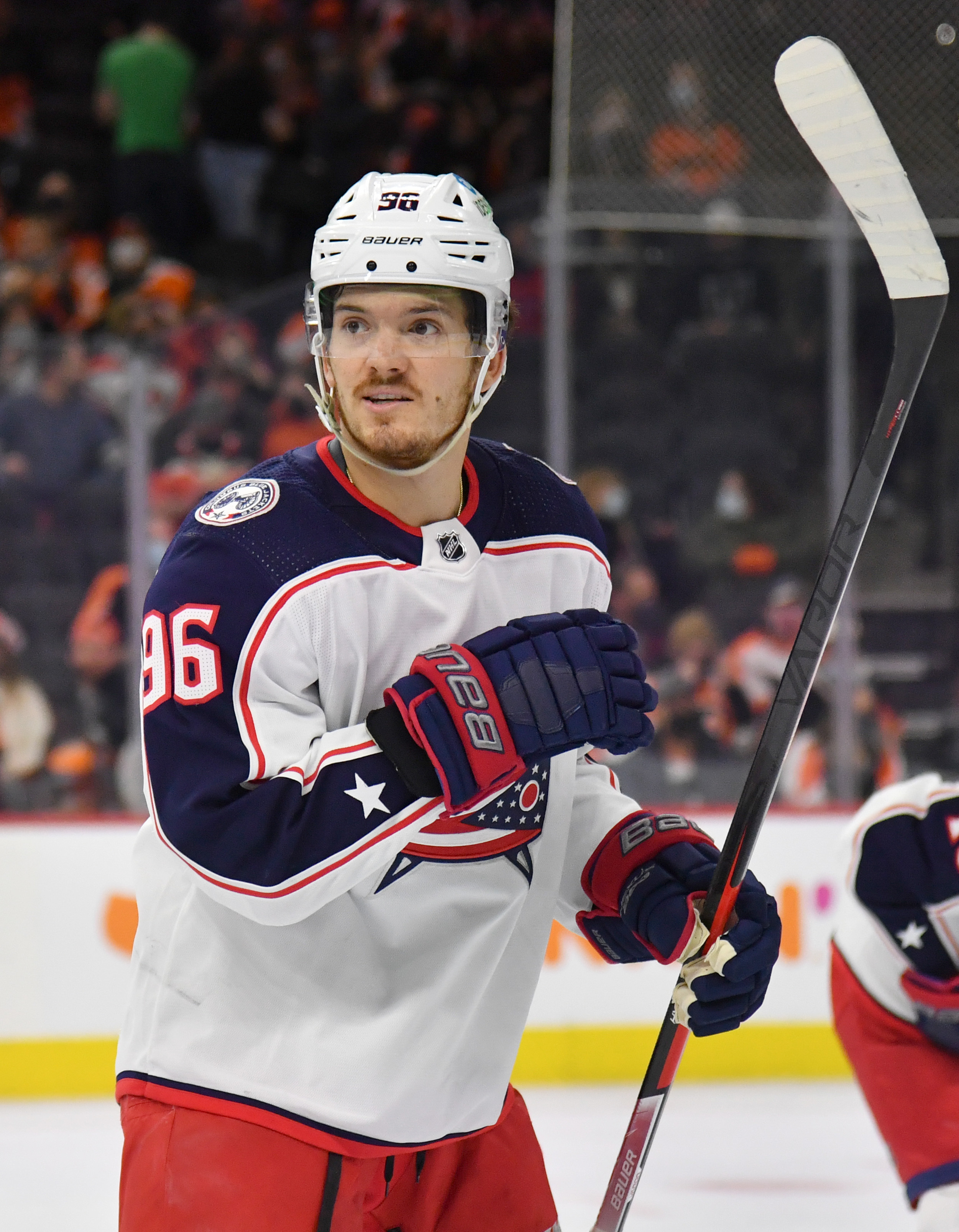 Jack Roslovic’s time with his hometown Blue Jackets has been up-and-down. At times, he has looked like a viable top-six piece and at others, his performance has been poor enough to make him a healthy scratch. His numbers this season are far from pretty (two goals and eight assists in 28 games). But the 27-year-old put up 44 points last season and 45 the year before. With this being a contract year, a change of scenery could give him a spark and with his struggles and a $4MM cap charge, it’s unlikely that Columbus could command a significant return for his services but there is some potential upside for whoever winds up acquiring him.
In terms of impact or upside plays for rental centers that are almost certain to be available, that might be it for the list. Chicago’s Tyler Johnson is at a 20-goal pace this season but he’s also playing more on a rebuilding Blackhawks team than he would elsewhere. With max retention, he could yield a later-round pick but Johnson would likely be a depth player more than an offensive one on a new team.
There are a couple of players who could be wild cards to become available depending on how things go the next few weeks and certain teams potentially fall out of the playoff picture. Alexander Wennberg hasn’t lived up to his contract with Seattle but could be an upgrade on the third line for a few playoff-bound teams although maximum retention will be needed to make his $5MM price tag more affordable. That shouldn’t be the case for Nashville’s Thomas Novak, who checks in at just $800K. He isn’t quite producing at the level of a year ago when he had 43 points in 51 games but he is above the half-point-per-game mark. If the Predators make him available, his cheap contract will make him highly sought after.
On top of these players, there are some depth pieces that will likely be moved as potential fourth line additions or reserve forwards as there are every year. But if you’re a team looking for someone with some offensive upside, the pickings were already slim and just got a whole lot slimmer. That should be good news for a team with one of those players while others may decide to look at shopping a non-rental middleman to try to capitalize on the lack of impact supply remaining on the market.
Photo courtesy of USA Today Sports Images.