
Offseason Checklist: Vancouver Canucks
The offseason has arrived for all but the two teams who are still taking part in the playoffs. For the rest, it’s time to examine what they will need to accomplish over the coming months. Next up is a look at Vancouver.
The Canucks were one of the surprises of the season, going from a non-playoff team to winning the Pacific Division and getting deep into the second round despite being without their starting goalie. GM Patrik Allvin has already checked one significant item off his summer to-do list with the recent re-signing of Filip Hronek to a long-term extension but he still has some items to check off in the coming weeks and months.
Reload The Back End
Even with Hronek under contract, Vancouver has just three full-time blueliners signed for next season – Hronek, Quinn Hughes, and Carson Soucy. Noah Juulsen is also under contract, but he profiles as a sixth option at best and preferably a seventh who comes in when injuries arise. That leaves three spots to fill, either by re-signing or replacing their pending unrestricted free agents.
The most notable of the trio is Nikita Zadorov. The 29-year-old did well after being acquired early in the season from Calgary and then was a difference-maker for them in the playoffs. He has struggled to get a long-term deal so far in his career, but that shouldn’t be the case this time around, with some suggesting that he could get six years and $6MM per season. There’s mutual interest in having Zadorov stick around, but with how well-positioned he is to cash in, it’d be hard to pass up testing the market.
Tyler Myers had a contract that made him a target from the moment it was signed. Miscast in a top role, the 34-year-old had arguably his best season in five years with Vancouver in 2023-24 as he was moved down the lineup. He won’t get $6MM this time around, but there’s believed to be mutual interest in him coming back at the right price. Meanwhile, that isn’t expected to be the case for Ian Cole, with the 35-year-old being set to possibly land with his sixth organization since 2020.
With nearly $17MM in cap space per CapFriendly, there’s room to potentially have one contract of significance as they re-sign or replace these veterans, although if they want to add up front – more on that shortly – then they’ll need some more cost-effective options as well. Notably, Myers and Cole logged the most minutes shorthanded, so as they look to fill those spots, it’s likely that they will be looking to bring in some players with a track record of success on the penalty kill.
Boeser Extension Talks
 As it stands, the Canucks won’t have nearly as much roster turnover via free agency in 2025 as they will this year, at least among their star players. They do have one big fish to get extended before next summer, though.
Brock Boeser finally hit his potential in earnest in 2023-24. After posting middling stat lines the past two seasons while dealing with a variety of personal struggles, which he opened up about to The Province’s Ben Kuzma last year, he erupted for a career-best 40 goals and 73 points in 81 regular-season contests. Averaging 18:36 per game and flourishing under head coach Rick Tocchet, he’s made himself an irreplaceable part of their core group of forwards and has set himself up well heading into a contract year.
As of today, he’d earn a significant raise on his current $6.65MM cap hit. Evolving Hockey projects a max-term eight-year deal in the $8MM AAV range as the most likely scenario if Boeser were to be extended shortly after becoming eligible to sign one on July 1. But with their aforementioned large plate of free agents to deal with this summer, extension talks with Boeser will likely take a while to get going.
Injuries were a concern early on in his career, but he has flashed the potential to consistently produce in the 70-point range in the past. His 0.90 points per game this season was a career-high, but he did get close on multiple other occasions (0.89 in 2017-18, 0.81 in 2018-19, 0.88 in 2020-21).
Add Impact Forward
A quick glance at the Canucks’ depth chart next season reveals a painstakingly clear need for a top-six winger (or two) to help complement J.T. Miller and Elias Pettersson. Boeser has one spot locked down, and Conor Garland should likely find himself further up in the lineup after a strong 2023-24 campaign, but Ilya Mikheyev is currently slated for a second-line role alongside Pettersson. He’s not expected back next season anyway, and assuming they can clear the entirety of his $4.75MM cap hit, that’s more money for their front office braintrust of Patrik Allvin and Jim Rutherford to play with.
Their top target is clear. They were linked to former Penguins forward Jake Guentzel at the trade deadline, and while they lost a bidding war to the Hurricanes, he’s available again this summer, with Carolina dangling his signing rights before he reaches UFA status. As expected, they’re checking in on him again.
He’d be the most expensive option available to meet the ‘impact forward’ moniker, likely save for Panthers winger Sam Reinhart. Guentzel is likely to cost a team around or more than $9MM per season, and Vancouver would need to pounce quickly. Can they get certainty in the coming days that they’ll be able to accommodate such a deal under the salary cap? That’ll be a story to follow as next week’s draft nears.
Other cheaper options to complement Miller or Pettersson on the wing include Jonathan Marchessault, Teuvo Teräväinen, or a reunion with Tyler Toffoli. All would be significant short-term upgrades over Mikheyev or other oft-used options higher up in the lineup, like youngster Nils Höglander.
Clear Poolman’s Contract
We’re all but certain that defenseman Tucker Poolman won’t play again due to migraine issues. He hasn’t skated in an NHL game since October 2022 and spent all of the 2023-24 campaign on long-term injured reserve.
While some criticized the four-year, $2.5MM AAV deal Poolman received from the Canucks in free agency, few thought it would yield just 43 games of service from Poolman in a Vancouver sweater. Regardless, the 31-year-old Iowa native now has just one year left on his deal, and it’s gumming up the offseason salary cap works. Could a team desperately in need of salary cap relief, such as the Golden Knights or Lightning, acquire Poolman’s $2.5MM cap hit next season and place it on LTIR for some much-needed in-season relief? It would be a win-win situation.
PHR’s Josh Erickson contributed significantly to this article.
Photo courtesy of USA Today Sports Images.
Offseason Checklist: Colorado Avalanche
The offseason has arrived for all but the two teams who are still taking part in the playoffs. For the rest, it’s time to examine what they will need to accomplish over the coming months. Next up is a look at Colorado.
Expectations were high once again for the Avalanche heading into 2023-24. The team made some moves to shore up their forward group over the offseason, leading them to be a speculative favorite to come out of the Central Division. However, they came up a bit short, falling to Dallas in the division final. Now, GM Chris MacFarland will look to add to his group again, a task that will be harder this time around. Here’s what should be on his checklist in the coming weeks.
Create Cap Flexibility
Captain Gabriel Landeskog missed the entire season, allowing Colorado to go well into LTIR last summer as they knew in advance he wouldn’t be available to play. There is still some uncertainty as to whether he’ll be ready to play next season but the winger has made it known he intends to try. That effectively encumbers $7MM as they need to have that free in case he’s able to return from his knee cartilage transplant.
Then there’s Valeri Nichushkin. He’ll miss the first few weeks of the season while being in Stage Three of the Player Assistance Program and will be cap-exempt during that time. However, whenever he is cleared to return, his full $6.125MM cap charge will come onto the books. They have to assume he’ll be cleared to come back so that money will be tied up as well.
While the Avs have over $16MM in cap room, per CapFriendly, they have quite a few roster spots to fill with that money; a big chunk of which will go to a pending RFA which will be highlighted shortly. With the volume of spots (as many as eight) to fill, they’ll be hard-pressed to spend big on an unrestricted free agent which will make it difficult to re-sign Jonathan Drouin.
Finding a way to move all or at least some of Josh Manson’s $4.5MM AAV would be one way to accomplish this although it’s usually not easy to free up that much cap space for a couple of years. Ross Colton ($4MM for three years) might be another option to move although doing so would create another hole down the middle to fill. There aren’t many ways to do it but if MacFarland can open up some more wiggle room, they’ll have plenty more viable options to build their roster.
Rantanen Extension Talks
While this is something that could easily stay on the back burner this summer, it wouldn’t be surprising to see Colorado take a real run at an extension for winger Mikko Rantanen. Once July 1st hits, he’ll officially be in the final year of his contract, making him eligible to sign a new deal at any time.
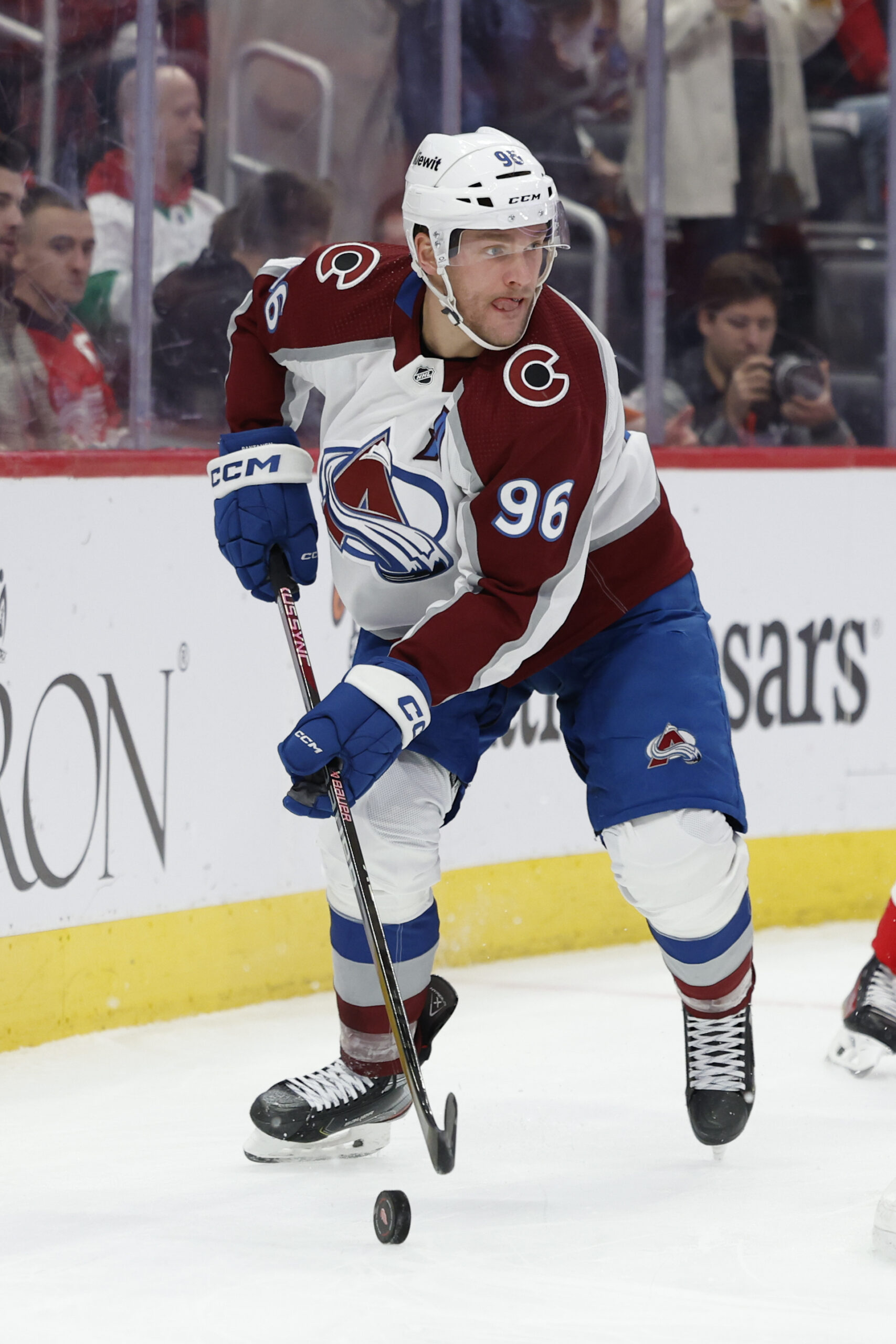 The 27-year-old has been playing on a contract that pays $9.25MM per season since 2019. It’s hard for that pricey of a contract to be construed as a team-friendly one but that is the case here. Rantanen has become an impactful and consistent producer, averaging at least 1.23 points per game in each of the last four seasons. He has been even more productive in the playoffs, averaging a minimum of 1.25 points per game over the last four postseason, tallying 62 points in 48 games over that span.
As a result, Rantanen is well-positioned to earn a considerable raise along with a max-term agreement of eight years if he wants to sign for that long. Earlier this month, Corey Masisak of The Denver Post outlined some possible comparables for what Rantanen’s next deal could look like. At this point, it’s fair to suggest that there’s a chance that Rantanen could sign the richest contract for a winger in NHL history (in terms of cap hit), surpassing Artemi Panarin’s $11.643MM. That still would slot him a bit behind Nathan MacKinnon who checks in at $12.6MM.
This isn’t something that MacFarland has to get done this summer as Rantanen is signed through next June. However, it would be worthwhile to at least get an understanding of the asking price (if not get a deal done altogether) to aid in their spending plans now as some of the players they’ll be pursuing shortly will undoubtedly be seeking multi-year deals. Having a better sense of what the 2025-26 books will look like makes navigating those other discussions a little easier.
Re-Sign Mittelstadt
Now, let’s get back to that pending RFA of note, center Casey Mittelstadt. The Avs pulled off arguably the most surprising trade back at the deadline, acquiring the 25-year-old from Buffalo in exchange for promising young defenseman Bowen Byram. In doing so, they shored up their second line, something they’d been looking to do since losing Nazem Kadri to Calgary in free agency.
Mittelstadt followed up a breakout 2022-23 performance that saw him put up 59 points with a similar showing between the two teams this season, tallying 57 points in 80 games. However, that doesn’t quite tell the full picture as he was limited to 10 points in 18 appearances following the swap, a point-per-game drop of 0.2 compared to his output with the Sabres. However, Mittelstadt was more impactful in the playoffs, collecting nine points in 11 games which will help his case this summer.
Mittelstadt is coming off a three-year bridge agreement that carried a $2.5MM AAV and has a required qualifying offer of $2.6MM. He’s also arbitration-eligible for the first and only time as he can reach unrestricted free agency next summer. That last note effectively rules out another short-term contract that would only buy a year or two of team control.
Given their cap constraints, it’s hard to envision the Avs working out a max-term agreement as the cost of it in terms of a higher AAV would make things a bit harder for them in the summer. Accordingly, a medium-term deal (four to six years) feels like the sweet spot to try to aim for. If that winds up being where the two sides land, he’s likely to at least double his qualifying offer and could push for $6MM. Getting him locked up would certainly give them some stability down the middle with MacKinnon not going anywhere either.
Load Up On Depth
Last summer, Colorado needed to sign several players to low-cost one-year deals to round out their roster. Up front, they added Drouin, Chris Wagner, and Joel Kiviranta while re-signing Andrew Cogliano all for $825K or less and also brought in Frederik Karlsson for the minimum from Dallas. On the back end, they brought back Jack Johnson for the minimum and later acquired Caleb Jones who was also making the minimum salary. They didn’t hit on every addition but most of them turned out pretty well while Drouin wound up being a key part of their forward group. However, all but Wagner are free agents next month.
That’s a lot of roster spots to try to fill and depending on what happens with Mittelstadt’s deal and potentially trying to bring Drouin back, they’re going to be looking at trying to fill the rest either internally or with low-cost free agent pickups. With their internal options, Nikolai Kovalenko and recent free agent pickup Jere Innala figure to be the likeliest to grab spots although both of them also check in at price tags higher than last summer’s group of depth additions.
With that in mind, MacFarland will likely be targeting four to six players for the league minimum or very close to it to try to backfill their forward group and round out the defense corps. Additionally, he will likely be trying to add some potential in-season recalls on two-way deals worth the minimum in the NHL. There will be a lot of these types of contracts signed in the first few days of free agency; expect Colorado to be among the leaders in them.
Photo courtesy of USA Today Sports Images.
Buyout Candidate: Conor Sheary
While the Lightning are the most successful franchise of the last 10 years, back-to-back first-round losses have them at risk of slipping into mediocrity. That’s exacerbated by a salary cap crunch this summer that, if not handled with care, could result in the loss of captain Steven Stamkos to free agency.
General manager Julien BriseBois has no intention of letting his team slip out of contention anytime soon. He’s already made one move to fill out his roster this summer, re-acquiring Stanley Cup champion defenseman Ryan McDonagh from the Predators shortly after both teams were eliminated from the playoffs.
Aside from Stamkos and future Hall-of-Famer Victor Hedman, the Bolts have much of their core signed long-term. Erik Černák, Anthony Cirelli, Brandon Hagel, Brayden Point and Mikhail Sergachev are all signed through at least 2030 with cap hits north of $5MM. Nikita Kucherov and Andrei Vasilevskiy have matching $9.5MM cap hits through 2027 and 2028, respectively. While it could likely change as the salary cap rises, none of them are significant bargains for what they’ve contributed the past couple of seasons, aside from Kucherov and Point.
The salary cap jumping to $88MM next season does offer BriseBois some much-needed flexibility, but they do still have just $5.335MM in projected space with at least three roster spots to fill if they want to have any sort of in-season wiggle room. Even with a significant discount, that’s likely not enough to sign anyone other than Stamkos, posing an obvious issue.
Tampa doesn’t have a recent history of buyouts, but it could be a decent last-ditch way to shed ill-advised cap hit allocation. In a piece for The Athletic on Monday, Harman Dayal and Thomas Drance name Lightning winger Conor Sheary a player to watch as the first window to buy out players, which opens 48 hours after the Stanley Cup Final ends, approaches.
[RELATED: 2024 Key Offseason Dates]
Often a strong secondary scoring threat throughout a 500-plus game career with the Capitals, Penguins and Sabres, Sheary became a UFA last summer. BriseBois pounced, hoping to add a cost-effective top-nine scoring option while inking him to a three-year, $6MM deal ($2MM AAV) with trade protection. The 32-year-old flamed out in Tampa, though, limited to just four goals and 15 points in 57 games on the year after scoring double-digit goals for the last seven years. He was a frequent healthy scratch near the end of the regular season and didn’t play at all in their first-round loss to the Panthers.
Sheary’s role was limited under head coach Jon Cooper. His 11:06 average time on ice was the lowest since his rookie season. There’s likely some bounceback potential there, as indicated by his career-low 8.0% shooting rate, but the risk of him declining further isn’t one the cap-strapped Lightning can afford to take.
Trading him and removing the final two years of his contract would be ideal, but a 16-team trade list complicates things. A buyout would at least reduce his cap hit from $2MM to $583K next season, opening up an additional $1.417MM in space, per CapFriendly. That’s easily enough to add a cost-effective depth option on the UFA market and opens up additional flexibility for a Stamkos extension.
The rest of the buyout isn’t awful, either. It would carry a $1.083MM hit in 2025-26, still saving the Bolts over $900K in the final season of his deal, before a sub-league minimum penalty of $583K in 2026-27 and 2027-28.
Offseason Checklist: Boston Bruins
The offseason has arrived for all but the two teams who are still taking part in the playoffs. For the rest, it’s time to examine what they will need to accomplish over the coming months. Next up is a look at Boston.
There were some question marks surrounding the Bruins heading into the season after they lost both Patrice Bergeron and David Krejci. However, they nearly won the Atlantic Division once again to bring their playoff streak to eight straight years. Boston got past Toronto in the opening round before falling to Florida in the second round. Armed with cap and roster flexibility for the first time in a while, GM Don Sweeney has a chance to reshape the roster or to keep the bulk of the core together. Here’s what should be on their to-do list in the coming weeks.
Add Impact Center
After losing their top two middlemen from the year before, the Bruins didn’t do a whole lot to replace them. Morgan Geekie came over after being non-tendered by Seattle while John Beecher and Matthew Poitras came up from the minors and the OHL respectively to largely fill the other vacancy. In the meantime, Charlie Coyle and Pavel Zacha covered the tough minutes. All things considered, they cobbled together a solution relatively well given their cap constraints.
Now they don’t have those constraints; they have over $21MM in cap room, per CapFriendly. They now have an opportunity – and a need – to try to address that. While their internal options fared well, they’re not a group of middlemen that a contender typically has.
There aren’t any true number one options on the open market this summer but there are some proven second options that can at least give them some more impactful depth. They were speculatively linked to Elias Lindholm last summer and it stands to reason they’ll have interest in someone who can cover the hard two-way minutes like Bergeron used to.
Among the secondary options are Chandler Stephenson, Sean Monahan, and Matt Duchene. All three have had success on the second line recently and have some upside at the offensive end. They might not produce more than the 60 and 59 points that Coyle and Zacha put up but a third middleman in that range would lengthen their offense and hedge against some injuries.
In theory, they could try to trade for a center but given the dearth of trade assets they have (a byproduct of going for it regularly), it’s hard to see them putting together a package that could land a top-six piece so turning to free agency should be the way they go.
Goalie Decisions
For the last couple of years, the Bruins have had a high-end goalie tandem between Jeremy Swayman and Linus Ullmark, allowing them to have starting-level goaltending on a nightly basis. However, it’s about to become a luxury that’s too expensive for them to afford.
 Swayman and the Bruins couldn’t agree on a contract last season, resulting in the two sides going to arbitration where he was awarded $3.475MM. Now, with another strong campaign under his belt, Swayman’s camp has a much better case this time around and will be heading for another big raise. Another one-year deal would push past the $5MM mark but it’s evident that both sides will want to get a longer-term agreement done this time around. A deal that buys multiple years of club control should cost at least $6MM while a max-term agreement probably pushes past $7MM, doubling his price from this season.
With that type of commitment to Swayman, Ullmark becomes a very expensive second option with one year and $5MM left on his deal. While they have enough cap room to carry both, that’s not necessarily the best use of their cap space with the other spots they’ll be looking to fill on their roster. That means they’ll be turning to the trade market as they had looked to back at the trade deadline when Ullmark is believed to have nixed a trade with his partial protection.
Ullmark will still have the ability to block a trade to nearly half the league this summer so it’s not a given that something will get done with Boston’s preferred option. It’s unfortunate for them that Ullmark will be in the market at a time where he’s not likely to be viewed as the number one option available and, in general, goalies don’t typically yield high-end returns too frequently. But they should find the best offer they can get in the next couple of weeks to get this taken care of before free agency opens up as they’ll then know if they were able to fill a need with the swap or, if it’s a futures-based package, if they’ll have other assets to trade to fill one of those needs.
Sweeney will also have to decide if they’ll go with rookie Brandon Bussi as the second-string option behind Swayman next season or if they want to bring in a more experienced veteran. If they don’t get a veteran to serve as the backup in the NHL, it wouldn’t be surprising to see them go after a veteran third-stringer to partner with Michael DiPietro in the minors.
Re-Sign Or Replace DeBrusk
Jake DeBrusk’s future with the Bruins has been murky for several years, going back to his trade request, extension, and the eventual rescinding of that request. But even after that time, his name was floated out as potential salary-matching ballast in hypothetical scenarios where Boston was landing a more impactful winger or help down the middle.
One way or the other, the uncertainty is coming to an end over the next couple of weeks. DeBrusk is now a pending unrestricted free agent and is one of the younger players to hit the open market next month. Accordingly, the time has come for the Bruins to decide if he’s part of their future plans which would require a long-term commitment and remove him from any trade speculation. Alternatively, he’ll be parting ways in early July and Sweeney will be on the lookout for a replacement.
The 27-year-old has reached the 40-point mark five times in his seven-year career but has only hit the 50-point plateau once back in 2022-23. Still, he’s in line for a sizable raise from the $4MM he made over the past two seasons. A long-term agreement could conceivably push past $6MM if the open market is as strong as some are making it out to be. Boston has the money to pay that if they want or they could take that offer and look at some other options on the open market.
There are a few wingers who should check in around that price point in free agency. Tyler Toffoli, Vladimir Tarasenko, and David Perron are shorter-term options if they don’t want to make a long-term commitment at that spot while Teuvo Teravainen and Tyler Bertuzzi (someone who has some familiarity with the team already) could command longer-term agreements. Viktor Arvidsson could be a good fit as well but coming off an injury-prone year, he might want just a one-year deal to bolster his market value for 2025-26. Either way, whether it’s re-signing or replacing DeBrusk, the Bruins have a big contract to hand out on the wing.
Add Depth
Last summer, the Bruins had several roster spots to fill for cheap, resulting in a lot of short-term contracts for role players. Included among those were James van Riemsdyk, Danton Heinen, Milan Lucic, and Kevin Shattenkirk, all of whom are set to return to the open market this summer so Sweeney will likely be looking to follow a similar script this time around.
Up front, they have at least two and arguably as many as four spots to fill as Pat Maroon is also a pending UFA. They won’t necessarily be as limited in terms of having to shop for players who will accept close to the league minimum although if they are able to land an impact center and either keep or replace DeBrusk, they will have to go bargain-hunting at some point. The good news for them is that there will be plenty of players that will be in that price range. They may not all sign quickly but Sweeney should be able to fill those spots.
On the back end, with Mason Lohrei showing that he’s ready for full-time NHL duty, the acquisition of Andrew Peeke at the trade deadline, and Parker Wotherspoon holding his own, they really only have to fill one spot even with Shattenkirk, Matt Grzelcyk, and Derek Forbort all heading for the open market. As a result, they could target someone a little higher in price that could play in a fourth or fifth role. It also wouldn’t be shocking to see an extra depth defender added to battle for the seventh spot. Again, there are a lot of blueliners who fit into these buckets so they should be able to take care of this one fairly easily.
Photo courtesy of USA Today Sports Images.
Ducks’ Trevor Zegras Offers Lucrative Trade Value
The 2024 summer is gearing up to be dramatic, with Vezina Trophy goaltenders and young top scorers headlining a very active trade market. The Anaheim Ducks may be positioning themselves as the team of the summer amidst it all, as star Ducks forward and former top-10 pick Trevor Zegras is once again facing trade rumors. Trade speculation is nothing new for the former USNTDP standout, who faced plenty of uncertainty entering the season – missing both training camp and preseason action while holding our for a new contract. He ultimately settled on a three-year, $17.2MM bridge contract – though Zegras would regardless end up missing most of the season with a broken ankle. He returned from an 11-week absence in March and ultimately totaled 31 games on the year, scoring just 15 points. But despite the down year, Zegras’ age, scoring upside, and cheap contract offer rare and incredibly lucrative value on the trade market.
It seems Zegras’ scoring upside has been shrouded behind a down year this season – but there’s no doubting his place among the best young scorers in the league. Zegras posted an impressive 23 goals and 61 points in 75 games as a rookie in 2021-22 – being named the runner-up to Moritz Seider‘s 2022 Calder Trophy. To boot, Zegras proved consistent in his sophomore year, managing 65 points and again scoring 23 goals in 81 games. Combined with his modest scoring this year, Zegras has totaled 55 goals and 154 points across his first 211 games. That equates to a 0.72 points-per-game pace, ranking Zegras among the most potent young scorers in the game, and situating him ahead of players like Seth Jarvis, Lucas Raymond, and Cole Caufield.
And unlike many young players, Zegras offers the flexibility play both center and winger at an NHL level, with Anaheim mentioning adapting Zegras to center as a key priority in his early development and time in the AHL. He was frequently used down the middle through his first two years in the NHL – though he posted a dismal 40.6 faceoff percentage. The arrival of Leo Carlsson this season was enough to bump Zegras back to the wing, where he struggled to work off the boards in a Ducks system built more on physicality than finesse. His struggles at the faceoff dot make him a hard sale as a full-time center, though his flexibility makes him a match for even more teams.
Zegras’ reputation may be unruly, but he’s been in elite scoring talent since breaking out with the NTDP’s notorious 2019 lineup. With so much consistency between his first two seasons, it seems much more likely that his down year was more the result of a shaky start to the year, marred by prolonged contracting negotiations and injury, than it was an indication that he’s fallen off course. At a spry 23, Zegras is just kicking off his career, already carving out a consistent top-six role and strong scoring pace before many players earn a daily lineup role at all. His offensive upside has vindicated Zegras’ draft spot – as he sits fourth among the 2019 class in NHL scoring – but it also makes him substantially harder to price on the trade market. There simply aren’t previous trades situated around a player as high-scoring or young as Zegras.
It, in a way, harkens back to Larry Murphy‘s move from the Los Angeles Kings to the Washington Capitals in 1983. While the swap differs in a lot of ways – Murphy most notably being a high scoring defenseman, and a player significantly closer to the league’s greatest at the time of his move. But there are plenty of similarities as well. Murphy also carried top-10 draft pedigree, vindicated by star scoring, and was moved before his 24th birthday. In that case, the Kings received stout top-four defenseman Brian Engblom and Ken Houston as he neared retirement. Zegras’ trade rumors are occurring over four decades later – so there’s like not much to be gleaned from Murphy’s move – though precedent could suggest that the Ducks may need to settle for impactful depth in any move featuring such a young star.
The Ducks will find much more present, and realistic, guidance in the trades of Martin Necas and Nikolaj Ehlers, two other potent scorers on the trade market – though Necas, the younger of the two, is still three years Zegras’ senior. Speculation around what the pair of wingers could fetch has been all over, with Carolina rumored to be interested in top prospects, though even a swap of the pair has been mentioned as a possibility. With Zegras under contract for the next two seasons, and expiring as a restricted free agent, Anaheim has plenty of time to wait and see how the Necas and Ehlers situations pan out. Whatever deal they put together for their young star will undoubtedly be a blockbuster, bringing in the pieces to boost Anaheim into a new era – one led by Carlsson, adorned by new jerseys, and hopefully bound for the playoff consistency the Ducks were once known for.
Free Agent Focus: Minnesota Wild
Free agency is now just a bit more than a month away and teams are looking ahead to when it opens. There will be several impact players set to hit the open market in July while many teams have key restricted free agents to re-sign as well. We continue our look around the NHL with an overview of the free agent situation for the Wild.
Key Restricted Free Agents
F Mason Shaw – Shaw made a valiant return to the lineup this season, signing a contract through the end of the season in February after recovering from the fourth ACL tear of his career. It’s become a biannual injury, with Shaw, still just 25 years old, facing it in 2017, 2019, 2020, and 2023. After having his 2022-23 campaign limited to just 59 games – his official rookie season – Shaw managed to appear in 20 games this season, recording three points and 34 penalty minutes. He also appeared in nine AHL games, recording seven points and a13 penalty minutes. Shaw is a depth forward and penalty-kill specialist, though his ability to once again battle back from injury should be enough to earn him another short-term, cheap contract – and another crack at a full year of healthy NHL play.
D Declan Chisholm – The Wild claimed Chisholm off waivers from the Winnipeg Jets in late January, and immediately slotted him in to the team’s rotation of bottom-pair defenders. Chisholm would ultimately total 29 games with the Wild, playing through his official rookie season and scoring eight points along the way. He’s filled the role of the team’s offensively-minded depth defenseman, one previously held by Calen Addison, who was traded to the San Jose Sharks in November. At 24, Chisholm doesn’t seem to be showing many signs of breakout potential, though he presents a young and cheap change-of-pace option to round out the Wild’s defense.
F Adam Beckman – The time has come for a decision on Adam Beckman, who has yet to find his stride in the NHL despite 23 career games. 11 of those games came this year, with Beckman managing two of the first three assists of his career and adding 12 penalty minutes. He’s been an effective scorer in the minor leagues, tallying 19 goals and 33 points in 51 games this year, after posting 24 goals and 36 points in 53 AHL games last year. That’s a promising pace, especially on a meager Iowa Wild offense, though there’s no telling what the path forward for Beckman may look like. His looming contract negotiations should be telling of Minnesota’s intentions with their 2019 third-round selection, as well as his chances of carving out an everyday role in the NHL next season.
Other RFAs: F Dmitry Ovchinnikov, F Adam Raska, F Sam Hentges, F Samuel Walker, D Simon Johansson, G Hunter Jones
Key Unrestricted Free Agents
D Dakota Mermis – Mermis was Minnesota’s de facto seventh defenseman this season, bouncing between the lineup through the early parts of the season before earning a daily depth role following Addison’s trade. He appeared in a career-high 47 games as a result, netting eight points and 33 penalty minutes. Mermis is yet another cheap option for depth defense in Minnesota, though he faces crowded competition for minutes should he re-sign.
D Alex Goligoski – The Wild ended up turning away from Goligoski this season, as Mermis emerged as a legitimate candidate for minutes during Goligoski’s 15 game absence to a lower-body injury early in the season. The 38-year-old veteran would end up a healthy scratch for multiple games in the second half of the season, though he did still manage 10 assist in the 36 games he appeared in. It seems the curtains are beginning to draw closed on Goligoski’s 16-year career in the NHL, which featured a Stanley Cup in his rookie season of 2009 and saw him reach 1,000 games in 2022. Even if Goligoski’s intent on playing more, he’ll seemingly have to find a new home in free agency – after losing his spot with the Wild.
D Will Butcher – Minnesota acquired Butcher in January, sending AHL forwrard Maxim Cajkovic back to the Pittsburgh Penguins. Butcher has spent the last two seasons entirely in the AHL, serving out two separate league-minimum, one-year contracts and totaling a combined 59 points in 103 games. He’s a far way from his breakout 2017-18 rookie season, when he scored 44 points with the New Jersey Devils. Butcher’s his last NHL stint coming with the 2021-22 Buffalo Sabres, when he managed eight points in 37 games. He’s likely doomed for another league-minimum contract this season, and will need to fight his up from a minor league role.
Other UFAs: F Jacob Lucchini, F Turner Elson, F Steven Fogarty, F Jujhar Khaira, F Nick Swaney, G Zane McIntyre
Projected Cap Space
The Minnesota Wild can enjoy rare peace of mind this summer, facing a very minimal list of pending free agents in terms of both quantity and projected cost. The team should have plenty of room to re-sign their choice of the departing names, with $6.256MM in projected cap space. With a backlog of depth defenders and a mostly filled-out lineup, the Wild could be in a prime position to make at least one lucrative free-agent addition – likely focused on bringing a boost to the bottom-six.
Offseason Checklist: Carolina Hurricanes
The offseason has arrived for all but the two teams who are still taking part in the playoffs. For the rest, it’s time to examine what they will need to accomplish over the coming months. Next up is a look at Carolina.
For the first time in a while, the Hurricanes were aggressive making moves in-season. After largely staying quiet at the past few trade deadlines, they acquired arguably the top name on the market in forward Jake Guentzel from the Penguins – without having to give up a first-round pick. While he performed well, it didn’t get them over the playoff hump, and they were dispatched in the second round by the Presidents’ Trophy-winning Rangers. Now, they’re headed for an offseason of major turnover both on the ice and off it, thanks to a late GM change.
Jarvis Extension
The Hurricanes’ entire offseason plan seems to revolve around prioritizing a limited amount of pending free agents instead of trying to retain as many as possible. Aside from defense fixture Jaccob Slavin, who’s under contract next season anyway but is still getting an extension next month, their other priority is a new deal for pending RFA Seth Jarvis. The 2020 13th overall pick has exhausted his entry-level contract and is in line for a significant pay bump over his previous $894K cap hit.
It’s not clear whether the Canes’ front office, led by interim GM Eric Tulsky, prefers to go the bridge deal or the long-term route with Jarvis. The difference in cap hit would likely be significant. Evolving Hockey projects a $5.15MM cap hit for a two-year deal, for example, but an $8.5MM cap hit if they wanted to lock him up to a maximum eight-year deal right away.
It’ll depend on how much cap space they want to reserve for everybody else next season. They’ve got nearly $24MM to spend after signing defenseman Jalen Chatfield to a three-year, $3MM deal this week. It also looks like they’ve made their peace with letting trade Guentzel walk, as they’ve started shopping around his signing rights for a mid-round pick. But after signing Jarvis, they still need to re-sign or replace Jordan Martinook, Stefan Noesen and Teuvo Teräväinen – and that’s just among forwards. Tony DeAngelo, Brett Pesce and Brady Skjei are all headed toward the UFA market on defense, although the Hurricanes do have some young players – particularly blue liner Scott Morrow – who are ready to challenge for spots.
Still, they’ve got to get some cost certainty on Jarvis before going free-agent hunting. As much as a $3MM range in cap hit, depending on the term, would surely be the difference between them landing or not landing someone high on their wish list.
Trade Nečas
Of course, in order to re-sign Jarvis, they need to figure out a game plan for the other big-name RFA forward they’re reportedly sacrificing to make room for him. Now arbitration-eligible after completing his two-year, $6MM contract, Martin Nečas finds himself on the block after seeing an 18-point decrease this season from 2022-23’s career-high mark of 71.
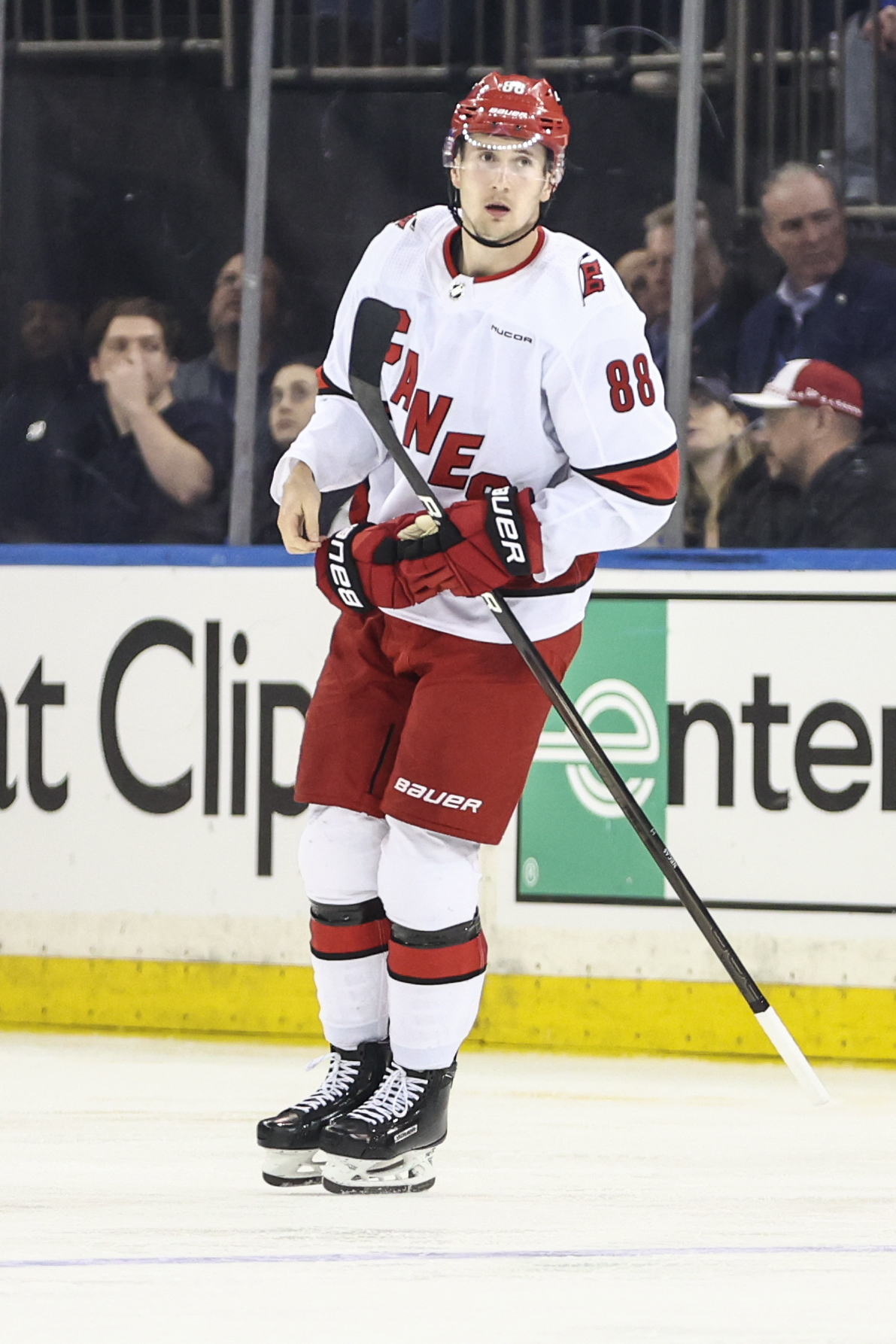 And it’s a move that should happen relatively soon, hopefully making this a short-lived unchecked box for all parties involved. An amicable departure via trade is the outcome both sides still prefer, Sportsnet’s Elliotte Friedman said earlier this month. The beginning of the Stanley Cup Final came and went without a move, as Frank Seravalli of Daily Faceoff suggested may have been in the works, but all indications still point toward a deal getting done before or on draft day.
The Hurricanes are expecting a rich return package, though. While he’s still 25, that may be tough to swallow for teams picking up a player who’s only truly challenged for first-line minutes at sparing moments during his seven-year, 362-game NHL career. The 2017 12th-overall pick has eclipsed the 50-point mark just twice, each coming in his last two seasons.
His back-to-back 20-goal campaigns and his ability to shift to center if needed do position his value at a bit of a high point, though. He’s still projected to garner $7.5MM annually on a seven-year extension, per Evolving Hockey. That puts him relatively in line (if not more expensive) than some other comparable top-six-caliber but inconsistent forwards on the UFA market, such as Elias Lindholm.
Refill Wing Depth
As mentioned earlier, the Canes will be dealing with some major roster turnover on offense outside of their core forward pieces via their pending UFAs. Add Nečas into the mix, and it’s clear they’ll need to make some moves to replenish their scoring depth – especially on the wings.
Pulling off a Nečas deal could potentially solve some of that problem. By all accounts, they’re looking for NHL-ready talent in return, not draft picks and prospects. The purpose of such a deal is twofold: one, helping keep their contention window alive with a similarly valued Nečas replacement, and two, making it easier to get a trade across the finish line by opening up some roster flexibility for the acquiring team.
That leaves everybody else. Of course, Martinook, Noesen and Teräväinen could still – theoretically – all be back before or after July 1, and this is no longer much of a conversation. There’s still a question to be had about who might replace Guentzel at the top of the lineup, though. Yes, the Canes finished second in the Metropolitan Division without his services aside from the last few weeks of the season. But he was a force in a Carolina sweater, racking up 25 points in 17 games to end the campaign.
It could certainly be a by-committee approach in terms of depth scoring, and Jarvis and Andrei Svechnikov would still round out a spectacular Aho-centered first line. But it does draw their secondary scoring into question, as outside of Nečas and their first line, their leading scorer from last season would be captain Jordan Staal and his 30 points. They’ll need some cost-effective, high-ceiling UFA options to help plug those holes.
Worry About The Future
It’s the last item on this list, but it’s also one they’re likely to start figuring out quickly. It appears they’ve already shifted a good portion of their attention here, reportedly agreeing in principle to an extension for Slavin. He’s not eligible to put pen to paper until July 1 with one season still left on his contract, though.
But even with the news, the Hurricanes still face a similar situation on defense in the summer of 2025 as they do now. Only Chatfield and Slavin are signed to one-way contracts for 2025-26, although Morrow will still be on his entry-level deal as a likely regular contributor. However, a replacement for the still-effective-but-aging Brent Burns will be needed, and Dmitry Orlov will also be an unrestricted free agent after next year.
Things are mostly stabilized offensively, with the brunt of the turnover expected this summer. A long-term extension for Jarvis “resets the window” for their forward corps, and no major pieces will be due for new deals within another few years.
They’ll also need to find a partner for the up-and-coming Pyotr Kochetkov in the crease. Barring a goalie trade, the Hurricanes will bring him back in tandem with established veteran Frederik Andersen next season. If both stay healthy and play to the potential they showcased this season, it’s a top-10 duo in the league. But Andersen will be 35 in October, and his injury history has given Carolina fits at inopportune times. It seems likely this will be his last season in Raleigh.
Image courtesy of USA Today Sports.
Free Agent Focus: Montreal Canadiens
Free agency is now just a month away and teams are looking ahead to when it opens. There will be several impact players set to hit the open market in July while many teams have key restricted free agents to re-sign as well. We continue our look around the NHL with an overview of the free agent situation for the Canadiens.
Key Restricted Free Agents
F Jesse Ylonen – Hoping to build on a solid depth scoring season in 2022-23, Ylonen failed to boost his production in any meaningful way. In fact, he took a step or two back during the 2023-24 campaign while seeing his ice time dip towards the back half of the season. Ylonen saw his point-per-game average drop from 0.43 P/G to 0.14 P/G in only one year. Luckily, this should allow Montreal to keep him close to his previous league-minimum salary of $775K in hopes that he will rebound for the 2024-25 NHL season.
D Arber Xhekaj – Not much of a point producer from the back end, Xhekaj has become a valuable presence on the Canadiens’ blue line. Over the last two years, Xhekaj has scored a total of eight goals and 23 points over 95 games while also delivering 284 hits. However, because of his physicality, Xhekaj has lost quite a few games to injury in his first two years with Montreal, and the team will be hoping he can maintain better health moving forward. He should be able to get a modest raise on his most recent salary of $828K at the NHL level this summer, as Evolving Hockey projects a 2-year, $3MM contract for Xhekaj. 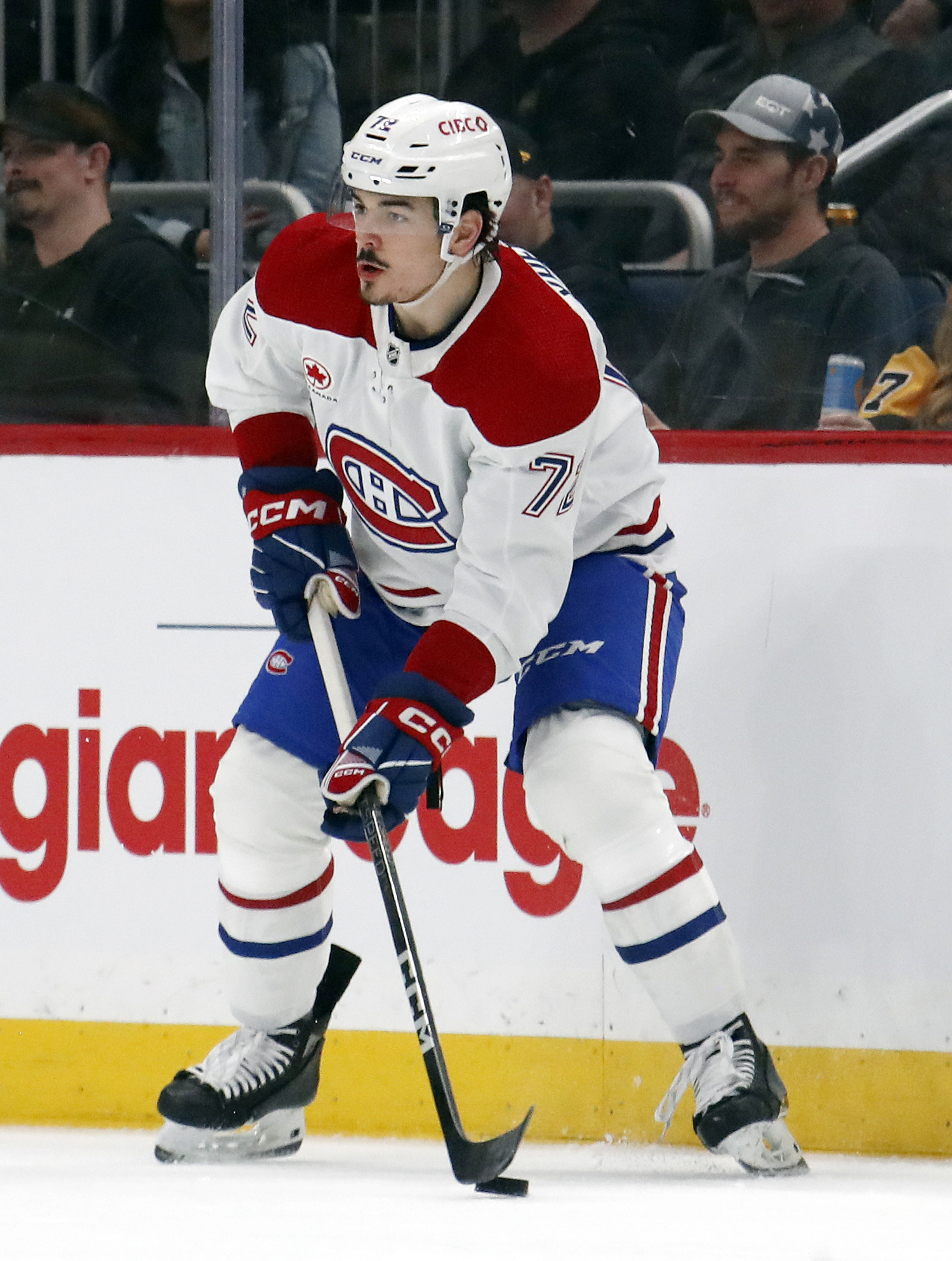
D Justin Barron – Acquired in the trade that sent Artturi Lehkonen to the Colorado Avalanche during the 2022-23 NHL season, Barron could potentially be crowded out of the Canadiens defensive core this summer. Shuffled back-and-forth between Montreal and their AHL affiliate, the Laval Rocket, Barron failed to build on his production this season despite seeing his ice time increase by an average of two minutes. It’s unlikely that the Canadiens will choose not to tender Barron a contract this offseason, but he may start the season in Laval with the team already having a crowded blue line.
Other RFAs: F Lias Andersson, F Filip Cederqvist, D Mattias Norlinder
Key Unrestricted Free Agents
F Tanner Pearson – After suffering through injuries during the 2022-23 campaign with the Vancouver Canucks, Montreal acquired Pearson last offseason for some much-needed depth scoring. However, Pearson would have one of his worst seasons to date in northeastern Canada, scoring five goals and 13 points through 54 games this year. A few weeks ago, it was announced the Canadiens have no intentions of re-signing Pearson, confirming he will hit the open market this summer.
Other UFAs: F Colin White, D Chris Wideman, F Arnaud Durandeau, F Philippe Maillet, F Mitchell Stephens, D Brady Keeper
Projected Cap Space
Heading into the summer months, the Canadiens organization will have around $9.4MM of cap space to work with, with the ability to go 10% over the upper limit. Once the 2024-25 season starts, the team will place goaltender Carey Price on long-term injured reserve which will open up another $10.5MM to work with during the year.
Unless Montreal can somehow facilitate a trade of Price’s contract this summer, they will have a little wiggle room to add an impact piece in free agency. Defenseman Mike Matheson and forward Juraj Slafkovsky took major steps forward this past season and the organization’s prospect pool should add complimentary pieces shortly. Because of this, Montreal’s sole focus should be moving out bloated but moveable contracts in Christian Dvorak and Joel Armia to increase the organization’s cap flexibility despite Price’s massive salary.
Photos courtesy of USA Today Sports Images. Contract information courtesy of CapFriendly.
Mapping Out The Blackhawks’ Offseason Plans
Once again mired as one of the worst teams during the regular season in 2023-24, the Chicago Blackhawks have an interesting offseason ahead. With a major piece set in stone now that Connor Bedard has confirmed he’s the real deal, the Blackhawks have a lot of flexibility to improve the team this summer.
After failing to win back-to-back draft lotteries, Chicago will start their offseason with the second overall pick in the 2024 NHL Draft. It is common knowledge that the San Jose Sharks will select Macklin Celebrini with the first overall pick. Still, the Blackhawks will likely select defenseman Artyom Levshunov or forward Ivan Demidov with the next selection, both of which will project as elite-level players in their own right.
After the NHL Draft, the next significant date in the offseason will be July 1st. This is where Chicago can shake things up in a major way. For their roster in 2024-25, the Blackhawks have 10 forwards, four defensemen, and two goalies already signed to contracts. The team will likely re-up on most of their restricted free agents and graduate prospects to the majors, but they will have a ton of cap flexibility to fill in the other holes.
Having nearly $33MM to play with this summer, General Manager Kyle Davidson could have practically any player on the market, assuming those players would want to come to the Windy City. In fact, Sportsnet’s Elliotte Friedman has already alluded to Chicago poking around Jake Guentzel‘s camp, with the latter having roots in the American Midwest. If the Blackhawks can convince Guentzel to sign a long-term deal with the organization this summer, that would be a foundational building block to put next to Bedard for the first half of his career.
Nevertheless, even if Chicago makes serious investments this summer, they will still be hard-pressed to earn a playoff spot next year. The Central Division is still projected to be led by the Colorado Avalanche, Dallas Stars, and Winnipeg Jets next season. Still, the Blackhawks may be able to move past the Utah Hockey Club, Minnesota Wild, and St. Louis Blues if nearly everything goes positively.
Landing a big fish or two should make the Blackhawks more competitive for the 2024-25 NHL season, and aid in developing the youngsters that now inhabit the roster. Unlike other rebuilding clubs, the presence of Bedard has allowed Chicago to accelerate their rebuild quicker than normal.
PHR Mailbag: Ullmark, Rangers, Trouba, Marner, Tkachuk-Huberdeau Trade, Laine, Holl
Topics in this edition of the PHR Mailbag include Jacob Trouba’s future with the Rangers, Patrik Laine’s situation in Columbus, and much more. If your question doesn’t appear here, we’ll have two more of these columns between now and next weekend so watch for it in one of those.
@JJFlip1995: What is the likelihood that the Bruins trade Ullmark and what is a likely return from said trade?
GM Don Sweeney has made it clear that he’d love to keep both netminders. I think he’s speaking truthfully about that desire. But I would be absolutely stunned if it actually happened. Jeremy Swayman is heading for a pricey long-term contract which would push Boston’s spending on goaltenders near the top of the NHL. Given that they have some needs to fill while having some rare spending flexibility this summer, I’m not sure that spending big between the pipes is the best way to do it. It’ll help during the regular season but come playoff time, we saw how little having Ullmark as a high-end second option mattered.
As for a return, I don’t think it’s going to be a huge one. With what’s believed to be multiple other veteran starters available this summer, the market isn’t going to be too strong beyond the top option (and that’s not Ullmark). I don’t see the high-end picks being in play over the next couple of weeks.
A lot will depend on if the Bruins are taking a contract back as part of the swap. If they’re just moving him straight up, they might get a late first-round pick and even that might be on the high side if other dominoes fall first. I think their preference might be to try to swap Ullmark for a skater to fill one of their other holes with a minimal cap effect. At that point, you’re probably looking at a second-pairing defender or a second-line winger. If they can do that and then back-fill with Brandon Bussi taking over behind Swayman, that would be a solid outcome for them.
@RamonesFan41: Who will the Rangers buy out? Trouba, Goodrow, or someone else???
Can I pick none of the above? I don’t think they buy out anyone, to be honest.
I’ll talk a bit more about Trouba shortly but a buyout costs them $4MM for the next two years and then $2MM for two more years after that. Can the Rangers get a better defenseman for $4MM or less? I don’t think they can. So if you’re not able to upgrade that position, why buy him out and make the team worse? He didn’t have a great playoff showing but he can still be a contributor so I don’t think they even consider the possibility of a buyout for him.
As for Barclay Goodrow, you could sell me on the idea, at least. The buyout price tag isn’t crazy. They’d have a cap credit next season of $200K followed by a $1MM cap charge in 2025-26 before ballooning to a $3.5MM charge in 2026-27. From there, it’s a little over $1.1MM for three more years. If they need extra money now, they could buy him out and pre-spend some of the expected cap increase in 2026-27 to cover the higher cost at that time.
But Goodrow is coming off a strong postseason showing where he was one of their leaders in goals with six. He’s a player who is more effective in the playoffs and I think some might suggest they need more of those players, not less. I wouldn’t be shocked if they bought him out but I’m leaning no right now.
Looking at the rest of the roster, I don’t see a viable candidate. If they have reservations about Filip Chytil being able to stay healthy moving forward, they could try to buy him out at one-third of the cost but with the concussion issues he had, I suspect that’s a grievance waiting to happen. That’s really about it for options so I don’t expect them to go that route in the next couple of weeks.
met man: Do the Rangers stand pat or make moves to improve the team via trades or free agent signings?
With a little over $9MM in cap room per CapFriendly, New York has enough cap space to re-sign Ryan Lindgren and Braden Schneider and round out the roster so they don’t have to necessarily do anything. They wouldn’t be able to do much else but starting next season with the bulk of this core intact isn’t a bad way to go. We are, after all, talking about the team that had the most points during the regular season so it’s a good group.
Kaapo Kakko feels like a possible trade chip even with his new deal. Maybe there’s a winger at a similar price tag that they feel is a better fit on the roster or if they want a free agent in that price range, perhaps you look at moving him for a draft pick. I wouldn’t be shocked if they looked at some lower-cost free agents as well. In general, I expect a fairly quiet offseason from them.
But if it were up to me, I’d look to try to go into next season with a couple million in cap space. They have some waiver-exempt players who could be shuffled back and forth on off days to add to that amount. Maintaining that to the trade deadline is worth around $9MM to $10MM in full-season salaries, giving them the ability to add multiple players. If they make a move now, it probably caps them out. I’d rather try to get two pieces in-season than one during the summer, especially on a team that is already somewhat of a contender.
Schwa: Do you see the Rangers moving on from Trouba? What could you see as the additional assets given to get him off the books?
Maybe a team like Utah could be a fit given they have no D under contract for next season. $8MM for two seasons isn’t too bad for a team to get a physical player who offers leadership. They need to spend some money and he likely won’t provide a cap crunch for them by the time the contract expires.
Let’s talk about Trouba a bit more now. As I already noted earlier, I don’t see a buyout happening. It’s fair to say that he underachieved this season and that doesn’t help his short-term trade value. Neither does an $8MM price tag. Yes, two years remaining makes it more manageable but how many teams can realistically afford that? Perhaps more importantly, how many good teams can afford that?
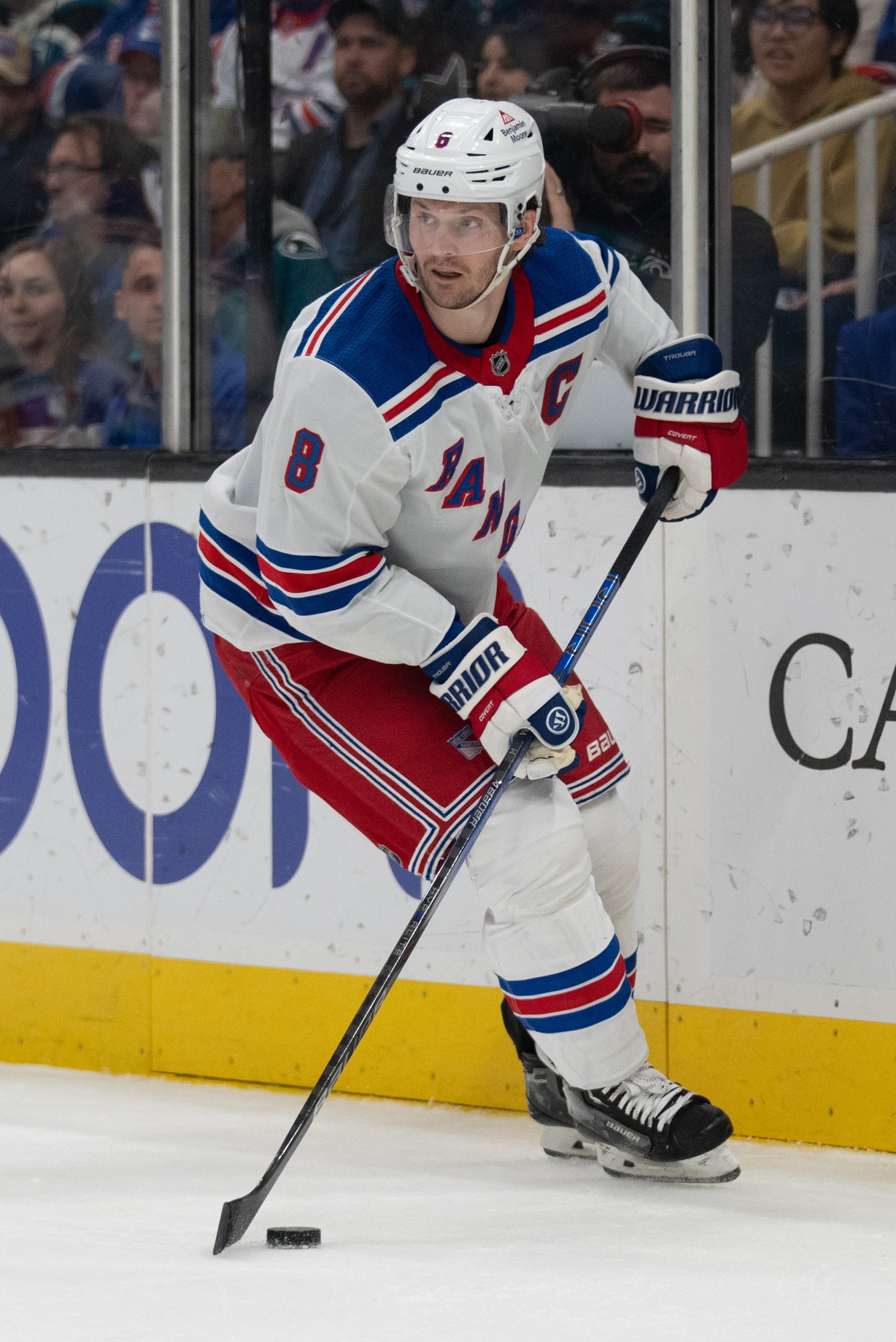 You identified Utah as a possible landing spot and your logic is certainly sound. That’s definitely a team that could benefit from a shorter-term veteran add to try to stabilize things and they can certainly afford the contract. But they’re not a playoff team. Trouba has a 15-team no-trade clause as of July 1st (with a full no-move before then). Personally, I think it stands to reason that he’d have some non-playoff teams on that list which probably takes Chicago and San Jose, other weaker teams with ample cap room, off the table as well.
If you look at the list of playoff teams this year that can probably afford to take on an $8MM contract without it materially affecting what else they might try to do this summer, Nashville comes to mind. The problem is they might be the only team on that list.
Without many viable options for a cap dump, they might have to look at trying to move him for another player. But in doing that, they’re mitigating the cap savings and if I’m being honest, I don’t think they’d get the best player in the move. If you’re a contender, how much is it worth it to take a lesser player back (one that won’t log 20-plus minutes a night on the right side of the back end) and only get a bit of cap savings? That doesn’t seem like a great idea to me. Never say never but I think he stays put.
frozenaquatic: Panarin straight up for Marner. NTCs notwithstanding, who says no? Fills organizational holes for each, and opens up first-line LW for Lafreniere. Panarin’s a little better but Marner is a little younger. Similar contracts.
Trouba to Hockey Club Sibir Novosibirsk Oblast for two pucks and a mouthguard. Who says no? The mouthguard?
I think we’ve covered Trouba more than enough by now but let’s talk about the first proposal. In a vacuum, I don’t dislike the offer for either side; your quick logic makes sense. I do think both sides would say no, however.
From Toronto’s perspective, the idea of trading Mitch Marner would be to change up the composition of their roster. Maybe it’s for a prominent blueliner, a power forward, a future center to possibly replace John Tavares, or a combination of the three. Artemi Panarin does none of that. He gets them an extra year of club control at a slightly higher price tag which isn’t nothing but that’s not the type of roster shakeup I think they’d be looking to do.
Meanwhile, for the Rangers, while they save a bit of money for next season, it could cost them considerably for 2025-26. If they can’t re-sign Marner, then they’ve lost a year of a player who just put up 120 points. And if they can re-sign him, it’s probably going to be at a price tag that’s higher than Panarin’s which could be notable as they potentially look to reshape their roster. Having said that, I think they’d be the likelier of the two teams to say yes even though I think they’d say no in the end.
PyramidHeadcrab: Since hindsight is 20/20, who won the Tkachuk-Huberdeau trade? I gotta imagine Florida wins that one by a mile, but can we prove it with numbers? I distinctly remember the Florida fanbase having an absolute meltdown, “Tkachuk is just a mid power forward without Gaudreau!” But in watching this guy the past couple years, I personally think he’s become my favourite player since Paul Kariya.
Still gotta get me a Kariya #9 Ducks jersey…
And speaking of the other casualty of Calgary’s cap crunch, what does Johnny Gaudreau need to be successful going forward in Columbus?
Right now, it’s Florida by a considerable margin in that trade. Matthew Tkachuk has outscored both Jonathan Huberdeau and MacKenzie Weegar combined since the swap (197 points to 190) and makes $7.25MM less. I think that’s all the numbers that are really needed.
Tkachuk has proven himself to be a legitimate top-line power forward whose style fits in perfectly with a grittier group that the Panthers have. And while a $9.75MM price tag certainly isn’t cheap, he’d get considerably more than that if he was hitting the open market next month.
Meanwhile, Huberdeau has struggled immensely under two different head coaches now over his first two years in Calgary. He’s one of the highest-paid wingers in the league and is producing like a second-liner with two years of a little over 50 points. That can’t be spun as a positive. They need a whole lot more from him and barring an influx of offensive talent, I’m not sure he can be counted on to produce anywhere close to the level he was with Florida.
I will say this, however. Weegar had a great season, scoring 20 goals and 52 points while logging nearly 23 minutes a night. He’s a legitimate top-pairing player and at $6.25MM on a long-term deal, they’ll get some good value out of that for a while, either with the Flames or as part of a trade if they opt for a rebuild.
It’s hard to say Florida will lose this deal, especially if they’re able to close things out against Edmonton. Right now, it looks pretty lopsided but if Huberdeau can return to a top-line level, Calgary could still do relatively well here.
As for Gaudreau, he needs higher-end linemates. Boone Jenner is a very good center, one of the more underrated ones even. But he’s not a true top-line option, especially offensively. A well-rounded offensive middleman to play off of would make a big difference. I think they have that in their system, it’s just a matter of getting Adam Fantilli more development time. In an ideal world, a big winger on the other side to do some of the board work would also help. So, too, would a more free-flowing system. In other words, Gaudreau needs a lot to go right if he wants to get back to the point-per-game level.