
Topics in this edition of the PHR Mailbag include veteran players who St. Louis could move this summer, a viable offer sheet candidate, and more. If your question doesn’t appear here, check back in last weekend’s column while we’ll have one more mailbag from our latest callout for questions next weekend.
Blues_Choices: Do the Blues make any moves this summer? Binnington and Kyrou are talked about a lot, but what kind of package would they get back?
Second, why would the Blues trade Parayko as they have no defensemen ready to take his place?
I’m not sure a package deal for Jordan Binnington and Jordan Kyrou would make a lot of sense. More teams would want Kyrou than Binnington so putting them together might actually reduce the number of overall suitors.
Ultimately, a lot of this answer depends on what incoming GM Alex Steen wants to do. Are they rebuilding, retooling, or trying to make the playoffs next year? The answer to that dictates the type of return, at least in part.
With Binnington, I suspect they’d want a goalie back (someone signed for a year or two to be Joel Hofer’s backup, or even push for more of a platoon role) plus something else. I’m thinking a second-round prospect or draft pick as that something, with the Blues retaining on Binnington’s $6MM price tag to help generate that return. I don’t think they want to retain on multi-year deals but one-year rentals would be another story.
Since this isn’t a deep UFA class, I think the Blues would be able to benefit from a stronger trade return if they moved Kyrou. He’s not in the same level as Robert Thomas (when the ask was believed to be three top-15 equivalent pieces) but it might not be much lower given the limited options that might be available. A core forward, a quality prospect, and a first-round pick (that one likely being more toward the back of the first round) could be doable, especially if there are teams looking at his $8.125MM AAV for the next half-decade and forecasting it as becoming team-friendly in a higher cap environment. The prospect would likely be the make-or-break piece. I could see something like this happening this summer if we wind up with a lot of trade activity.
As for Colton Parayko, it’s important to note the mindset at the time that this was a team likely heading for at least a short-term rebuild considering how active GM Doug Armstrong was in trade discussions. In that case, do they need a 33-year-old whose best days will be behind him by the time they emerge from that rebuild? If the answer is no, then the question shifts to asset maximization.
When is the optimal time to move Parayko to generate the best possible return? That becomes the priority over ensuring there’s ample depth to backfill. If you’re not worried about winning too much in the short term, having a ready replacement doesn’t matter as much. In the short term, they’d have given Logan Mailloux and Matthew Kessel bigger roles and see how they fared, then looked at a short-term free agent stopgap in the summer. In the reported Buffalo trade, they were getting someone who could plausibly have replaced Parayko down the road in Radim Mrtka, but he was just going to be a few years away from being ready to be an impact defender. With that being the likely timeline to return to the playoffs had they wound up dealing away a bunch of their core pieces, they’d have been just fine with that timeline.
Jaysen: The Habs need more size in their bottom six, 2nd line C, upgrade on the right-side D. What would be some realistic targets via trade or offer sheet, and what would the cost be for each need? Thanks!
I don’t see the Canadiens being a viable offer-sheet threat. Yes, they have all of their picks available to make them but they don’t have enough salary cap space as things stand to re-sign their pending RFAs and then try to bring in someone of consequence via an offer sheet. Never say never, but I would be surprised if they went this route. Now, onto the three areas you mentioned.
Size in the bottom six is the easiest of the three to get in free agency if they’re willing to pay what’s going to be a high price for that role, given the six-years and $20MM Michael McCarron just got. A.J. Greer and Beck Malenstyn fit the bill while Brandon Duhaime is coming off a down year but profiles as the type of physical player I think you’re looking for. Mason Marchment fits the bill as well but might land on the second line instead of the third and frankly would cost more than what Montreal could afford at the moment.
As for the second-line center, that one’s probably not coming from free agency. There’s a case to make that there isn’t one left in free agency although I could see someone like Claude Giroux fitting the bill on a one-year deal with the hope that Michael Hage would be ready by the spring. That said, I see Ottawa re-signing Giroux at some point. On the trade front, I believe the speculation that if Nico Hischier were to be made available, GM Kent Hughes would make a big offer. But I’m not convinced it’s coming to that point, especially early enough in the summer. Vincent Trocheck could fit the bill but with the speculation that Montreal’s front office isn’t exactly talking much to New York’s could make that complicated. Dylan Strome has been tossed out as a possibility but I don’t see Washington moving him. Mason McTavish would probably fit the bill but are the Canadiens prepared to pay a top-end return with him coming off a down year? (Anaheim has no reason to move him otherwise.)
When it comes to the right-side defenseman, it depends on what they’re trying to upgrade. Are they trying to upgrade on Alexandre Carrier, or the combo of Arber Xhekaj and Jayden Struble on their off-side? If it’s the former, UFA Jacob Trouba would fit the bill if he wanted to play north of the border while someone like Brent Burns would be a one-year stopgap or bridge to David Reinbacher. Connor Murphy warrants a mention too. On the trade front, Zach Whitecloud (who could fit the short-term second-pairing upgrade as well) would be an option if Calgary wanted to trade him while they at least kicked the tires on Rasmus Ristolainen at the trade deadline. If it’s just a depth addition for the third pairing though, UFAs like Radko Gudas or Vincent Desharnais come to mind. Trade-wise, I wonder if they could look at bringing back Johnathan Kovacevic. He held his own in a top-four role with the Devils and with the amount they’re spending on defense, he could be expendable this summer.
baseballpun: Do you think Mavrik Bourque would sign an offer sheet in the $4MM range requiring a second-round pick as compensation? And if not, would he be worth making a $7MM offer (assuming you have the cap space)?
This was something I noted in Dallas’ Offseason Checklist last month as something they’re going to have to guard against. Do I necessarily think Bourque is looking to sign one? No, in an ideal world, the Stars find a way to open up money to re-sign both him and Jason Robertson, though Bourque would likely need another short-term contract to make it work.
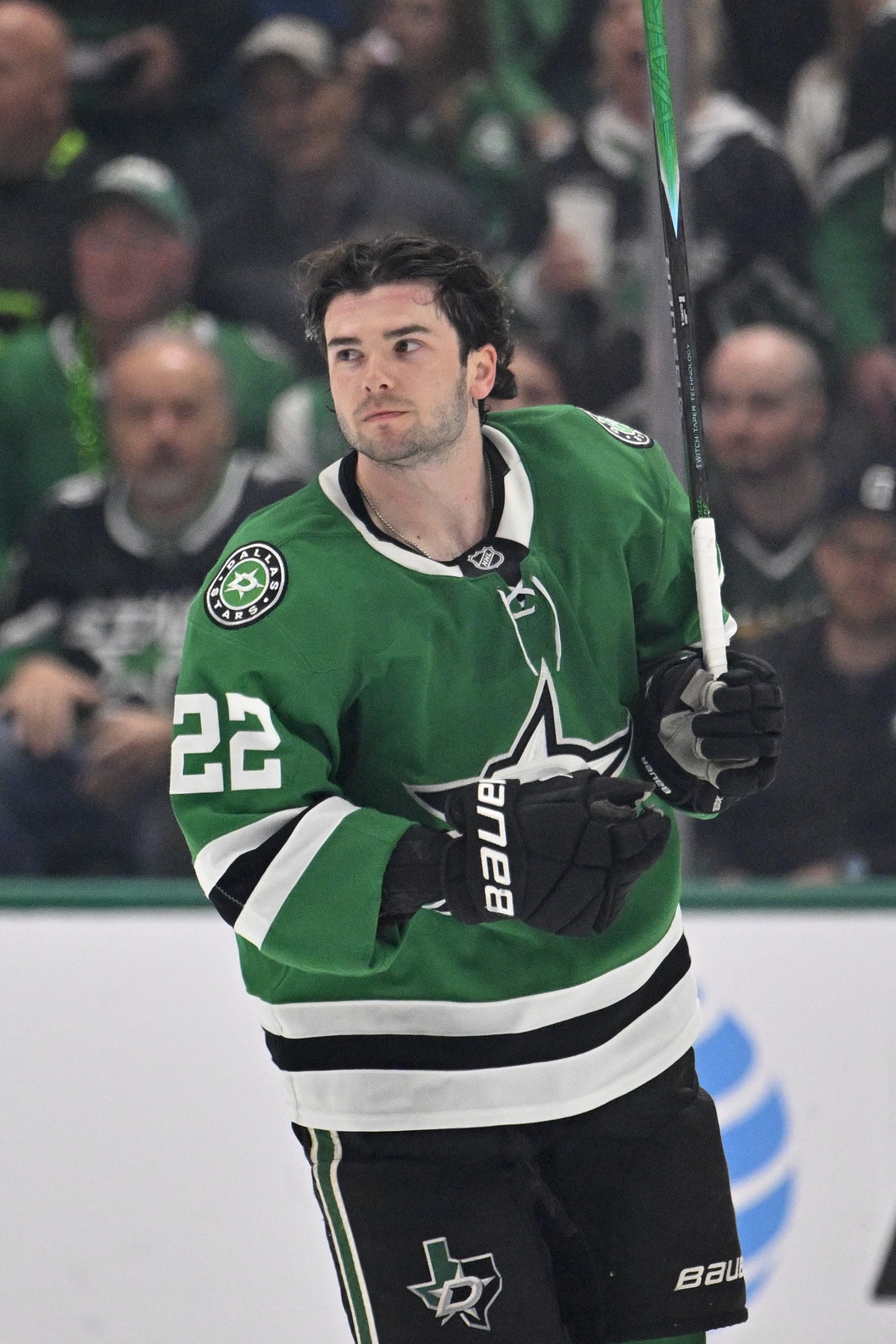 But if he were to sign an offer sheet, it would presumably be for a short-term deal anyway. Based on this year’s thresholds, he could sign for up to $4.775MM and the signing team would only owe a second-round pick as compensation. That’s a number that would make life difficult for the Stars but it’s also probably not a number that Bourque wants to lock in at long term; he’d potentially be foregoing a bigger payday down the road by doing so. Just to cover it, an offer at $7.15MM would cost a first-round pick and a third-round selection. From an asset cost standpoint, that seems like reasonable value for a 24-year-old middle-six winger with three years of team control. But he’s not worth that money on a short-term deal. Would a team go five years at that to get two extra years of control? (The divisor on offer sheets is a maximum of five so a six-year offer at $7.15MM would trigger a higher level of compensation which a team wouldn’t likely do.) I don’t think that price tag and term is realistic.
But the $4.775MM on a short-term deal (one or two years) is. In all likelihood, that’s more than what he would receive in arbitration which is why I can’t quite rule out the possibility of him signing one, as rare as they are. A team could also get creative and front-load it with a signing bonus to put the next qualifying offer below the AAV, giving them a bit more security.
A lot would depend on how talks are going early in July. It’s only a few days after free agency starts that the decision about filing for salary arbitration needs to be made so that becomes the pressure point. If things are looking up in talks with the Stars, it seems doubtful that Bourque would entertain an offer sheet. But if they’re not going so well or he’s being asked to be flexible again to make the money for the rest of the team worked, then I think there’s a legitimate chance an offer sheet gets considered.
bottlesup: The Kraken were willing to give 34-year-old Panarin $14MM a year for four years before they lost out to LA. Do you think they’re an overwhelming favorite to go after Tuch, and what percentage would you give them that he’s in Seattle?
To be fair, I think there’s a big difference between Artemi Panarin and Alex Tuch. Panarin is a brand-name player, a premier point producer who has averaged more than a point per game in now nine straight seasons. While he’s likely on the downswing of his career now at 34, he’s still someone a team can structure an offense around, at least for a couple of years. In that sense, an overpayment in terms of money to try to entice him to choose Seattle over another organization is defensible.
But I also wouldn’t interpret that as a sign that this is their strategy moving forward. Tuch is a quality player but he’s not in the same tier as Panarin. Over the last three seasons, he has been around a 30-goal, 65-point player, a total that Panarin has beaten in all of his 11 years. He is a contributor to an attack, not its focal point. Don’t get me wrong, Tuch is a solid player and is worthy of the interest he’s going to receive if he gets to the open market. But I don’t think the Kraken (or any other team) is planning to offer a similar type of overpayment that is so far above market value as they did with Panarin. I suspect what they tried there was more of a one-off.
Seattle has enough expiring contracts (Jaden Schwartz, Jamie Oleksiak, Eeli Tolvanen, and Bobby McMann among them) that they have ample cap space to take a run at Tuch. Do I think they’ll make a serious pitch? Yes. But would I call them a favorite to land him? Not at all. Seattle could offer top dollar but other teams will offer similar money and a better chance at winning in the short term.
lgr34561: What would your opinion be on a Sharks/Rangers trade where the Sharks would receive the 5th overall pick, the 26th overall pick, and Braden Schneider while the Rangers would receive the 2nd overall pick?
I think this trade would make sense for both teams. From the Sharks’ perspective, they are getting an NHL-ready defensive prospect (true that he has regressed but he still has that potential if developed correctly) plus moving back three spaces which might still give them the defenseman that they want. Plus, they get the 26th overall pick. For the Rangers it makes sense because they need a franchise type of player and I’m not sure if they’re finding that at number five and would want to move up to two to draft Stenberg. This is my opinion and I would like to know yours. Thank you!
I think the Rangers say yes but not the Sharks.
For New York, Braden Schneider is a player who has been seemingly on the fringes for a couple of years now; he has been in trade speculation for a while. Is he really a core piece for the Rangers? Not really, and the 26th pick statistically isn’t likely to yield one. (Good player, yes, but not necessarily a core one.) Is it worth moving two non-core assets to turn a fifth pick into the second pick with the shot at getting a legitimate top-line winger like Ivar Stenberg? Of course it is.
But for the Sharks, they have a boatload of picks and prospects in their system already so there isn’t necessarily as much appeal in adding a late first and Schneider. For a team that’s as asset-rich as San Jose is, quality matters more than quantity of assets. Schneider fills a need for them for sure but I suspect they can trade (or sign) a right-shot defender without moving the number two pick so they don’t need to use that pick to get one. (Or if they do, they’re getting a much more impactful player back.)
If San Jose was a team that had traded a bunch of picks away in recent years and had a depleted cupboard, I think this would be something they’d at least entertain. They’d probably still say no but they might consider it. But because of the stockpile they already have, this isn’t the type of move they’d be looking to do.
Big M: For Toronto’s Matthew Knies and their #1 ’26 pick, Kyle Davidson should offer Chicago’s two ’27 #1 picks, Frank Nazar, Sacha Boisvert, Artyom Levshunov, and Kevin Korchinski’s signing rights. I also believe Ilya Mikheyev should get a three-year contract.
If the Maple Leafs were looking to embark on a rebuild, this isn’t a half-bad offer. Yes, it’s quantity for quality but if they were to hit on those two first-rounders, they could get five or six (depending on what happens with Korchinski) strong pieces, including some core ones. That’s a good enough stockpile that they’d probably at least have to think about it.
But Toronto isn’t looking to rebuild under new GM John Chayka. While it’s believed they’re willing to listen on just about anyone, all signs point to them trying to get back to the playoffs next season. This move would make those efforts more difficult. Accordingly, I think they say no, keep Knies, and draft Gavin McKenna to give themselves the best possible chance of getting back to the playoffs next season.
As for Mikheyev, I think the Blackhawks agree with you. That’s why they kept him at the trade deadline, with the hope that they could re-sign him. They have tried to re-sign him since the season ended but they’re too far apart on money right now. They tried to allow his camp to talk to other teams to get a better feel for his market but the NHL shut that down rather quickly. So, unless the asking price drops or GM Kyle Davidson ups his offer (or both), it doesn’t look like Mikheyev will be signing before free agency opens up next month.
Photo courtesy of Jerome Miron-Imagn Images.