
Maple Leafs Hire John Chayka As GM, Mats Sundin As Senior Advisor
May 3: Toronto has confirmed both hirings on Sunday. Chayka is stepping in as general manager, while Sundin is joining as senior executive advisor. Maple Leafs president Keith Pelley’s statement was as follows:
I’m thrilled to welcome John and Mats to their roles, two great hockey minds that will strengthen our entire hockey club. From the start of this process, it’s been about building a championship-calibre team for our fans and our city and today is an important step towards that goal.
May 2: The Toronto Maple Leafs are expected to hold a press conference on Monday where they will announce Mats Sundin and John Chayka have been hired to lead the team’s front office. The news was first reported by Steve Simmons of the Toronto Sun and later seconded by Sportsnet. The specifics of roles and responsibilities haven’t been defined, but it seems likely that Chayka will step into the team’s vacant general manager role.
Chayka became the youngest general manager in NHL history when he was hired by the Arizona Coyotes on May 4, 2016, at the age of 26. He was championed as an innovative, analytical thinker at the time and held the Coyotes role through four seasons, also serving as President of Hockey Operations for the latter three. Arizona only made the playoffs in Chayka’s last season, but he suddenly resigned from his roles just one day before the team kicked off the 2020 Stanley Cup Playoffs. The decision came just eight months after Chayka agreed to a multi-year extension with the Coyotes.
The NHL suspended Chayka in 2021 after it was revealed that he had entertained offers from other teams while still under contract with the Coyotes. The league also discovered that Chayka and the Coyotes had held private draft combines, something strictly forbidden by the league. Arizona was forced to give up its 2020 second-round pick and 2021 first-round pick as a result.
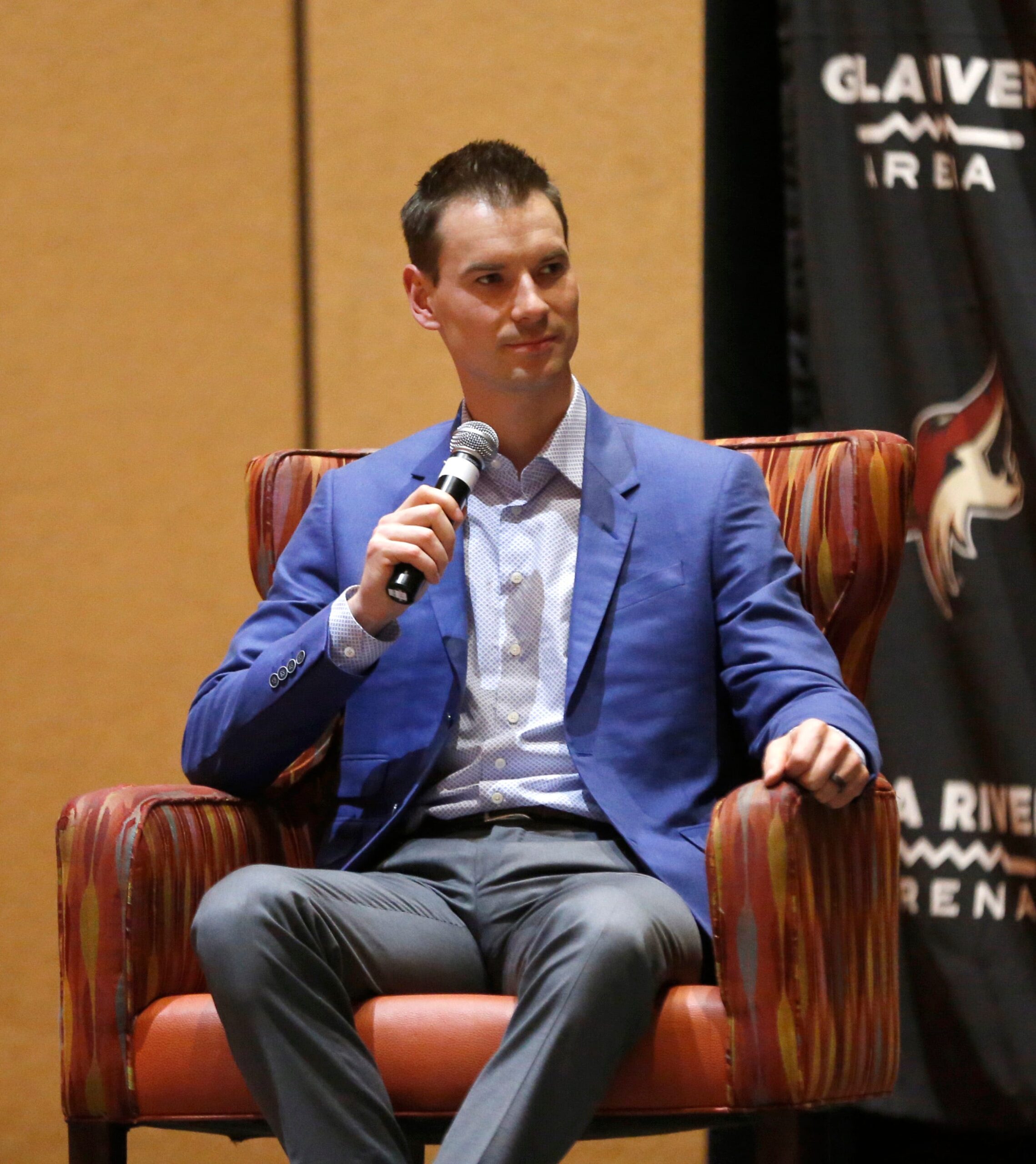 Chayka championed roster turnover in his time with the Coyotes. He added multiple impactful players to the roster, including Phil Kessel, Taylor Hall, Niklas Hjalmarsson, and Darcy Kuemper. He also brought in players who remain core components of the Utah Mammoth: Nick Schmaltz, Lawson Crouse, Clayton Keller, and Barrett Hayton. But quantity did not mean quality for the Coyotes, who struggled to click and never managed more than 35 wins under Chayka’s reign. He did have a knack for finding NHL talent in the draft, selecting six players who have gone on to play in at least 200 NHL games, though that is out of 32 total selections.
Many of Chayka’s gut calls seemed to be the right choices at the wrong time. He will look to correct his timing with a Toronto club in need of any kind of direction forward. The Maple Leafs managed to break out of their first-round slumps with trips to the second round in 2023 and 2025 – but they haven’t made it to the Eastern Conference Finals since 2002.
The Leafs couldn’t capitalize on the combination of Auston Matthews, William Nylander, John Tavares, and Mitch Marner – losing the latter to the Vegas Golden Knights last summer. Chayka’s primary task will be to build a core that can push through the playoffs before more of their core four step out of the lineup. He will have the boost of young difference-makers Matthew Knies and Easton Cowan, though the former appeared in trade rumors through the middle of the season. That trade could kick off a refresh of the Toronto lineup, as much as the decision to keep Knies around could define the top-end of Toronto’s future.
Sundin will be a strong steward as the Maple Leafs enter a new era. He joined the Leafs in a franchise-changing trade in 1994, with Wendel Clark among the four assets sent back to the Quebec Nordiques. Sundin, only two seasons removed from his first season above 100 points, instantly scored at a point-per-game pace for the Maple Leafs. He reached 94 points in the 1996-97 season, enough to cement his spot as the leader of Toronto’s lineup and earn him the captaincy. He wore the ‘C’ for the next 11 seasons from 1997 to 2008. Even in his final season in Toronto, Sundin managed 78 points in 74 games. His career spanned the Leafs’ last two trips to the Eastern Conference Finals – in 2002 and 1999. He left the Leafs for one season with the Vancouver Canucks in 2008-09, then retired as Toronto’s all-time points leader (987). He also held the goals record (420) until Matthews passed him on January 3.
Sundin’s number was retired by Toronto in 2012. He was inducted into the Hockey Hall of Fame nine months later. In retirement, he has lived in the same privacy he fought for during his playing days. He supported Team Sweden at the 2013 World Championship and the 2017 World Cup as a team consultant. The Tre Kronor won Gold at both tournaments. Sundin has otherwise not filled any formal team roles. The same robust leadership and hockey knowledge that guided his playing career will now guide Sundin’s managerial career. His guidance could be an important presence for Toronto’s top players.
Photo courtesy of Patrick Breen, Patrick Breen/The Republic.
Maple Leafs Interviewing Mats Sundin For Hockey Operations Role
The Maple Leafs will be interviewing Mats Sundin, the franchise’s all-time leading scorer, for a role in their hockey operations department as soon as today, Elliotte Friedman of Sportsnet reports. It doesn’t appear he’s being considered for either Toronto’s general manager or the president of hockey operations vacancy. However, he could be brought on board in an advisory role, “or something along those lines,” Friedman writes.
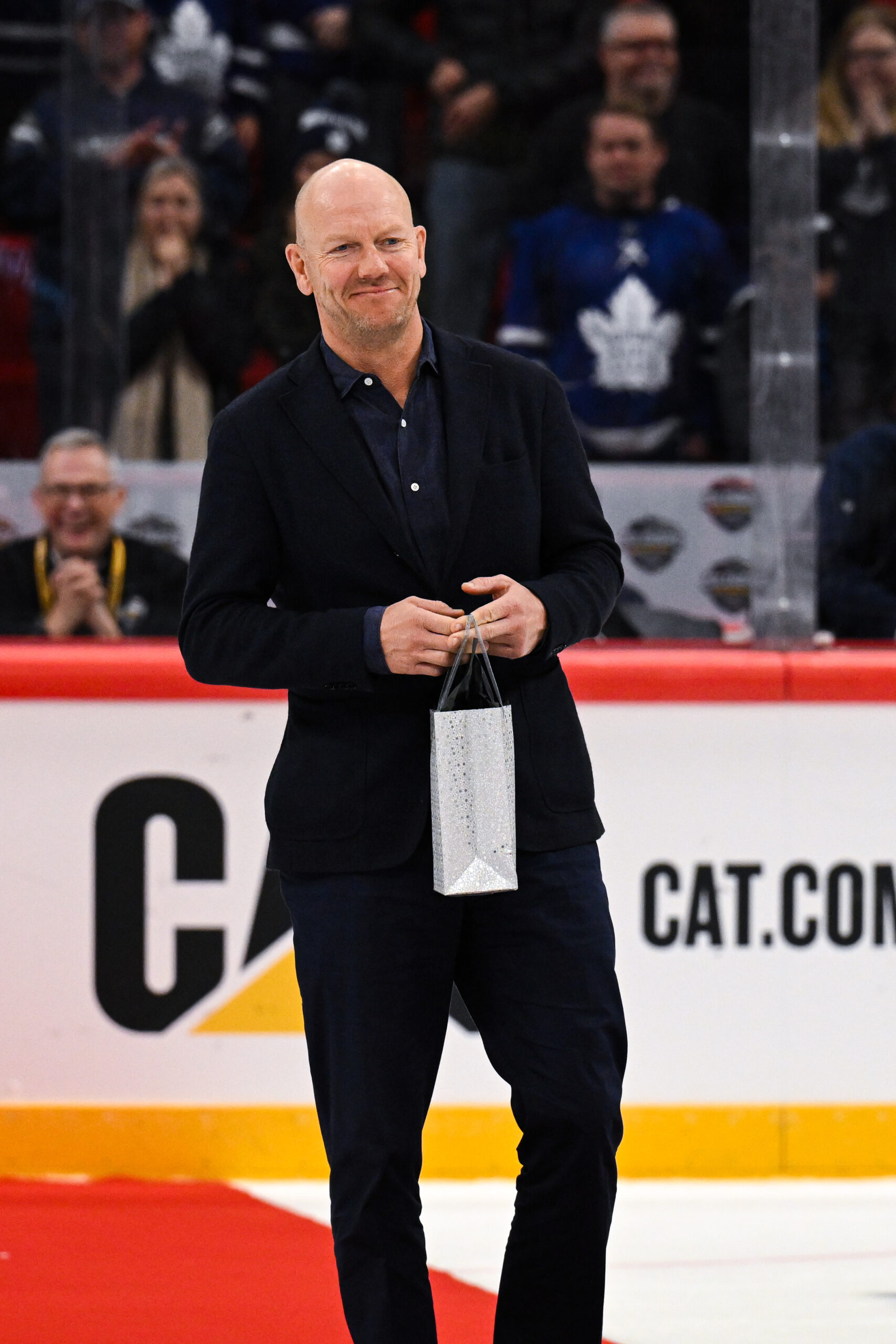 Sundin hasn’t been technically affiliated with the Leafs since the penultimate season of his playing career in 2007-08. An unrestricted free agent the following summer, he took several weeks into the 2008-09 season to decide on his future before ultimately signing a one-year deal with the Canucks. He retired the following offseason.
Since then, Sundin’s management resume has only gained some footnotes. He has no club experience in the front office and has only worked with Sweden’s men’s national team as a consultant on two occasions – first for the 2013 World Championship and again for the 2016 World Cup of Hockey. That 2013 team, led by the Sedin twins, an in-his-prime Loui Eriksson, and a young Gabriel Landeskog, landed Sweden its first gold medal at the tournament in seven years.
Sundin’s franchise records could stand for a while yet, pending Auston Matthews‘ long-term future in Toronto. The first-ballot Hall-of-Fame center and one of the NHL’s 100 all-time greatest players according to their centennial list in 2017, he was the first European ever to go first overall in the draft when the Nordiques selected him in 1989. He ended up in Toronto five years later in a blockbuster deal and, over the next 13 years, put up 420 goals, 567 assists, and 987 points in 981 games in a Leafs sweater. A perennial All-Star, Matthews has passed him in the goals department but still has 207 points to go before taking that crown away from him.
Teams taking this path to get a well-respected player but inexperienced executive into higher-leverage front office roles is becoming more commonplace. The Blues laid out their succession plan for outgoing GM Doug Armstrong several years ago, appointing Alexander Steen as a special assistant under Armstrong in 2024 with him scheduled to replace him in the GM’s chair this offseason. There’s a real chance an initial advisory role for Sundin could lead to something bigger in a few years, if he’s open to it.
Image courtesy of Per Haljestam-Imagn Images.