
Tampa Bay Lightning head coach Jon Cooper, Pittsburgh Penguins head coach Dan Muse, and Buffalo Sabres head coach Lindy Ruff were named the finalists for the Jack Adams award, which is presented annually “to the NHL coach adjudged to have contributed the most to his team’s success.”
In a year flush with options for the award, each member of this trio still stands out. Cooper, who is the NHL’s longest-tenured head coach, led the Lightning to a 50-26-6 record. 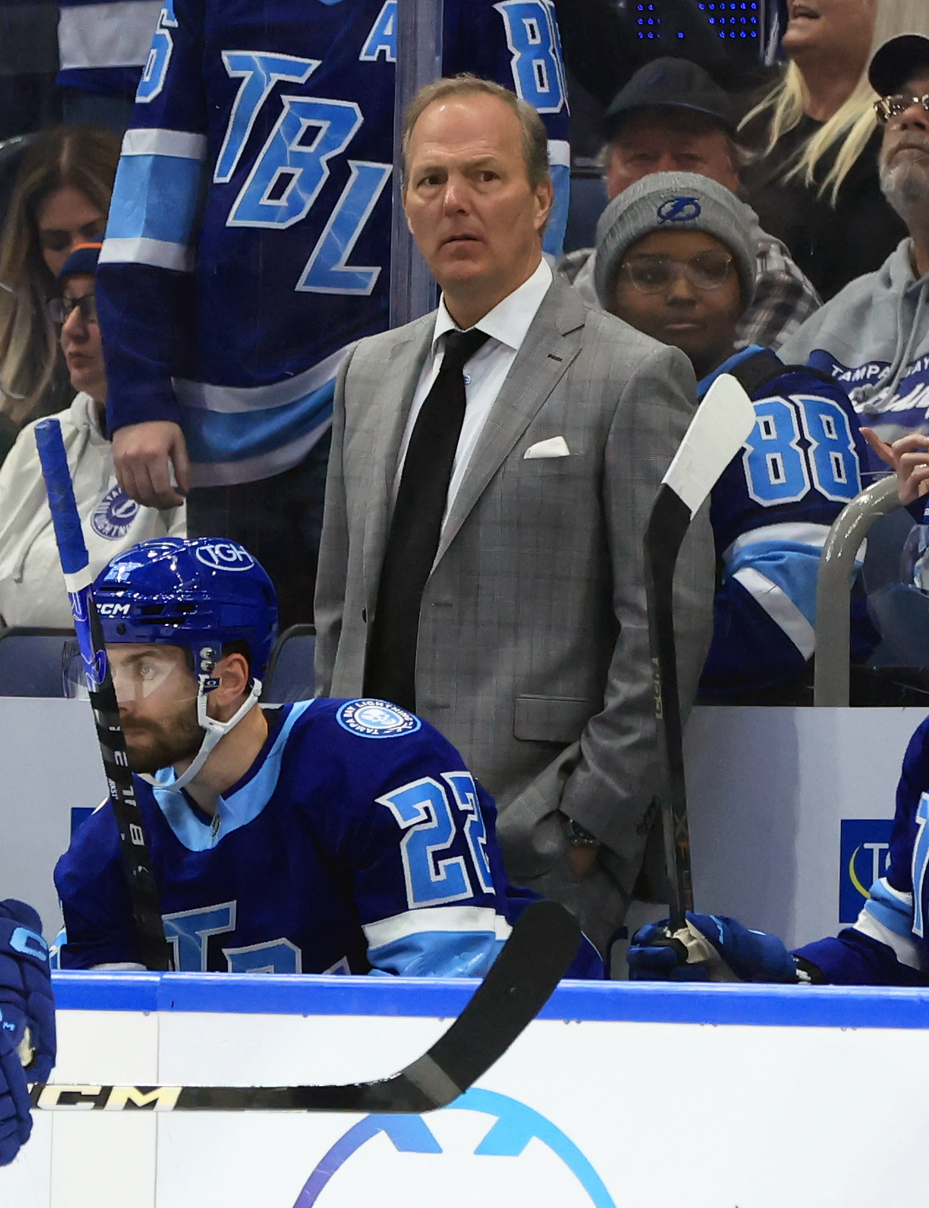
He was able to deftly manage significant injuries on his team’s blueline, with veteran stalwarts Victor Hedman and Ryan McDonagh limited to 33 and 48 games played, respectively.
In the face of those injuries, Cooper’s Lightning didn’t miss a beat, and he was able to get the most out of previously unheralded blueliners.
Cooper trusted undrafted 30-year-old Darren Raddysh as one of his team’s top defensemen in the absence of Hedman, and Raddysh rewarded his coach with a breakout 22-goal, 70-point campaign. He became just the second Lightning blueliner in franchise history to hit 70 points in a season.
Raddysh wasn’t the only undrafted blueliner to emerge for the Lightning. 28-year-old Charle-Edouard D’Astous, an elite blueliner in various leagues from the ECHL to SHL, was seamlessly integrated into Tampa’s lineup and put into positions to succeed. By the end of the season, D’Astous finished his rookie campaign with 29 points in 70 games, firmly establishing himself as an NHL defenseman.
For other coaches, dealing with so many injuries to key players can be a fatal blow to their team’s Stanley Cup hopes. For Tampa Bay, it served as an opportunity to integrate new faces into the lineup, and give new players a chance to have career-best campaigns. That, more than anything else, is why Cooper (and the rest of his staff) have been nominated for this award.
But Cooper isn’t the only deserving candidate. First-year head coach Dan Muse is another worthy option, as he guided the Penguins to a 41-25-16 record, good for second place in the Metropolitan Division. The Penguins entered the season considered by most to be a rebuilding club, a franchise with next to no hope of playing meaningful games in the spring. The Penguins not only beat those expectations, but they cruised into the playoffs.
The former New York Rangers and Nashville Predators assistant oversaw numerous players in his lineup who had career-best years, or campaigns that revitalized previously sagging career trajectories.
The Penguins made a bet that they could get the most out of struggling Blue Jackets first-rounder Egor Chinakhov, and that bet paid off as he scored 18 goals and 36 points in 43 games after his trade to the Steel City. He had six points in 29 games before the trade. Muse was able to manage an 18-year-old rookie’s transition to the NHL, guiding Benjamin Kindel to a successful 17-goal, 35-point debut campaign.
Numerous other players put up significantly improved performances under Muse’s watch, including veteran blueliner Erik Karlsson (66 points,) forward Anthony Mantha (64 points,) forward Tommy Novak (42 points,) defenseman Ryan Shea (35 points,) defenseman Parker Wotherspoon (30 points,) and forward Justin Brazeau (17 goals, 34 points.)
The formerly rebuilding Penguins took a risk to hire Muse, a first-time NHL head coach, in large part due to his exceptional reputation as a developer of players. For a team increasingly focused on youth, his track record in player development was seen as extremely valuable.
What most didn’t expect was for Muse’s leadership and player development acumen to pay dividends so quickly, and materialize in growth for players of all different ages and at varying stages of their careers. While the Penguins improved considerably as a team, it’s the widespread improvement Muse oversaw, player to player, that has gotten him nominated for this award.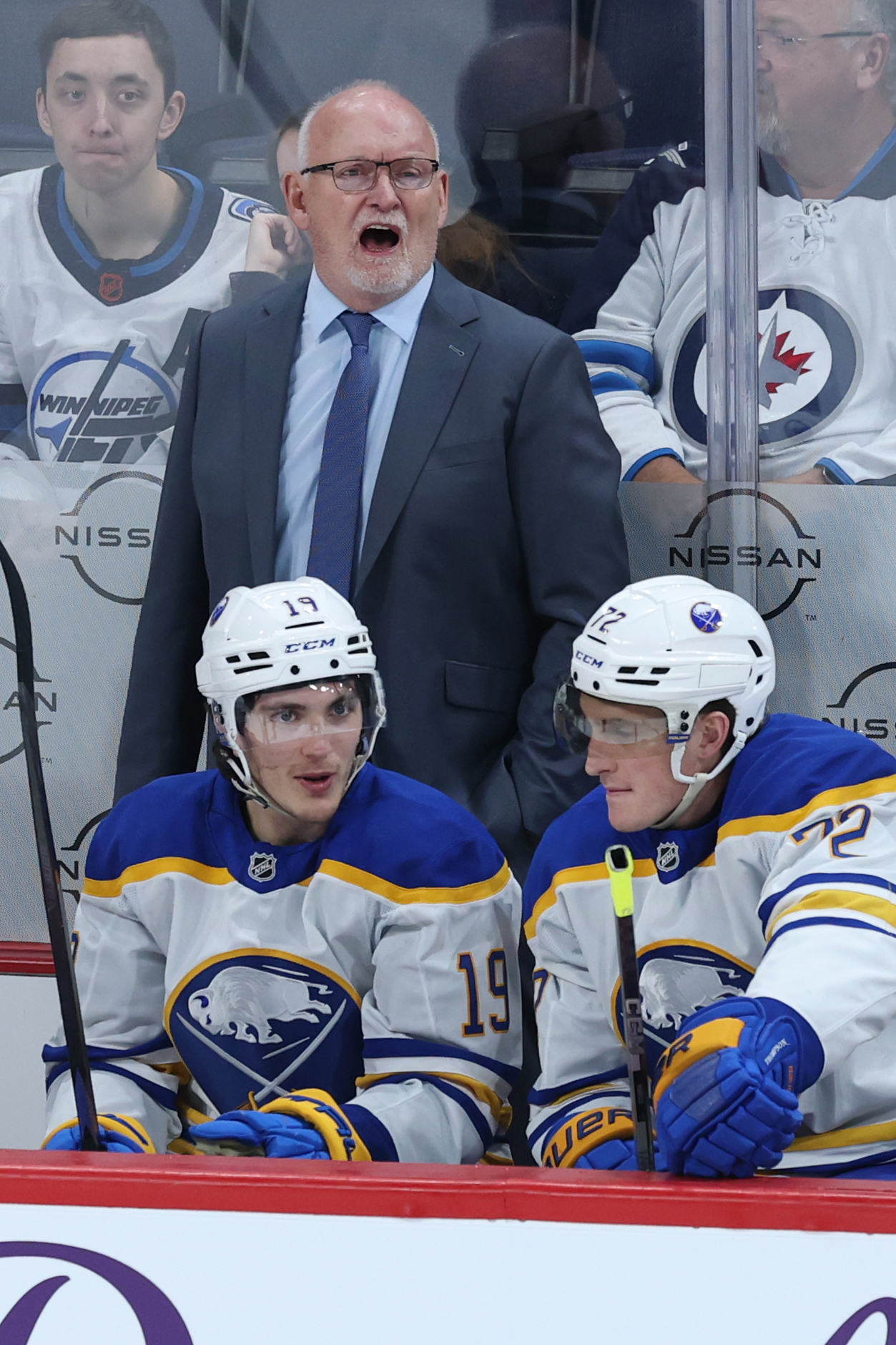
Finally, the third nominee is Ruff, who achieved what for so many coaches seemed impossible and ended the Sabres’ league-leading playoff drought.
In his second stint in Western New York, Ruff has turned the Sabres into a sensation. Buffalo went 50-23-9 this season.
For the first time since 2010, the Sabres will be able to add a banner to the rafters of KeyBank Center as division champions.
Battling against the weight of the Sabres’ recent history, Ruff guided his team through significant early pressure, pressure that ended up costing GM Kevyn Adams his job. By the time the calendar flipped to the new year, Ruff’s Sabres had the makings of a juggernaut. They ended up storming to the top of the Atlantic Division, and have entirely reversed the league-wide conversation about the franchise.
The enormity of the achievement of returning the Sabres to the playoffs after so many failed attempts by the franchise is enough to qualify Ruff for the Jack Adams, and in a year where so many coaches have proven their quality, Ruff may very well be the favorite.
Photos courtesy of Kim Klement Neitzel-Imagn Images, James Carey Lauder-Imagn Images
I know Jon Cooper has never won the Jack Adams Award and he’s deserving a “Coach of the Year” type award especially after this season. But apparently winning this particular award, has become a jinx to the winner. I actually hope he doesn’t win it.
Give it to Lindy Ruff as he at least helped end a 14 year playoff drought & who knows, Buffalo could fall into another drought before anyone knows it.
Rod Brind’Amour somehow managed 53 wins with three bad goaltenders, That’s some impressive coaching.
Some deserving candidates outside these 3 as well. But this is all Ruff this year.
Muse over Tocchet is stupid. Both teams had same number of points and Tocchet did it without superstar Crosby. Of course these are same writers who said Flyers had no chance.
The age-old question of how much credit you give a coach just because the team wins.
With all of these candidates who managed playoff teams who weren’t before (Tocchet, Sturm, Quennville, the Utah coach, etc), you give it to Cooper because he had injuries?! Many more deserving candidates