
As the Vancouver Canucks consider all possibilities to help reshape their club and build a future Stanley Cup contender, one name that has emerged as a potential key trade candidate is defenseman Filip Hronek. The Czech blueliner is the Canucks’ most important rearguard in the aftermath of the Quinn Hughes trade, and would likely draw an immense amount of league-wide interest if he was shopped.
The prospect of Vancouver dealing Hronek is a topic that has been recently discussed by numerous figures in the media, but today Hronek’s agent, Allan Walsh of Octagon Hockey, shut down the speculation, writing: “This is just wasted air,” and “Vancouver management and coaches are happy with Fil and Fil has no interest in going anywhere else.”
While Hronek may have seemed like a potentially realistic trade candidate for those outside of the Vancouver market, Walsh’s unequivocal denial of such a possibility does not come as any great surprise upon closer examination. First and foremost, Hronek’s eight-year, $7.25MM contract carries a full no-move clause until 2028. As a result, Hronek and his camp would need to sign off on any deal involving him. In other words, if Hronek doesn’t want to be traded (and Walsh said, in no uncertain terms, that he does not), he won’t be traded.
Additionally, while the Canucks are pursuing a team-building strategy centered around acquiring young players and draft picks, there is still a necessity for veteran leaders to insulate and guide that young talent. The Montreal Canadiens, a team many point to as an example of rebuild done right, retained key veterans such as Brendan Gallagher, Josh Anderson, and Mike Matheson throughout their rebuild, ensuring their young core players had experienced veterans to guide them. Hronek could be one of the Canucks’ equivalents to that Canadiens trio.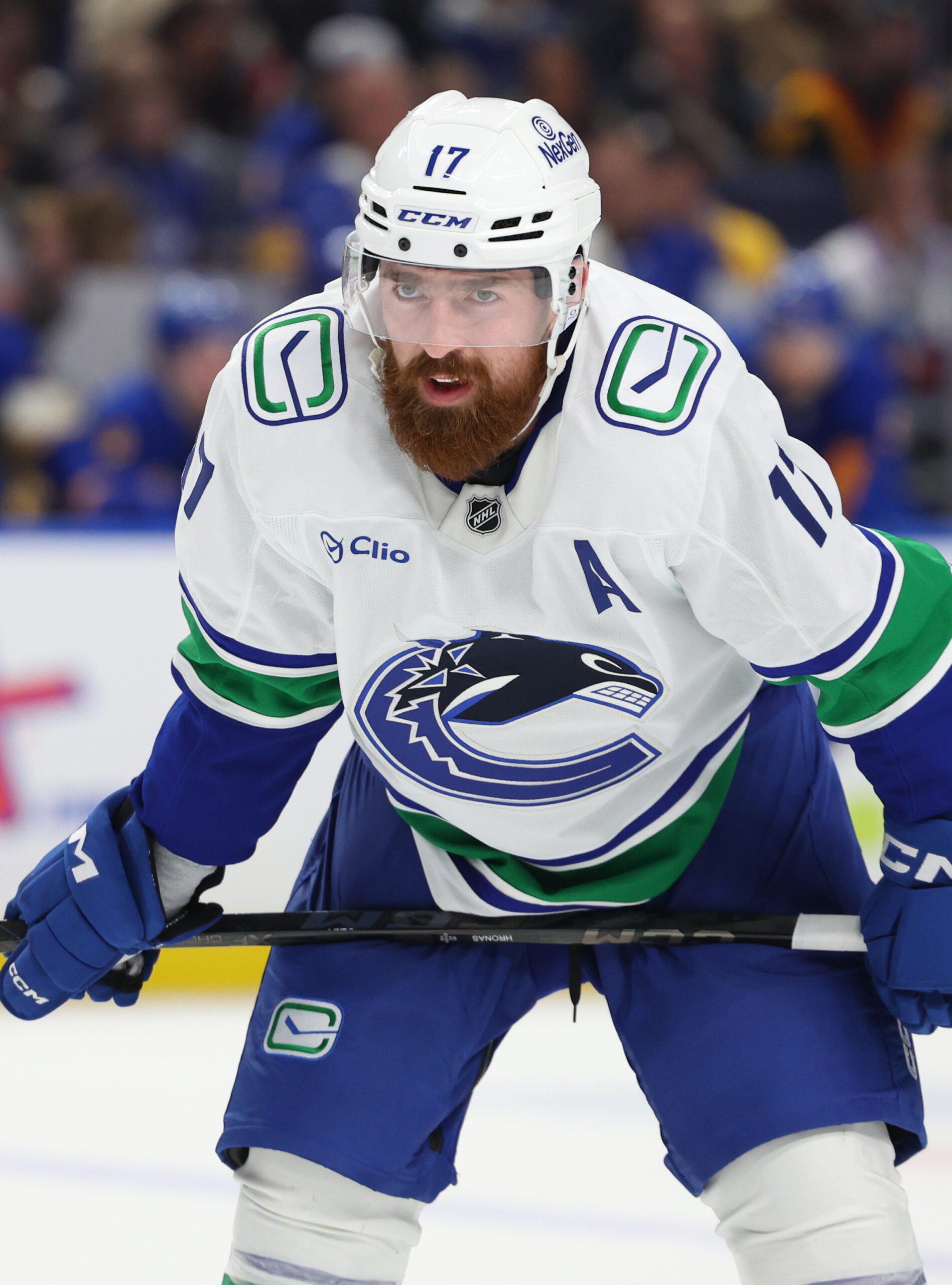
Hronek is held in high regard both for his immense on-ice contributions as well as his value off the ice to the Canucks’ locker room and overall team culture. He’s a trusted veteran and is a legitimate candidate to be the Canucks’ next captain, according to CHEK TV’s Rick Dhaliwal (via The Athletic’s Thomas Drance).
While he’d certainly fetch the Canucks a mammoth return if they ever elected to trade him, keeping Hronek could very well end up being the more valuable choice when it comes to meaningfully advancing their rebuild.
In this sense, it’s important to not look at the concept of “advancing a rebuild” in narrow, dogmatic terms.
Keeping a valuable veteran asset, rather than trading him for draft picks or prospects, can be the right choice for a rebuilding team. The value to a rebuild provided by a veteran effectively absorbing a difficult workload can equal, or even outweigh, the value provided by an extra set of draft picks. Hronek is positioned to be able to illustrate this in the coming years.
Hronek is now Vancouver’s No. 1 defenseman, averaging 24:23 time on ice per game including time on both sides of special teams. He’s behind only Elias Pettersson for the team lead in scoring, and is often their most consistent player on a nightly basis.
There is a real trickle-down effect of the workload Hronek handles on a nightly basis. By handling the tough matchups and eating so much time on ice per game, the Canucks are able to more appropriately deploy their younger blueliners. Because Hronek is playing 24 minutes per night, the Canucks can ease a younger defenseman such as Victor Mancini into the NHL in a role he’s more suited for. If Hronek were traded, a defender like Mancini could end up playing more minutes and tougher matchups than he’s ready for, something that may not be conducive to his development.
Matheson was mentioned earlier as a comparable defenseman in terms of being a veteran on a rebuilding club, and one only needs to look at the impact Matheson has had in Montreal in order to grasp just how valuable Hronek can be to the Canucks’ rebuild. Over the course of the worst years of the Canadiens rebuild, Matheson was a rock. He ranked No. 11 in the NHL in time on ice per game his first year in Montreal, and was No. 3 in the NHL in 2023-24.
Because Matheson was able to weather those difficult matchups and handle such a heavy workload, the Canadiens enjoyed a clear trickle-down benefit. Young, developing defensemen such as Lane Hutson, Kaiden Guhle, and Arber Xhekaj were able to find their footing at the NHL level without being handed too much, too fast.
Those defensemen were able to be placed in positions to succeed more often than not, and faced a far lower risk of over-exposure damaging their confidence and development. The Canadiens have reaped the benefits of that arrangement. Their rebuild meaningfully advanced because they elected to prioritize the on-ice value of keeping Matheson, rather than the hypothetical future value of trading him for prospects or draft picks.
That appears to be the approach the Canucks are set to take with Hronek. As mentioned, the player’s representation has made it clear that he has no interest in landing elsewhere, and the Canucks themselves are reportedly more likely to name Hronek captain than they are to deal him. That may not stop teams in need of a high-end blueliner from calling, but they’ll likely do so with a clear understanding that trading for Hronek is not a realistic possibility.
Photos courtesy of Timothy T. Ludwig-Imagn Images
Solid article.
He should be their captain.
I have no problem with Hronek’s edit (or agent’s); it should signal shifting sands to the likes of Garland, DeBrusk & M-Pettey tho. As Calgary, and the Habs before them, have signalled, you will be behind the eight-ball if you aren’t garnering more picks to juice your odds. Shame ol’ man Rutherford got snookered by former student Guerin in the Hughes trade; for a lesser & pure rental defenceman, Calgary got potentially 2 1sts, while Canucks took the Wild offer for 2 years of Hughes without a counter-offer.