
Offseason Checklist: Boston Bruins
The offseason is in full flight with the draft and free agency fast approaching. We continue our series which examines what each team needs to accomplish over the coming weeks and months. Next up is a look at Boston.
The Bruins underwent a few notable changes over the last year but the end result was the same as they were eliminated in the second round, this time by the eventual Cup winner in Tampa Bay. GM Don Sweeney has more salary cap flexibility this summer than he’s accustomed to although he also has some other holes to fill this time around as well. Here is an overview of what they should be looking to accomplish.
Goaltending Decisions
Tuukka Rask has been a fixture in Boston’s goaltending tandem for the past dozen years. However, he’s set to become an unrestricted free agent this summer and hip surgery will cost him the first half of next season. He has made it clear that he wants to return to the Bruins and that he’s not looking to go elsewhere but is the feeling mutual? More specifically, can they afford to wait for him?
With Jaroslav Halak also set to become an unrestricted free agent, Jeremy Swayman currently stands as the only goalie in the mix for one of the two spots. Swayman was quite impressive in his first taste of NHL action this season – a 1.50 GAA with a .945 SV% in 10 games (all starts) – but can they afford to enter 2021-22 with him as the starter and a placeholder as the backup while waiting for Rask to return? If they believe Swayman is ready for a full-time NHL role, they could certainly go that route and adding Rask midseason or soon after would give them a nice boost for the stretch run.
But if the answer to that is no, that complicates things a little bit. Daniel Vladar is the other goalie in the mix and has impressed in the minors but has just five career NHL games under his belt. He’s eligible for waivers and could be a candidate to be claimed. If they don’t want to run the risk of losing him, the Bruins could be faced with running two rookie goalies out to start the season.
If they opt to bring in a veteran goalie (which could simply be re-signing Halak) and re-sign Rask, that could create a situation where Swayman is the odd one out midseason by default once Rask returns. Unlike Vladar, he’s waiver-exempt so there are no issues there but if he has a strong first half making it difficult to send him down, it could be a three-goalie situation down the stretch for the second year in a row. It can work but it’s typically not an ideal spot for teams to be in.
With Rask’s injury, his specific fate doesn’t necessarily have to be decided at the beginning of free agency. But if they want to go outside the organization for a goalie, whoever they want to work with Swayman will need to sign sooner than later knowing how fast the goalie market typically is in free agency.
Re-Sign Or Replace Hall
The Bruins weren’t able to get a deal done with Taylor Hall last fall but when Buffalo opted to move him at the trade deadline, the veteran was able to leverage his trade protection to force a deal to Boston. At that time, both sides expressed an interest in a longer-term arrangement and reiterated the same following the playoffs.
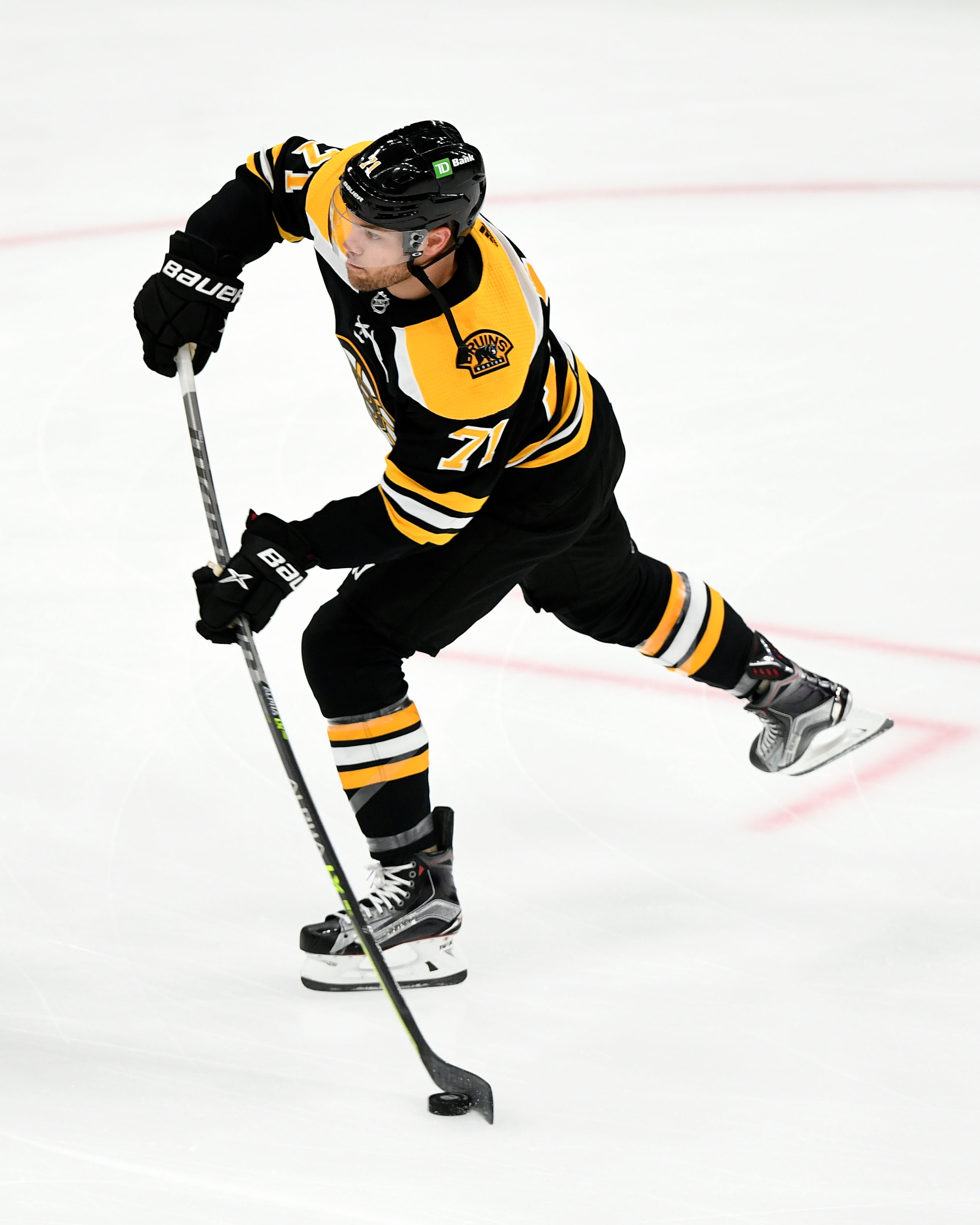 It’s one thing to have mutual interest in getting something done and another to actually agreeing on a contract. Hall opted for a pillow contract last fall with his one-year, $8MM agreement with the Sabres with the hopes that a rebound season would better position himself for a long-term deal this summer. That didn’t happen; at least, it didn’t happen with Buffalo. His time with them was nothing short of a disaster as he scored just twice in 37 games. But things went much better following his trade as he tallied eight goals in just 16 contests and came up just shy of a point per game average. That’s still not $8MM value but it was a whole lot better. He was a bit quieter in the playoffs, however, with just five points in 11 games.
It’s safe to say he’s looking at a cut in pay but by how much? The free agent market wasn’t particularly kind to wingers last fall and his marketability is probably a little lower now than it was in October. Accordingly, landing something at his prior contract – a $6MM AAV – may even be difficult as his recent production would justify something a little lower than that.
At this point, Boston would appear to be the odds-on favorite to bring back the 29-year-old but if they don’t, Sweeney will need to move quickly to try to replace him. A capable secondary scoring threat has been something they’ve been coveting for a while now and their offense was certainly boosted when Hall came in so bringing in someone else to fill that role if Hall leaves would certainly be helpful.
Add Defensive Upgrades
When Torey Krug (and to a lesser extent, Zdeno Chara) left as unrestricted free agents, there was an expectation that reinforcements were on the way. That didn’t happen. Then the season started and the hope became an early-season addition. That didn’t happen either. It took until the trade deadline for Sweeney to try to make a meaningful pickup and that came in the form of Mike Reilly, a player who had bounced around a bit but really found his footing with Ottawa before continuing that with the Bruins. Even so, Reilly is no more than a second-pairing defender but made a huge impact on Boston’s back end.
Between Reilly’s impact and the injuries they dealt with in the playoffs, that should have sent a strong message to Sweeney about the need to supplement their back end. Cap space certainly won’t be an issue as with the big-ticket deals coming off the books (Rask, Hall, and David Krejci), they have over $26MM at their disposal. Yes, a good chunk of that will be spent on goalies and re-signing or replacing Hall but there is more than ample cap room for the Bruins to try to add an impact defender as well as upgrade their depth.
Find A Second Line Center
Speaking of Krejci’s expiring contract, this creates another void up front that needs to be addressed. The 15-year Bruin has indicated he wants to return to Boston but is undecided on whether or not he’s going to play again in the NHL. If he does come back, this is a pretty easy spot to fill – re-sign Krejci for less than the $7.25MM cap hit he had on his most recent contract and call it a day.
If that doesn’t happen, Sweeney will need to go shopping. Charlie Coyle had a tough year in the third spot and recently underwent a pair of knee surgeries. While he’s expected to be ready for training camp, counting on him to boost the second line when he struggled as much as he did would be risky. Having said that, it’s once again not a great free agent class down the middle (Phillip Danault, Alexander Wennberg, Mikael Granlund, and Paul Stastny are the top options available) so if they can’t land one of those, the addition would need to come from outside the organization. The short supply of free agents means that this market should develop fairly quickly so Sweeney would certainly prefer a firm commitment sooner than later from Krejci in the hopes of filling that spot before it really opens up.
Photo courtesy of USA Today Sports Images. Contract information courtesy of CapFriendly.
Expansion Primer: Arizona Coyotes
Over the last few weeks, we have been breaking down each team’s situation as it pertains to the 2021 NHL Expansion Draft. Which players are eligible, who will likely warrant protection, and which ones may be on the block to avoid the risk of losing them for nothing? Each team is required to submit their protection lists by 4:00 PM CDT on July 17th. The full eligibility rules can be found here, while CapFriendly has an expansion tool to make your own lists.
The last time the Coyotes faced an expansion draft, they ended up losing a player that they had no intention of even signing. Teemu Pulkkinen was an unsigned restricted free agent that had played just four games for the Coyotes at the end of the 2016-17 season. He was grabbed by Vegas and signed to a one-year deal, but spent the entire season in the minor leagues before going to the KHL. In retrospect, Brad Richardson likely should have been the Golden Knights pick, but even that certainly wouldn’t have pushed the needle very much for them. This time around they are in a similar situation, though there may be a couple of names more interesting to the Kraken than Pulkkinen ever was to Vegas.
Eligible Players (Non-UFA)
Forwards:
Clayton Keller, Phil Kessel (NMC), Nick Schmaltz, Christian Dvorak, Tyler Pitlick, Lawson Crouse, Johan Larsson, Christian Fischer, Brayden Burke, Conor Garland, Tyler Steenbergen, John Hayden, Dryden Hunt, Blake Speers, Lane Pederson, Frederik Gauthier
Defense:
Oliver Ekman-Larsson, Jakob Chychrun, Ilya Lyubushkin, Kyle Capobianco, Cam Dineen, Dysin Mayo, Vili Saarijarvi
Goalies:
Darcy Kuemper, Adin Hill, Marek Langhamer
Notable Unrestricted Free Agents
F Derick Brassard, F Michael Bunting, D Alex Goligoski, D Niklas Hjalmarsson, D Jason Demers, D Jordan Oesterle, G Antti Raanta
Notable Exemptions
F Barrett Hayton, D Victor Soderstrom, G Ivan Prosvetov
Key Decisions
With so many unrestricted free agents coming off the books this summer, the Coyotes are actually in a position to add players over the next few days. The team could potentially nab an impact defenseman or an extra forward and protect them, something that not many teams can accommodate right now. If teams are out there in danger of losing a valuable asset for nothing, why not get at least a clearance price in the desert.
If that doesn’t happen though, there is a decision to make upfront. The team has to protect Kessel unless he waives his no-movement clause, but he was their leading scorer last season anyway. Garland is still an RFA and there have been rumors of trade talks, but he’s also one of the team’s most important assets. Keller, Schmaltz and Dvorak are basically all underperforming in terms of how much they’re being paid, but unless the team wants to attempt a drastic cap cut by letting them go to Seattle for free, they’ll be protected. Crouse is coming off a brutal year where he scored just four goals in 51 games, but is still young enough (24) and cheap enough ($1.53MM) to be worth hoping on a bounce-back season in 2021-22.
That leaves just a single protection slot for a group of forwards that includes Pitlick, Larsson, Fischer, Hunt and Hayden. None of those names jump out as a “must-protect” player, meaning the Coyotes could be exposing a handful of fringe forwards and letting the expansion team have their pick, just like a few years ago. Pitlick perhaps leads that group in terms of likelihood, but it’s not a slam dunk for any of them.
One interesting name to mention is Bunting, who is a Group VI unrestricted free agent but has gotten some offseason hype because of his late-season play and gold medal at the World Championship with Team Canada. The 25-year-old forward scored more goals (10) in 21 games for the Coyotes than Pitlick and Fischer combined, and could be an interesting target for the Kraken in their exclusive negotiating window. That is unless the Arizona front office signs him first, given they still have the capability to protect him.
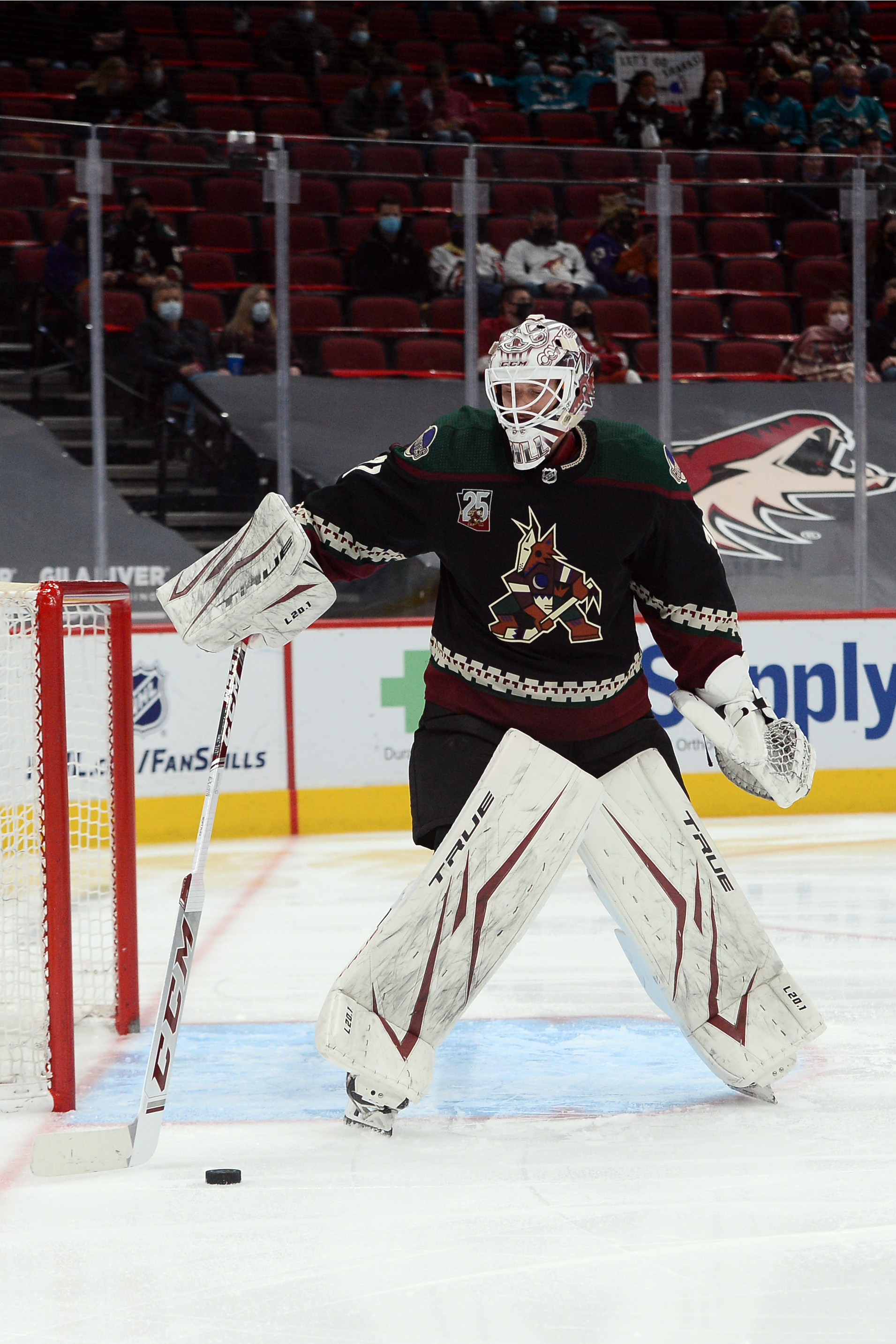 On defense, there’s little worry about losing an impact player. The Coyotes will protect Ekman-Larsson because of his NMC and Chychrun because he’s the team’s best player. After that, there’s nothing really left to use the third spot on. Lyubushkin would be a nice piece to protect, but he is currently the only player (other than Ekman-Larsson and Chychrun) who meets the exposure requirements. If the team signed another one of the defensemen that have passed the games played threshold–say, Goligoski–then he would become the third player protected on the back end over Lyubushkin anyway.
In net is the biggest decision of them all for Arizona. Kuemper or Hill? The former is a much more established name and is a legitimate starting option, but the latter is six years younger and could still have a bright future. The face that Hill is signed for just $800K next season is likely appealing to both the Coyotes and the Kraken, but it would be too risky to leave Kuemper exposed with such few other intriguing options on the roster. A trade here seems prudent, though any acquiring team would need room to protect either one, certainly not an easy thing to find right now.
Projected Protection List
F Clayton Keller
F Phil Kessel
F Nick Schmaltz
F Christian Dvorak
F Lawson Crouse
F Conor Garland
F Tyler Pitlick
D Oliver Ekman-Larsson
D Jakob Chychrun
D Kyle Capobianco
Skater Exposure Requirement Checklist
When Vegas had their expansion draft, a minimum of two forwards and one defenseman had to be exposed that were under contract and played either 40 games in the most recent season or 70 over the past two combined. Due to the pandemic, those thresholds have been changed to 27 games played in 2020-21 or 54 in 2019/20 and 2020-21 combined. In creating our expansion list for each team in this series, we will ensure that these criteria are met.
Forwards (2): Johan Larsson, Christian Fischer
Defensemen (1): Ilya Lyubushkin
Meeting these requirements isn’t really an issue, unless the team desperately wants to protect Lyubushkin. That would require a new deal for someone else and then subsequently leaving them exposed, which doesn’t seem likely at this point. That said, it does actually pose a complication if the team ever wanted to trade one of Kuemper or Hill, since they would then need a different netminder to meet the exposure requirements. In all, it looks like the Coyotes might just take their chances losing whoever Seattle has their eye on and move forward like they did a few years ago.
Photo courtesy of USA Today Sports Images. Contract information courtesy of CapFriendly.
Pittsburgh Penguins Re-Sign Teddy Blueger
The Pittsburgh Penguins aren’t waiting around for restricted free agency. The team has re-signed Teddy Blueger to a two-year contract that carries him through the 2022-23 season. The deal comes with an average annual value of $2.2MM, locking the centerman in at a reasonable price. GM Ron Hextall released a short statement on the deal:
Teddy has proven to be a versatile, two-way center, as well as a fixture on the penalty kill. He is a valuable player for our team.
Blueger, 26, was a year away from unrestricted free agency, meaning the Penguins have bought out one of his open market years with this contract. Originally a second-round pick way back in 2012, he finally made his NHL debut during the 2018-19 season and has been a fixture in the Penguins lineup ever since. During the 2019-20 season he even received Selke Trophy votes as one of the best defensive forwards in the NHL, but it was really this season when he added 22 points in just 43 games that his true value as a two-way option came out.
There are few forwards in the league that receive tougher deployment than Blueger, who starts nearly three times as many shifts in the defensive zone as the offensive. The idea is that if he can be a positive with such defensive responsibility, the other centers on the Penguins—of which they have some good ones—will be free to contribute more at the offensive end of the rink. While some of his possession statistics are punished heavily because of that deployment, the Penguins still generally come out on the winning end of the goals scored battle with him on the ice.
With this new contract, his role in Pittsburgh likely won’t change, with heavy penalty killing and defensive minutes baked right into his role. Of course, with a Penguins team facing some real decisions in terms of who to protect at the expansion draft, Blueger may actually end up exposed to the Seattle Kraken. If he does, a $2.2MM contract might actually be pretty enticing to a team that could give him a bigger offensive opportunity. It’s not like Blueger doesn’t have the ability to contribute at that end, as he showed in college and the minor leagues. While there will be other interesting options available, this is exactly the kind of player that an expansion team may target now that he’s on a reasonable two-year deal.
NHL Announces Official Order For 2021 Entry Draft
The NHL has announced the official order of selection for the upcoming 2021 Entry Draft, which will be held virtually starting on July 23. The first round will be held that night, with rounds 2-7 going on July 24. The Buffalo Sabres hold the first overall pick, while the expansion Seattle Kraken will make their first draft choice in franchise history second overall.
The full order:
Maple Leafs Notes: Hyman, Andersen, Bogosian
The Toronto Maple Leafs have a few key free agents scheduled to hit the open market later this month, with no one more important than Zach Hyman. The Toronto native has turned himself from a fifth-round afterthought into a legitimate top-six option, able to play both wings and score at a high rate. Hyman had 15 goals and 33 points in 43 games this season while also being a key member of the team’s top penalty-killing unit. That success should lead to a big raise this summer, but it appears as though the Maple Leafs and Hyman’s camp aren’t close on a number that works for both sides.
Pierre LeBrun of The Athletic tweets that there is a “sizeable gap in positions,” suggesting that Hyman will indeed hit the open market on July 28. The 29-year-old will likely be one of the top options for many teams looking for forward help because of his versatility, but that will also leave a pretty sizable hole in the Maple Leafs lineup. Of course, as with any of the free agents Toronto is dealing with, any contract before the expansion draft would put the team in a tough situation protection-wise.
- LeBrun also tweets out that there have been talks between the Maple Leafs and free agent netminder Frederik Andersen, but no contract offer to this point. Obviously, Toronto wouldn’t want to sign Andersen before the expansion draft, but it does appear as though he will at least test the market even though there is mutual interest for a reunion. The Maple Leafs frankly just don’t have the cap space to commit much money to Andersen if Jack Campbell is penciled in as the team’s starter, meaning he very well could be looking at a much more lucrative offer on the open market.
- While Hyman and Andersen represent core pieces that have been in Toronto for a while, there are many other unrestricted free agents on the Toronto roster who could be brought back as depth pieces. One of those is Zach Bogosian, who brought some stability to the third pairing for the Maple Leafs last season and is now a free agent once again at the age of 30. Terry Koshan of the Toronto Sun reports that though there have been talks between the two sides, it seems likely that Bogosian will test the open market as well, which makes a lot of sense for a player that earned just $1MM on his one-year deal in Toronto. Bogosian is still young enough to earn a multi-year deal, is coming off a Stanley Cup with the Lightning and a strong campaign with the Maple Leafs, and is that always-enticing mix of physical and right-handed. For a Maple Leafs team that can’t overspend on the margins, he may be priced out of their reach.
Boston Bruins Sign Brandon Carlo To Six-Year Extension
The Boston Bruins have locked up one of their key players, signing Brandon Carlo to a six-year extension. The contract will carry an average annual value of $4.1MM, meaning Carlo will earn $24.6MM over the six seasons. Bruins GM Don Sweeney released a short statement on the deal:
The Bruins are very pleased to have extended Brandon on a long-term deal. Brandon is a player who has grown into a foundational defenseman with our team while also emerging as an important leader on and off the ice.
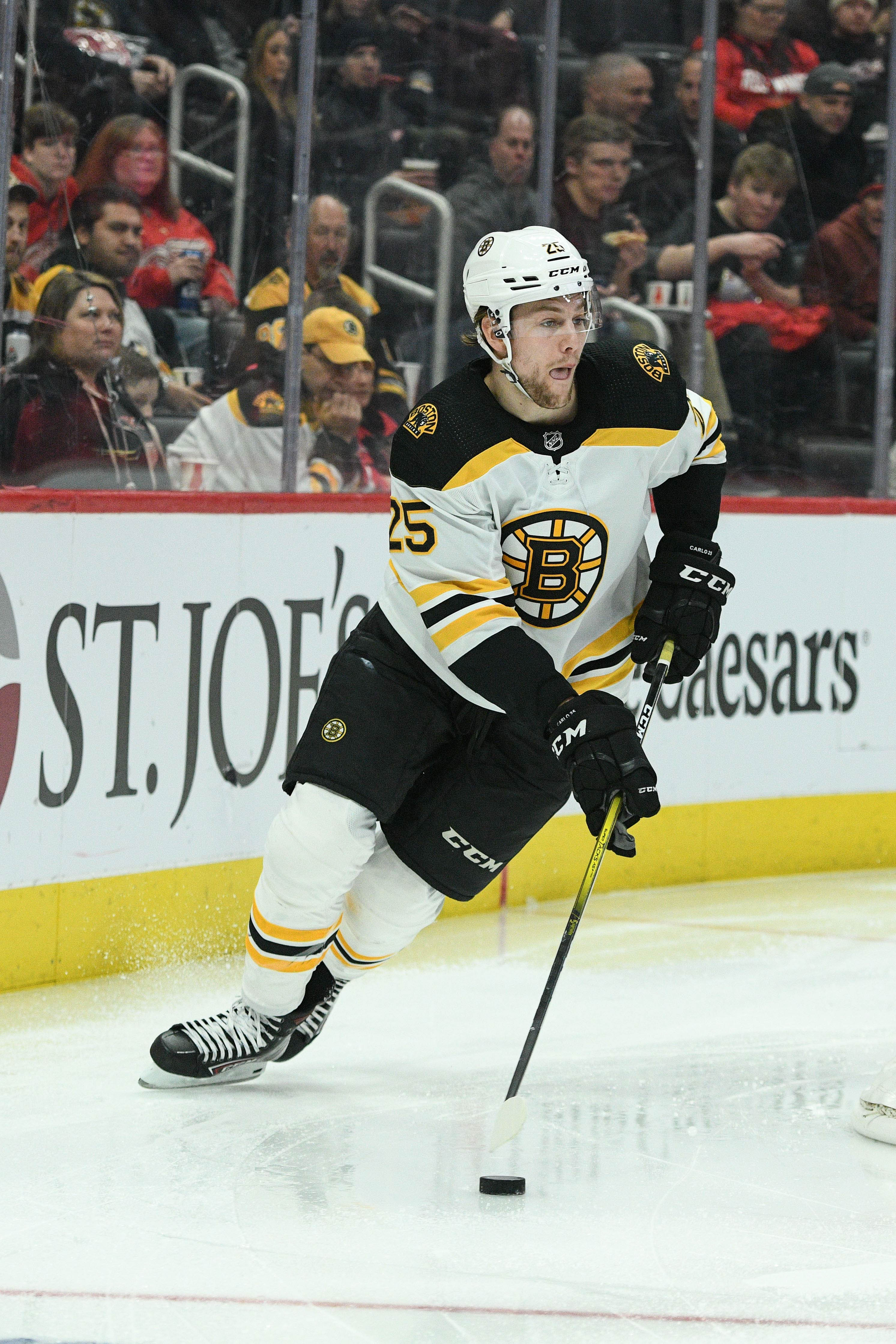 Carlo, 24, is one of the most important players on the Bruins roster, soaking up tough defensive minutes behind Charlie McAvoy. The 6’5″ defenseman burst onto the scene in 2016-17 and averaged nearly 21 minutes a night as a rookie, scoring six goals and 16 points. That goal total is actually still his career-high, but it’s not about offensive production when valuing Carlo’s contribution to the team. The coaching staff in Boston has absolutely pummelled him with defensive zone starts since he entered the league, and put him on the ice for nearly three minutes of short-handed time every night this season. His results in those tough minutes have been rather strong, suggesting that he will continue to be a good shutdown option for the next while.
On a six-year contract that buys out four years of unrestricted free agency, getting Carlo at $4.1MM is a big win for the Bruins. The team is likely looking at a much more expensive extension for McAvoy when he reaches restricted free agency in a year, but having the anchor of their second pair locked in at a reasonable price will make that negotiation much easier. It also takes a big name off the offseason to-do list, meaning Sweeney and company can get focused on some of the other pending RFAs or the UFA market.
This extension could also serve as a comparable for some of the other names around the league, even if it does include a pair of RFA years. Adam Larsson, who plays a similar role for the Edmonton Oilers, is a pending UFA, while 25-year-old Travis Sanheim needs a new contract with the Philadelphia Flyers. Neither situation is exactly comparable to the one the Bruins and Carlo were in, but his deal will now go up on the board as a point of negotiation in many of the talks this summer.
Of course, there is always some risk when inking a deal of this length. Carlo did deal with injuries for much of this season, playing just 27 regular season games. In the playoffs, he left a game against the New York Islanders after a big hit from Cal Clutterbuck and didn’t return in the series. The young defenseman has suffered several concussions in his short career, which always casts some doubt over his future health and production. The Bruins obviously still believe in him and have rewarded him with a long-term contract, but you can see why a player in Carlo’s situation would be happy to sign a long-term deal at this point in his career.
Photo courtesy of USA Today Sports Images
Latest On Gabriel Landeskog’s Pending Free Agency
The Colorado Avalanche are getting closer and closer to unrestricted free agency without any resolution to their two biggest UFA negotiations. While most assumed captain Gabriel Landeskog would be re-signed without issue, things haven’t progressed as quickly as the veteran forward was hoping. In fact, Landeskog expressed some frustration when speaking with Peter Baugh of The Athletic:
I can’t help but be honest with you that I’m a little bit disappointed that it’s gotten this far and it’s had to come to this point.
We’ll see what happens. I’m still hopeful that we can agree on something and come to terms, but if it was up to me, I would have liked it to be done eight months ago, 10 months ago.
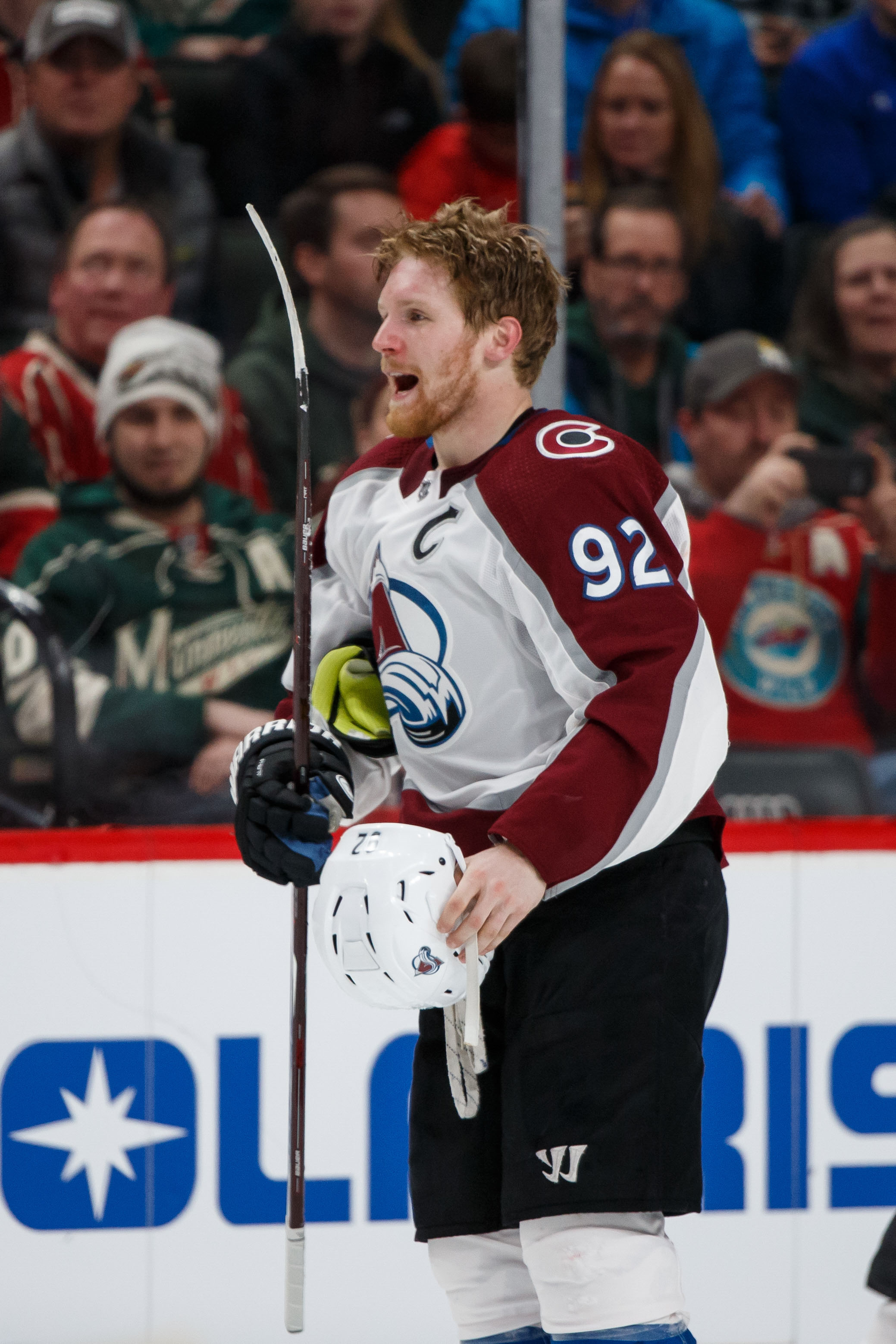 It’s difficult to imagine Landeskog in any sweater other than Colorado’s, given he has been a fixture there for so long. Selected second overall in 2011, the Swedish forward immediately jumped into the NHL to win the Calder Trophy with 52 points in 82 games. By the start of year two, he was made the then-youngest captain in NHL history. It’s been his team ever since, even as other supremely talented players have come and gone, even as Nathan MacKinnon assumed the mantle as the best player on the team; it was still Landeskog who wore the “C”.
Last night, Darren Dreger of TSN reported that Landeskog and the Avalanche are “not even close” in their negotiations, which raises some eyebrows given how close free agency is. In just two weeks teams will be able to call up Landeskog and offer him a huge long-term contract. The market for his services will be large, as it’s not often a player that combines first-line offensive production with physicality and leadership hits the market at the age of 28. With 52 points in 54 games this season, he recorded his eighth season of at least 20 goals.
There is still time for the Avalanche to work things out with their captain, but given the fact that they also need to sign Vezina finalist Philipp Grubauer and restricted free agent Cale Makar, there might not be enough money to go around. The team currently has more than $25MM in cap space, but that will shrink considerably after a deal is completed with Makar and the Avalanche still have MacKinnon’s free agency to think about. The 25-year-old center will hit the open market after the 2022-23 season, likely deserving to be paid among the highest earners in the entire NHL. Signing Landeskog and Grubauer to long-term deals would certainly complicate things going forward, but watching your captain walk out the door in the prime of his career is certainly not an optimal scenario.
Carolina Hurricanes Acquire Dylan Wells
The Carolina Hurricanes have acquired goaltender Dylan Wells from the Edmonton Oilers in exchange for future considerations. This move is designed to help the Hurricanes expansion situation, as Wells can fill the exposure requirement if tendered a qualifying offer this week. Wells is a pending RFA coming off a season as a taxi squad netminder.
Wells, 23, didn’t play a single game at any level during the 2020-21 season, and suited up only seven times for the Oilers AHL affiliate in 2019-20. Most of his professional career to this point has been in the ECHL, but perhaps he will get a bigger chance in the Carolina organization. The 6’2″ netminder was selected 123rd overall in 2016 but has struggled in his AHL chances, posting an 0-4-1 record in 2019-20 with a .878 save percentage.
Future considerations, in this case, are likely either nothing or a minor league trade that will be completed in tandem. Players on AHL contracts cannot be included in NHL deals, and the Oilers just recently did something similar in the Duncan Keith deal. A second AHL trade was completed the same night, sending a minor league forward to the IceHogs to replace Tim Soderlund.
The Hurricanes are set to protect Alex Nedeljkovic in the upcoming expansion draft and could have used Jeremy Helvig for the exposure requirements if they intend on extending him a qualifying offer. If not, Wells can now slide into that role as expansion draft fodder, without any real risk of being selected by the Kraken.
New Jersey Devils Sign Colton White
The New Jersey Devils have signed Colton White to a one-year, two-way contract for the 2021-22 season. The deal will pay White $750K at the NHL level and $130K at the AHL level.
White, 24, was scheduled for restricted free agency this summer after spending most of the season in the AHL. The minor league defenseman wore an “A” as an alternate captain for the Binghamton Devils and could very well be ticketed to have a leadership role on the new Utica team in 2021-22. Originally selected in the fourth round of the 2015 draft, he has managed just 11 games at the NHL level to this point. He has become a core piece at the AHL though, and certainly had enough upside to bring back.
Because he will turn 25 next season, White will be eligible for Group VI unrestricted free agency a year from now, unless he plays most of the season with New Jersey. That seems very unlikely, meaning he’ll get a chance to hit the open market after this one-year deal expires. For now, he’s headed back to the Devils to compete for playing time on a league-minimum deal.
Montreal Canadiens Extend Luke Richardson
A day after signing head coach Dominique Ducharme to an extension, the Montreal Canadiens are at it again. This time it’s top assistant Luke Richardson who gets the three-year deal, keeping him in the organization through the 2023-24 season.
Richardson, 52, took over for Ducharme in the playoffs after the head coach tested positive for COVID and impressed many around the league with his calm demeanor. There was some speculation that the former NHL defenseman would be given an opportunity to lead another team, but since all of the vacancies have been filled up, it made a lot of sense for him to return to Montreal, if he wasn’t already planning on doing so.
The Canadiens were lauded this postseason for the physical play of their defense corps, using their size to quickly shut down rush opportunities and punish attackers whenever they got close to Carey Price. One might compare it to the way that the 6’3″ Richardson played throughout his 1,417 game NHL career, which came with more than 2,000 penalty minutes.
Those 1,400+ games put him among the all-time leaders in the spot, sitting just one spot ahead of Hall of Fame defenseman Al MacInnis. While Richardson certainly never had a chance at the Hall—his career-high of 21 points saw to that—the sheer number of games played will command respect in any room. With four years of head coaching experience in the AHL and now even a taste of it at the NHL level, you can be sure that Richardson’s name will come up over the next few seasons as a top candidate for any vacant jobs.